Graduate Institute of Medical Sciences, College of Medicine, Taipei Medical University, Taipei 110, Taiwan.
Department of Life Sciences, National Chung Hsing University, Taichung 402, Taiwan.
Int J Mol Sci. 2018 Jun 20;19(6):1818. doi: 10.3390/ijms19061818.
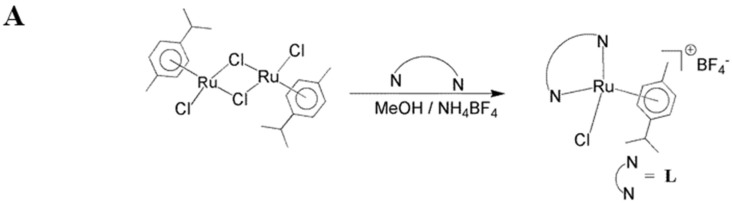
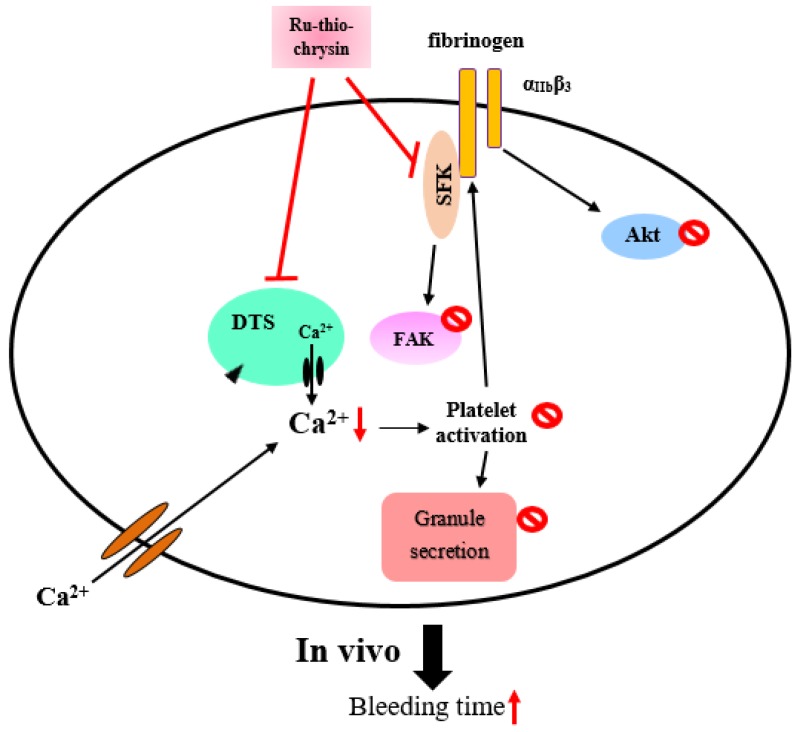
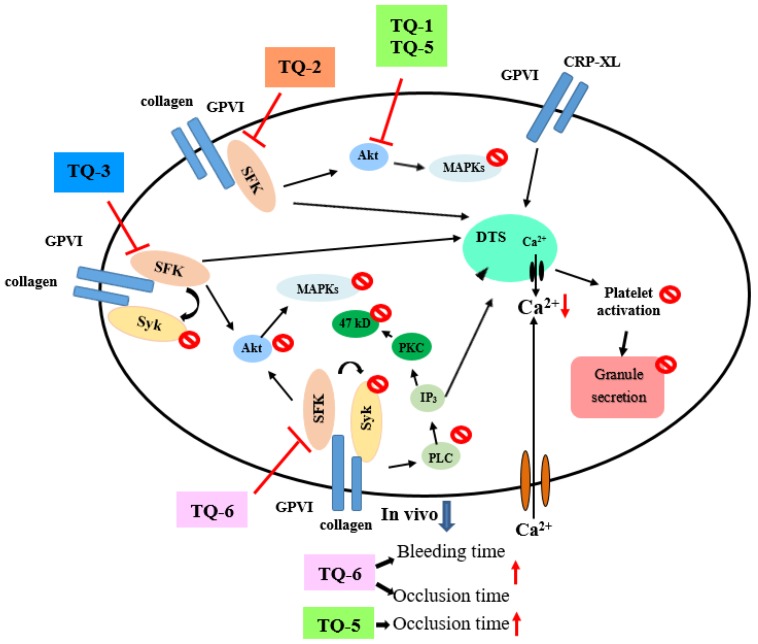
In oncotherapy, ruthenium (Ru) complexes are reflected as potential alternatives for platinum compounds and have been proved as encouraging anticancer drugs with high efficacy and low side effects. Cardiovascular diseases (CVDs) are mutually considered as the number one killer globally, and thrombosis is liable for the majority of CVD-related deaths. Platelets, an anuclear and small circulating blood cell, play key roles in hemostasis by inhibiting unnecessary blood loss of vascular damage by making blood clot. Platelet activation also plays a role in cancer metastasis and progression. Nevertheless, abnormal activation of platelets results in thrombosis under pathological settings such as the rupture of atherosclerotic plaques. Thrombosis diminishes the blood supply to the heart and brain resulting in heart attacks and strokes, respectively. While currently used anti-platelet drugs such as aspirin and clopidogrel demonstrate efficacy in many patients, they exert undesirable side effects. Therefore, the development of effective therapeutic strategies for the prevention and treatment of thrombotic diseases is a demanding priority. Recently, precious metal drugs have conquered the subject of metal-based drugs, and several investigators have motivated their attention on the synthesis of various ruthenium (Ru) complexes due to their prospective therapeutic values. Similarly, our recent studies established that novel ruthenium-based compounds suppressed platelet aggregation via inhibiting several signaling cascades. Our study also described the structure antiplatelet-activity relationship (SAR) of three newly synthesized ruthenium-based compounds. This review summarizes the antiplatelet activity of newly synthesized ruthenium-based compounds with their potential molecular mechanisms.
在肿瘤治疗中,钌(Ru)配合物被认为是铂类化合物的潜在替代品,并已被证明是具有高效低副作用的有希望的抗癌药物。心血管疾病(CVDs)被认为是全球头号杀手,而血栓是大多数与 CVD 相关的死亡的原因。血小板是一种无核的小循环血细胞,通过形成血栓来抑制血管损伤引起的不必要失血,在止血中起着关键作用。血小板的激活也在癌症转移和进展中发挥作用。然而,在动脉粥样硬化斑块破裂等病理情况下,血小板的异常激活会导致血栓形成。血栓会减少心脏和大脑的血液供应,分别导致心脏病发作和中风。虽然目前使用的抗血小板药物,如阿司匹林和氯吡格雷,在许多患者中显示出疗效,但它们会产生不良的副作用。因此,开发有效的治疗策略来预防和治疗血栓性疾病是当务之急。最近,贵金属药物攻克了金属药物领域,由于其潜在的治疗价值,许多研究人员激发了他们对合成各种钌(Ru)配合物的兴趣。同样,我们最近的研究表明,新型基于钌的化合物通过抑制几种信号级联来抑制血小板聚集。我们的研究还描述了三种新合成的基于钌的化合物的结构抗血小板活性关系(SAR)。本综述总结了新合成的基于钌的化合物的抗血小板活性及其潜在的分子机制。