Institute for Archaeological Sciences, University of Tübingen, Tübingen, Germany.
Senckenberg Center for Human Evolution and Paleoenvironment, University of Tübingen, Tübingen, Germany.
PLoS Negl Trop Dis. 2018 Jun 21;12(6):e0006447. doi: 10.1371/journal.pntd.0006447. eCollection 2018 Jun.
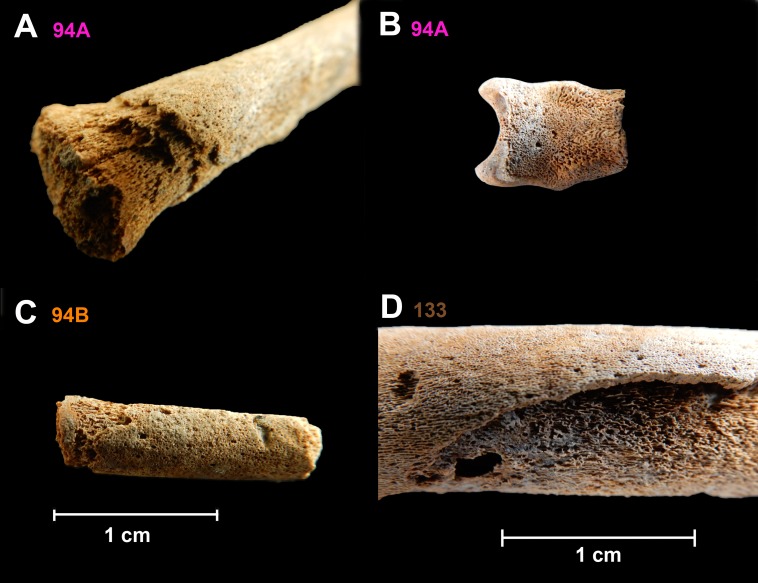
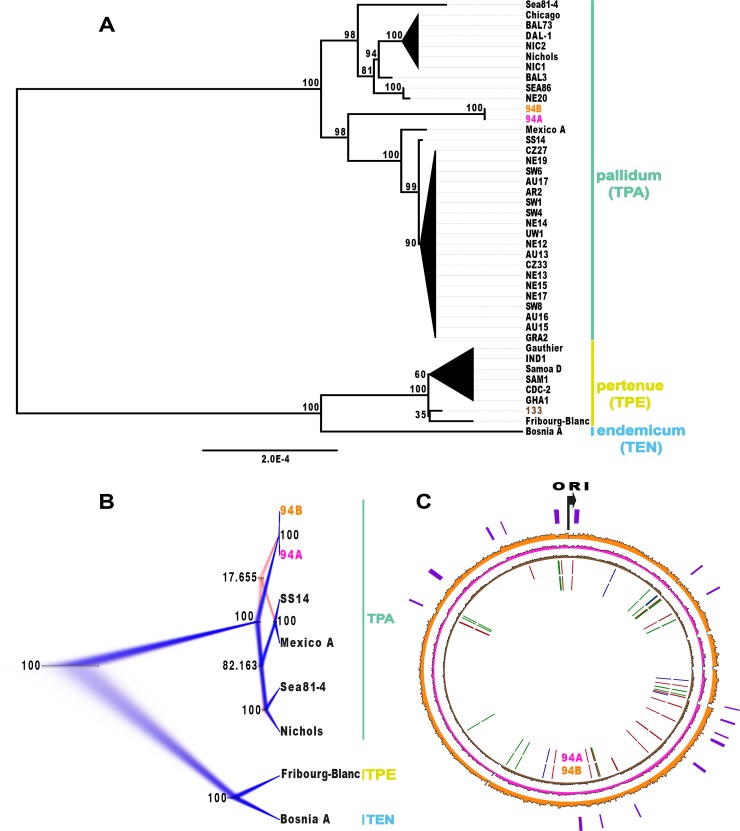
Treponema pallidum infections occur worldwide causing, among other diseases, syphilis and yaws. In particular sexually transmitted syphilis is regarded as a re-emerging infectious disease with millions of new infections annually. Here we present three historic T. pallidum genomes (two from T. pallidum ssp. pallidum and one from T. pallidum ssp. pertenue) that have been reconstructed from skeletons recovered from the Convent of Santa Isabel in Mexico City, operational between the 17th and 19th century. Our analyses indicate that different T. pallidum subspecies caused similar diagnostic presentations that are normally associated with syphilis in infants, and potential evidence of a congenital infection of T. pallidum ssp. pertenue, the causative agent of yaws. This first reconstruction of T. pallidum genomes from archaeological material opens the possibility of studying its evolutionary history at a resolution previously assumed to be out of reach.
梅毒螺旋体感染遍布全球,可引起多种疾病,包括梅毒和雅司病。特别是性传播梅毒被认为是一种新出现的传染病,每年有数百万人感染。在这里,我们展示了三个来自 17 至 19 世纪期间运营的墨西哥城圣伊莎贝尔女修道院的骨骼样本中重建的三个历史悠久的梅毒螺旋体基因组(两个来自梅毒螺旋体亚种苍白亚种,一个来自梅毒螺旋体亚种地方性亚种)。我们的分析表明,不同的梅毒螺旋体亚种引起相似的诊断表现,这些表现通常与婴儿期的梅毒有关,并且有潜在的证据表明梅毒螺旋体亚种地方性亚种(雅司病的病原体)存在先天性感染。这是首次从考古材料中重建梅毒螺旋体基因组,为研究其进化史提供了可能,而此前这一分辨率被认为遥不可及。