Kang Yuming, Su Guoai, Sun Jianmin, Zhang Yanli
Department of Hepatobiliary Surgery, The General Hospital of Ningxia Medical University, Yinchuan, Ningxia 750004, P.R. China.
Department of Internal Medicine, The Army General Hospital of The Chinese People's Liberation Army, Beijing 100700, P.R. China.
Oncol Lett. 2018 Jun;15(6):9647-9654. doi: 10.3892/ol.2018.8586. Epub 2018 Apr 26.
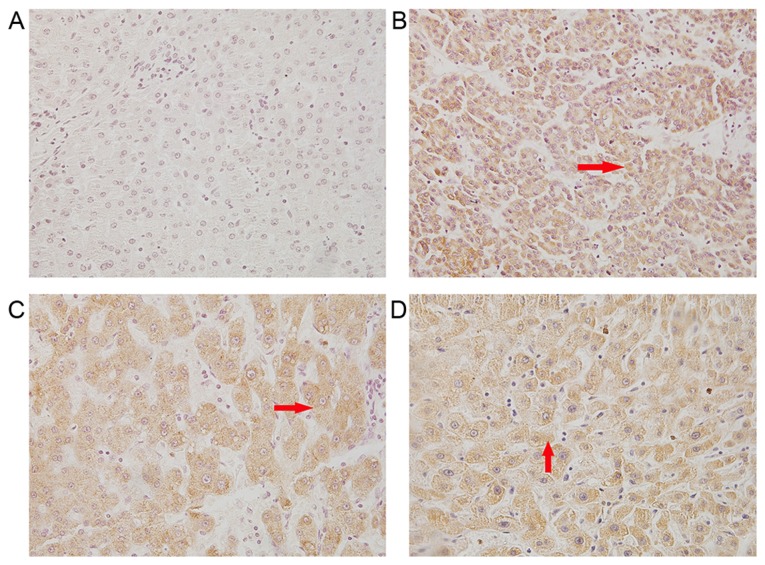
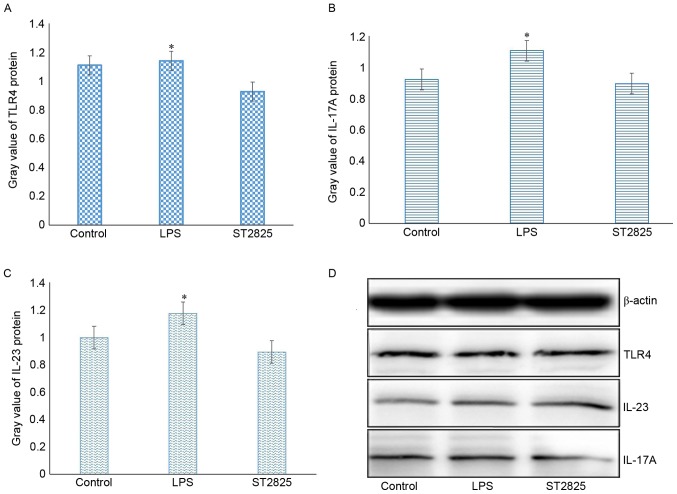
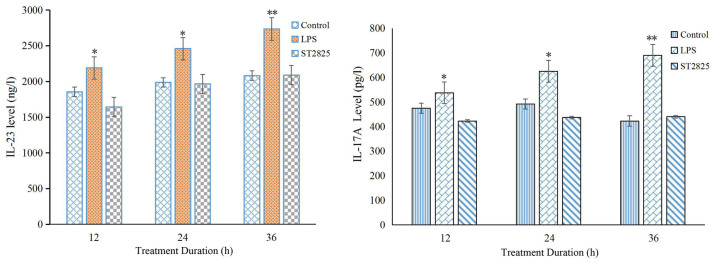
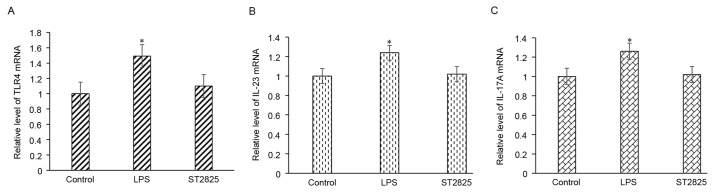
Toll-like receptor 4 (TLR4) and the interleukin (IL)-23/IL-17A axis serve an important role in tumor immunology. In the present study, the activation of the TLR4/myeloid differentiation primary response 88 (MyD88)-mediated signal transduction pathway in human hepatocellular carcinoma (HCC) cells was examined using immunohistochemistry, and the association between TLR4 expression and the IL-23/IL-17A axis was detected by ELISA, reverse transcription-quantitative polymerase chain reaction and western blot analysis in order to determine whether TLR4 and IL-23/IL-17A serve a role in HCC. It was observed that TLR4 expression was upregulated in HCC tissues compared with that in adjacent normal tissues. In addition, the TLR4 expression level was correlated with the degree of tumor differentiation and TNM stage. The expression levels of IL-17A and IL-23, which are key mediators of inflammation that contribute to carcinogenesis, are correlated with TLR4 expression in HCC. Cell line studies further revealed that activation of TLR4/MyD88 upregulated the expression of IL-17A and IL-23 at the mRNA and protein levels. Furthermore, activation of TLR4/MyD88 enhanced the expression of TLR4. IL-17A and IL-23 expression levels in HCC also appeared to be correlated with the TNM stage and tumor metastasis. In conclusion, the current results suggested that the TLR4/MyD88 signaling pathway is involved in HCC cell proliferation and metastasis via regulation of the IL-23/IL-17A axis; thus, the TLR4/IL-23/IL-17A pathway may represent a novel therapeutic target in HCC.
Toll样受体4(TLR4)和白细胞介素(IL)-23/IL-17A轴在肿瘤免疫学中发挥重要作用。在本研究中,采用免疫组织化学方法检测人肝癌(HCC)细胞中TLR4/髓样分化初级反应88(MyD88)介导的信号转导通路的激活情况,并通过酶联免疫吸附测定、逆转录-定量聚合酶链反应和蛋白质印迹分析检测TLR4表达与IL-23/IL-17A轴之间的关联,以确定TLR4和IL-23/IL-17A在HCC中是否发挥作用。结果观察到,与相邻正常组织相比,HCC组织中TLR4表达上调。此外,TLR4表达水平与肿瘤分化程度和TNM分期相关。促癌炎症的关键介质IL-17A和IL-23的表达水平与HCC中的TLR4表达相关。细胞系研究进一步显示,TLR4/MyD88的激活在mRNA和蛋白质水平上上调了IL-17A和IL-23的表达。此外,TLR4/MyD88的激活增强了TLR4的表达。HCC中IL-17A和IL-23的表达水平似乎也与TNM分期和肿瘤转移相关。总之,目前的结果表明,TLR4/MyD88信号通路通过调节IL-23/IL-17A轴参与HCC细胞的增殖和转移;因此TLR4/IL-23/IL-17A通路可能代表HCC的一个新的治疗靶点。