Kameshwar Ayyappa Kumar Sista, Qin Wensheng
Department of Biology, Lakehead University, 955 Oliver Road, Thunder Bay, Ontario, P7B 5E1, Canada.
J Genomics. 2018 Jun 10;6:74-87. doi: 10.7150/jgen.25648. eCollection 2018.
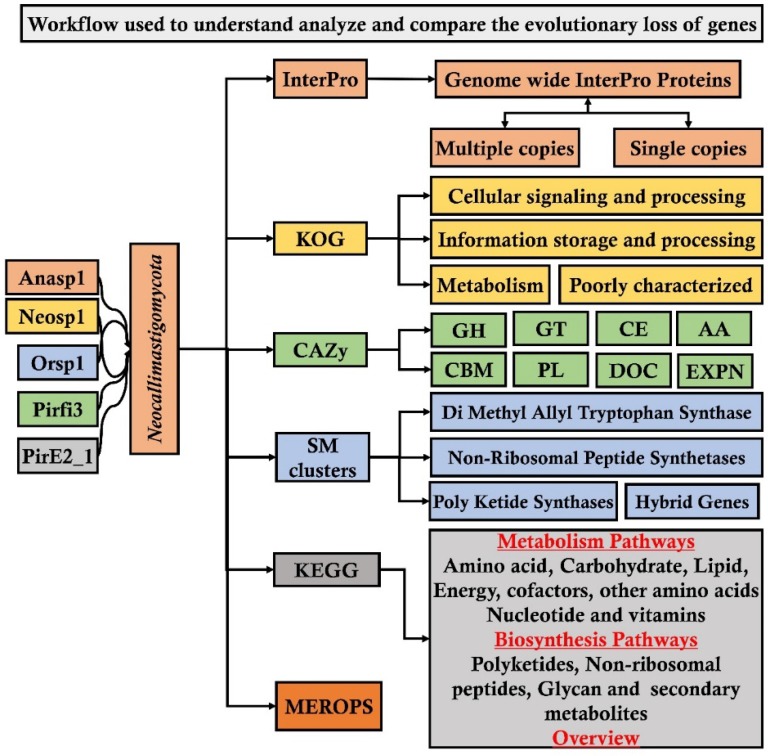
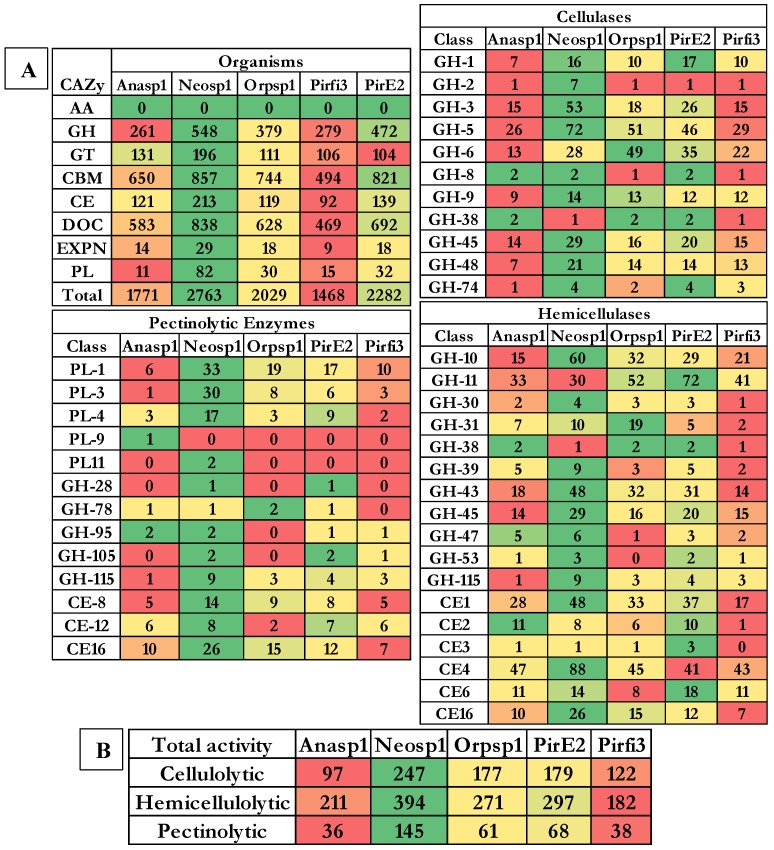
Ruminating animals, especially cattle lack the carbohydrate active enzyme encoding genes which are required for the degradation of the glycosidic linkages of plant cell wall carbohydrates (such as cellulose, hemicellulose, lignin and pectin). Thus, ruminating animals are completely dependent on the microorganisms (anaerobic bacteria and fungi, methanogenic archaea and protozoa) residing in their rumen (hindgut). In this study, we have retrieved and analyzed the complete genome wide annotations of the division fungi such as sp, sp E2. We have retrieved the InterPro, CAZy, KOG, KEGG, SM Clusters and MEROPS genome level data of these anaerobic fungi from JGI-MycoCosm database. Results obtained in our study reveals that, the genomes of anaerobic fungi completely lack genes encoding for lignin degrading auxiliary activity enzymes. Contrastingly, these fungi outnumbered other fungi by having highest number of CAZyme encoding genes. The genes encoding for dockerins and carbohydrate binding modules exaggerated other CAZymes which are involved in the structure and functioning of cellulosomes. Presence of cellulosomes and higher number of carbohydrate transport and metabolism genes also endorses the plant cell wall carbohydrate degrading abilities of these fungi. We also reported the tentative total cellulolytic, hemicellulolytic and pectinolytic abilities. And we have explicitly reported the genes, enzymes and the mechanisms involved in structure and functioning of the cellulosomes and hydrogenosomes. Our present work reveals the genomic machinery underlying the extrinsic plant cell wall degrading abilities of the anaerobic fungi. Results obtained in our study can be significantly applied in improving the gut health of cattle and especially in the fields of biofuel, biorefining and bioremediation-based industries.
反刍动物,尤其是牛,缺乏降解植物细胞壁碳水化合物(如纤维素、半纤维素、木质素和果胶)糖苷键所需的碳水化合物活性酶编码基因。因此,反刍动物完全依赖于其瘤胃(后肠)中存在的微生物(厌氧细菌和真菌、产甲烷古菌和原生动物)。在本研究中,我们检索并分析了诸如sp、sp E2等真菌门的全基因组注释。我们从JGI-MycoCosm数据库中检索了这些厌氧真菌的InterPro、CAZy、KOG、KEGG、SM Clusters和MEROPS基因组水平数据。我们的研究结果表明,厌氧真菌的基因组完全缺乏编码木质素降解辅助活性酶的基因。相反,这些真菌拥有数量最多的碳水化合物活性酶编码基因,比其他真菌数量更多。编码dockerins和碳水化合物结合模块的基因比参与纤维小体结构和功能的其他碳水化合物活性酶更多。纤维小体的存在以及大量的碳水化合物转运和代谢基因也证实了这些真菌降解植物细胞壁碳水化合物的能力。我们还报告了初步的总纤维素分解、半纤维素分解和果胶分解能力。并且我们明确报告了参与纤维小体和氢化酶结构与功能的基因、酶和机制。我们目前的工作揭示了厌氧真菌外在植物细胞壁降解能力背后的基因组机制。我们研究中获得的结果可显著应用于改善牛的肠道健康,特别是在生物燃料、生物精炼和基于生物修复的工业领域。