• 文献检索
  • 文档翻译
  • 深度研究
  • 学术资讯
  • Suppr Zotero 插件Zotero 插件
  • 邀请有礼
  • 套餐&价格
  • 历史记录
应用&插件
Suppr Zotero 插件Zotero 插件浏览器插件Mac 客户端Windows 客户端微信小程序
定价
高级版会员购买积分包购买API积分包
服务
文献检索文档翻译深度研究API 文档MCP 服务
关于我们
关于 Suppr公司介绍联系我们用户协议隐私条款
关注我们

Suppr 超能文献

核心技术专利:CN118964589B侵权必究
粤ICP备2023148730 号-1Suppr @ 2026

文献检索

告别复杂PubMed语法,用中文像聊天一样搜索,搜遍4000万医学文献。AI智能推荐,让科研检索更轻松。

立即免费搜索

文件翻译

保留排版,准确专业,支持PDF/Word/PPT等文件格式,支持 12+语言互译。

免费翻译文档

深度研究

AI帮你快速写综述,25分钟生成高质量综述,智能提取关键信息,辅助科研写作。

立即免费体验

钙离子刺激的癌细胞外泌体释放途径受 Munc13-4 调节。

A Ca-stimulated exosome release pathway in cancer cells is regulated by Munc13-4.

机构信息

Department of Biochemistry University of Wisconsin-Madison, Madison, WI.

Department of Biochemistry University of Wisconsin-Madison, Madison, WI

出版信息

J Cell Biol. 2018 Aug 6;217(8):2877-2890. doi: 10.1083/jcb.201710132. Epub 2018 Jun 21.

DOI:10.1083/jcb.201710132
PMID:29930202
原文链接:https://pmc.ncbi.nlm.nih.gov/articles/PMC6080937/
Abstract

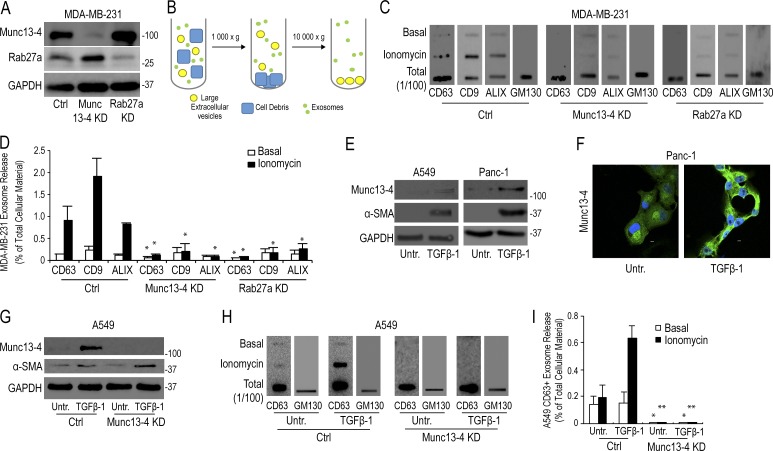
Cancer cells secrete copious amounts of exosomes, and elevated intracellular Ca is critical for tumor progression and metastasis, but the underlying cellular mechanisms are unknown. Munc13-4 is a Ca-dependent SNAP receptor- and Rab-binding protein required for Ca-dependent membrane fusion. Here we show that acute elevation of Ca in cancer cells stimulated a fivefold increase in CD63, CD9, and ALIX exosome release that was eliminated by Munc13-4 knockdown and not restored by Ca binding-deficient Munc13-4 mutants. Direct imaging of CD63-pHluorin exosome release confirmed its Munc13-4 dependence. Depletion of Munc13-4 in highly aggressive breast carcinoma MDA-MB-231 cells reduced the size of CD63 multivesicular bodies (MVBs), indicating a role for Munc13-4 in MVB maturation. Munc13-4 used a Rab11-dependent trafficking pathway to generate MVBs competent for exosome release. Membrane type 1 matrix metalloproteinase trafficking to MVBs by a Rab11-dependent pathway was also Munc13-4 dependent, and Munc13-4 depletion reduced extracellular matrix degradation. These studies identify a novel Ca- and Munc13-4-dependent pathway that underlies increased exosome release by cancer cells.

摘要

癌细胞大量分泌外泌体,细胞内 Ca 升高对于肿瘤的进展和转移至关重要,但潜在的细胞机制尚不清楚。Munc13-4 是一种 Ca 依赖性 SNAP 受体和 Rab 结合蛋白,对于 Ca 依赖性膜融合是必需的。在这里,我们发现癌细胞中 Ca 的急性升高刺激了 CD63、CD9 和 ALIX 外泌体释放增加了五倍,这一过程被 Munc13-4 敲低所消除,而不能被 Ca 结合缺陷型 Munc13-4 突变体所恢复。CD63-pHluorin 外泌体释放的直接成像证实了其对 Munc13-4 的依赖性。在高度侵袭性的乳腺癌 MDA-MB-231 细胞中耗尽 Munc13-4 减少了 CD63 多泡体 (MVB) 的大小,表明 Munc13-4 在 MVB 成熟中起作用。Munc13-4 使用 Rab11 依赖性转运途径来产生有能力释放外泌体的 MVB。通过 Rab11 依赖性途径转运到 MVB 的膜型 1 基质金属蛋白酶也依赖于 Munc13-4,Munc13-4 耗竭减少了细胞外基质的降解。这些研究确定了一种新的 Ca 和 Munc13-4 依赖性途径,该途径是癌细胞中外泌体释放增加的基础。
https://cdn.ncbi.nlm.nih.gov/pmc/blobs/e8b8/6080937/da069dc24dc4/JCB_201710132_Fig7.jpg
https://cdn.ncbi.nlm.nih.gov/pmc/blobs/e8b8/6080937/2949a7fc36df/JCB_201710132_Fig1.jpg
https://cdn.ncbi.nlm.nih.gov/pmc/blobs/e8b8/6080937/0b75b7194170/JCB_201710132_Fig2.jpg
https://cdn.ncbi.nlm.nih.gov/pmc/blobs/e8b8/6080937/71a9c6995ca8/JCB_201710132_Fig3.jpg
https://cdn.ncbi.nlm.nih.gov/pmc/blobs/e8b8/6080937/11e9047fdb34/JCB_201710132_Fig4.jpg
https://cdn.ncbi.nlm.nih.gov/pmc/blobs/e8b8/6080937/cf15a5296a69/JCB_201710132_Fig5.jpg
https://cdn.ncbi.nlm.nih.gov/pmc/blobs/e8b8/6080937/6ea0ff4d125c/JCB_201710132_Fig6.jpg
https://cdn.ncbi.nlm.nih.gov/pmc/blobs/e8b8/6080937/da069dc24dc4/JCB_201710132_Fig7.jpg
https://cdn.ncbi.nlm.nih.gov/pmc/blobs/e8b8/6080937/2949a7fc36df/JCB_201710132_Fig1.jpg
https://cdn.ncbi.nlm.nih.gov/pmc/blobs/e8b8/6080937/0b75b7194170/JCB_201710132_Fig2.jpg
https://cdn.ncbi.nlm.nih.gov/pmc/blobs/e8b8/6080937/71a9c6995ca8/JCB_201710132_Fig3.jpg
https://cdn.ncbi.nlm.nih.gov/pmc/blobs/e8b8/6080937/11e9047fdb34/JCB_201710132_Fig4.jpg
https://cdn.ncbi.nlm.nih.gov/pmc/blobs/e8b8/6080937/cf15a5296a69/JCB_201710132_Fig5.jpg
https://cdn.ncbi.nlm.nih.gov/pmc/blobs/e8b8/6080937/6ea0ff4d125c/JCB_201710132_Fig6.jpg
https://cdn.ncbi.nlm.nih.gov/pmc/blobs/e8b8/6080937/da069dc24dc4/JCB_201710132_Fig7.jpg

相似文献

1
A Ca-stimulated exosome release pathway in cancer cells is regulated by Munc13-4.钙离子刺激的癌细胞外泌体释放途径受 Munc13-4 调节。
J Cell Biol. 2018 Aug 6;217(8):2877-2890. doi: 10.1083/jcb.201710132. Epub 2018 Jun 21.
2
PIKfyve inhibition increases exosome release and induces secretory autophagy.PIKfyve抑制作用增加外泌体释放并诱导分泌性自噬。
Cell Mol Life Sci. 2016 Dec;73(24):4717-4737. doi: 10.1007/s00018-016-2309-8. Epub 2016 Jul 20.
3
Live-Imaging Detection of Multivesicular Body-Plasma Membrane Fusion and Exosome Release in Cultured Primary Neurons.在原代培养神经元中活细胞成像检测多泡体-质膜融合和外泌体释放
Methods Mol Biol. 2023;2683:213-220. doi: 10.1007/978-1-0716-3287-1_17.
4
CD63 Regulates Epstein-Barr Virus LMP1 Exosomal Packaging, Enhancement of Vesicle Production, and Noncanonical NF-κB Signaling.CD63调节爱泼斯坦-巴尔病毒潜伏膜蛋白1的外泌体包装、囊泡产生增强及非经典核因子κB信号传导。
J Virol. 2017 Feb 14;91(5). doi: 10.1128/JVI.02251-16. Print 2017 Mar 1.
5
Analysis of ESCRT functions in exosome biogenesis, composition and secretion highlights the heterogeneity of extracellular vesicles.对ESCRT在外泌体生物发生、组成和分泌中的功能分析突出了细胞外囊泡的异质性。
J Cell Sci. 2013 Dec 15;126(Pt 24):5553-65. doi: 10.1242/jcs.128868. Epub 2013 Oct 8.
6
Secretion modification region-derived peptide blocks exosome release and mediates cell cycle arrest in breast cancer cells.分泌修饰区域衍生肽可阻断乳腺癌细胞中外泌体的释放并介导细胞周期停滞。
Oncotarget. 2017 Feb 14;8(7):11302-11315. doi: 10.18632/oncotarget.14513.
7
Annexin A6 mediates calcium-dependent exosome secretion during plasma membrane repair.膜修复过程中,膜联蛋白 A6 介导钙离子依赖的外泌体分泌。
Elife. 2023 May 19;12:e86556. doi: 10.7554/eLife.86556.
8
A live cell reporter of exosome secretion and uptake reveals pathfinding behavior of migrating cells.活细胞外泌体分泌和摄取报告器揭示了迁移细胞的趋化行为。
Nat Commun. 2020 Apr 29;11(1):2092. doi: 10.1038/s41467-020-15747-2.
9
The Small GTPase Ral orchestrates MVB biogenesis and exosome secretion.小GTP酶Ral调控多泡体生物发生和外泌体分泌。
Small GTPases. 2018 Nov 2;9(6):445-451. doi: 10.1080/21541248.2016.1251378. Epub 2016 Nov 22.
10
Arf GTPase-Activating proteins ADAP1 and ARAP1 regulate incorporation of CD63 in multivesicular bodies.Arf GTPase 激活蛋白 ADAP1 和 ARAP1 调节 CD63 在内体小体中的掺入。
Biol Open. 2024 May 15;13(5). doi: 10.1242/bio.060338. Epub 2024 May 10.

引用本文的文献

1
EGF, TNF-α, and Hypoxia Preconditioning Enhances the Production and Therapeutic Effects of Mesenchymal Stem Cell-Derived Extracellular Vesicles for Regenerative Medicine.表皮生长因子、肿瘤坏死因子-α与缺氧预处理增强间充质干细胞衍生细胞外囊泡在再生医学中的产生及治疗效果
ACS Biomater Sci Eng. 2025 Sep 8;11(9):5572-5585. doi: 10.1021/acsbiomaterials.5c00898. Epub 2025 Aug 27.
2
Mechanical regulation of extracellular vesicle activity during tumour progression.肿瘤进展过程中细胞外囊泡活性的机械调节
Nat Biomed Eng. 2025 Aug 6. doi: 10.1038/s41551-025-01446-0.
3
Phosphodiesterase 1A physically interacts with YTHDF2 and reinforces the progression of non-small cell lung cancer.

本文引用的文献

1
Effects of Inhibiting VPS4 Support a General Role for ESCRTs in Extracellular Vesicle Biogenesis.抑制 VPS4 作用的效果支持 ESCRTs 在细胞外囊泡生物发生中的普遍作用。
Biophys J. 2017 Sep 19;113(6):1342-1352. doi: 10.1016/j.bpj.2017.05.032. Epub 2017 Jun 16.
2
Munc13-4 functions as a Ca sensor for homotypic secretory granule fusion to generate endosomal exocytic vacuoles.Munc13-4作为一种钙离子传感器,用于同型分泌颗粒融合以产生内体胞吐泡。
Mol Biol Cell. 2017 Mar 15;28(6):792-808. doi: 10.1091/mbc.E16-08-0617. Epub 2017 Jan 18.
3
Extracellular Vesicles in Cancer: Cell-to-Cell Mediators of Metastasis.
磷酸二酯酶1A与YTHDF2发生物理相互作用并促进非小细胞肺癌的进展。
Elife. 2025 Jul 24;13:RP98903. doi: 10.7554/eLife.98903.
4
Molecular Mechanisms of Extracellular Vesicle Biogenesis and Their Impact on the Design of Custom EVs.细胞外囊泡生物发生的分子机制及其对定制细胞外囊泡设计的影响
Adv Healthc Mater. 2025 Sep;14(23):e2501349. doi: 10.1002/adhm.202501349. Epub 2025 Jul 8.
5
A Molecular Perspective on the Intricate Interplay Among Exosomes, Bioenergetic Metabolism, and the Pathogenesis of Diabetic Cardiomyopathy.关于外泌体、生物能量代谢与糖尿病性心肌病发病机制之间复杂相互作用的分子视角
J Cardiovasc Transl Res. 2025 Jul 7. doi: 10.1007/s12265-025-10655-6.
6
Programmed Cell Death Protein 10 (PDCD10) Regulates Vesicle Trafficking and Contributes to the Progression of Clear Cell Renal Cell Carcinoma.程序性细胞死亡蛋白10(PDCD10)调节囊泡运输并促进透明细胞肾细胞癌的进展。
J Extracell Vesicles. 2025 Jun;14(6):e70108. doi: 10.1002/jev2.70108.
7
The biology of exosomes and exosomal non-coding RNAs in cardiovascular diseases.外泌体及外泌体非编码RNA在心血管疾病中的生物学特性
Front Pharmacol. 2025 May 26;16:1529375. doi: 10.3389/fphar.2025.1529375. eCollection 2025.
8
Precision exosome engineering for neurological therapeutics: molecular mechanisms and targeted strategies.用于神经治疗的精准外泌体工程:分子机制与靶向策略
Mol Biol Rep. 2025 May 30;52(1):518. doi: 10.1007/s11033-025-10639-4.
9
Programmable production of bioactive extracellular vesicles in vivo to treat myocardial infarction.体内可编程生产生物活性细胞外囊泡用于治疗心肌梗死。
Nat Commun. 2025 Mar 25;16(1):2924. doi: 10.1038/s41467-025-58260-0.
10
Amlodipine, an L-type Ca2+ channel inhibitor, regulates release of extracellular vesicles from tumor cells.氨氯地平,一种L型钙离子通道抑制剂,可调节肿瘤细胞外泌体的释放。
Carcinogenesis. 2025 Apr 3;46(2). doi: 10.1093/carcin/bgaf016.
癌症中的细胞外囊泡:转移的细胞间介质
Cancer Cell. 2016 Dec 12;30(6):836-848. doi: 10.1016/j.ccell.2016.10.009.
4
Tetherin is an exosomal tether.束缚素是一种外泌体束缚蛋白。
Elife. 2016 Sep 22;5:e17180. doi: 10.7554/eLife.17180.
5
Y-box protein 1 is required to sort microRNAs into exosomes in cells and in a cell-free reaction.Y盒蛋白1是细胞内和无细胞反应中将微小RNA分选到外泌体所必需的。
Elife. 2016 Aug 25;5:e19276. doi: 10.7554/eLife.19276.
6
Cortactin promotes exosome secretion by controlling branched actin dynamics.皮层肌动蛋白通过控制分支状肌动蛋白动力学促进外泌体分泌。
J Cell Biol. 2016 Jul 18;214(2):197-213. doi: 10.1083/jcb.201601025. Epub 2016 Jul 11.
7
Introduction to Extracellular Vesicles: Biogenesis, RNA Cargo Selection, Content, Release, and Uptake.细胞外囊泡简介:生物发生、RNA 货物选择、内容物、释放和摄取
Cell Mol Neurobiol. 2016 Apr;36(3):301-12. doi: 10.1007/s10571-016-0366-z. Epub 2016 Apr 6.
8
The biology and function of exosomes in cancer.外泌体在癌症中的生物学特性与功能
J Clin Invest. 2016 Apr 1;126(4):1208-15. doi: 10.1172/JCI81135.
9
The emerging roles of exosomes in tumor-stroma interaction.外泌体在肿瘤-基质相互作用中的新兴作用。
J Cancer Res Clin Oncol. 2016 Sep;142(9):1897-907. doi: 10.1007/s00432-016-2145-0. Epub 2016 Mar 17.
10
Communication by Extracellular Vesicles: Where We Are and Where We Need to Go.细胞外囊泡通讯:我们的现状与未来展望。
Cell. 2016 Mar 10;164(6):1226-1232. doi: 10.1016/j.cell.2016.01.043.