Department of Cell and Developmental Biology, Vanderbilt University School of Medicine, Nashville, TN, USA.
Program in Cancer Biology, Vanderbilt University School of Medicine, Nashville, TN, USA.
Nat Commun. 2020 Apr 29;11(1):2092. doi: 10.1038/s41467-020-15747-2.
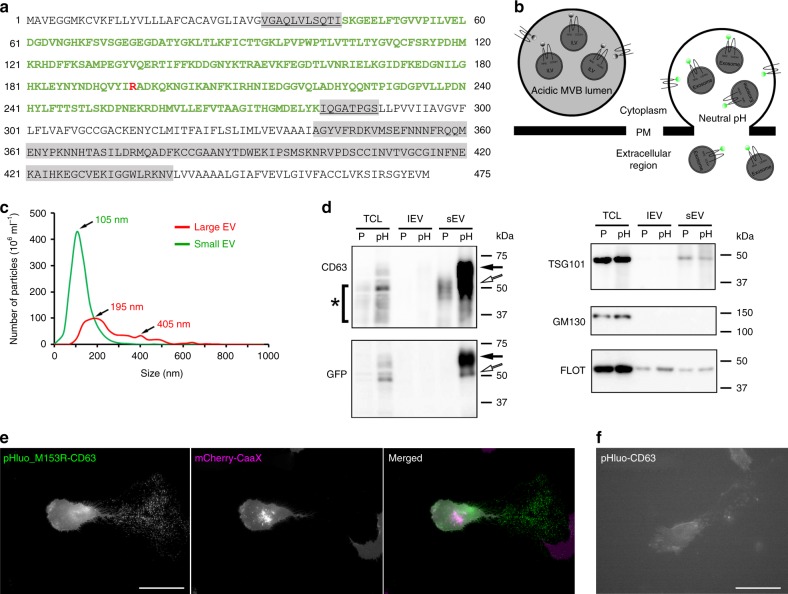
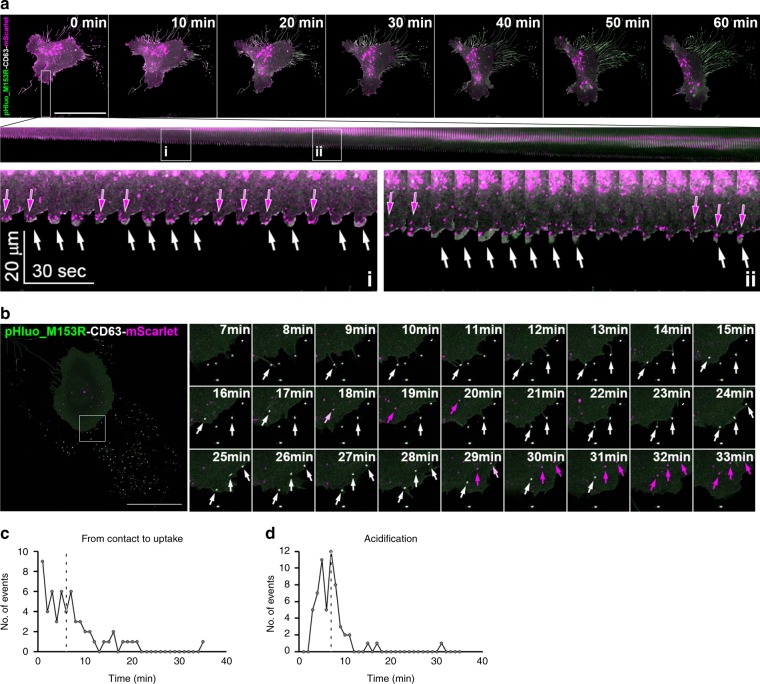
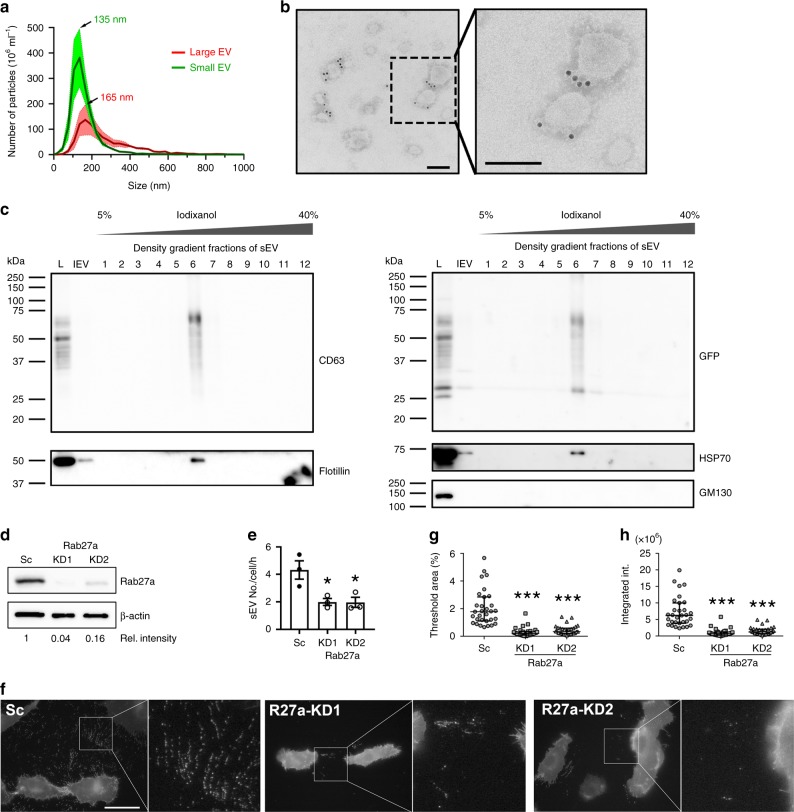
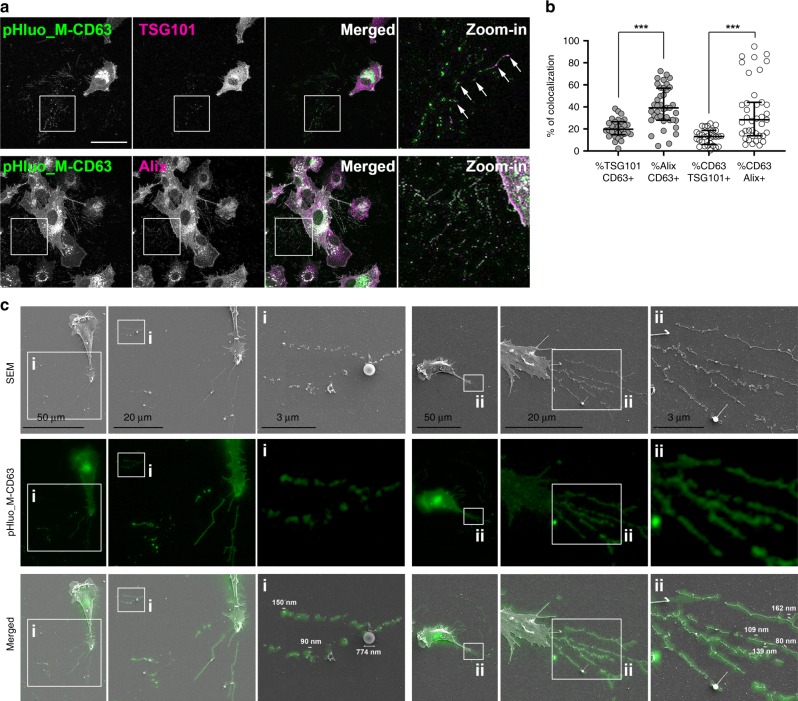
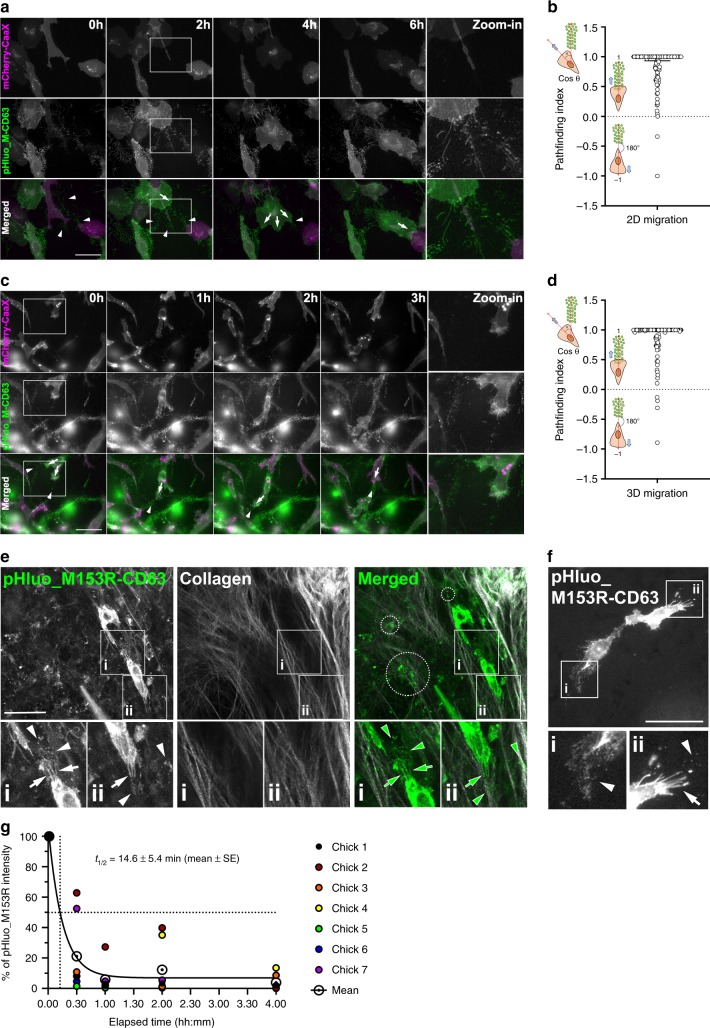
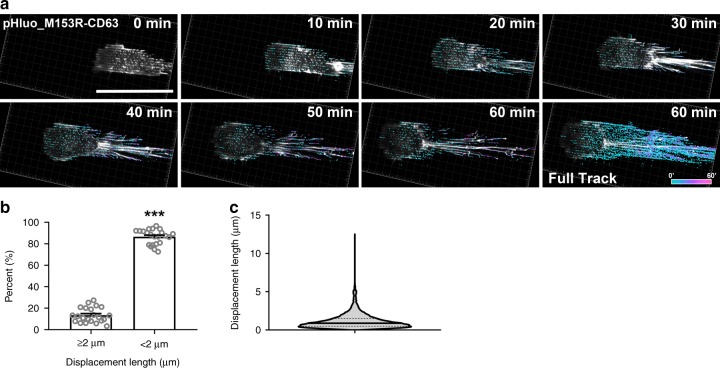
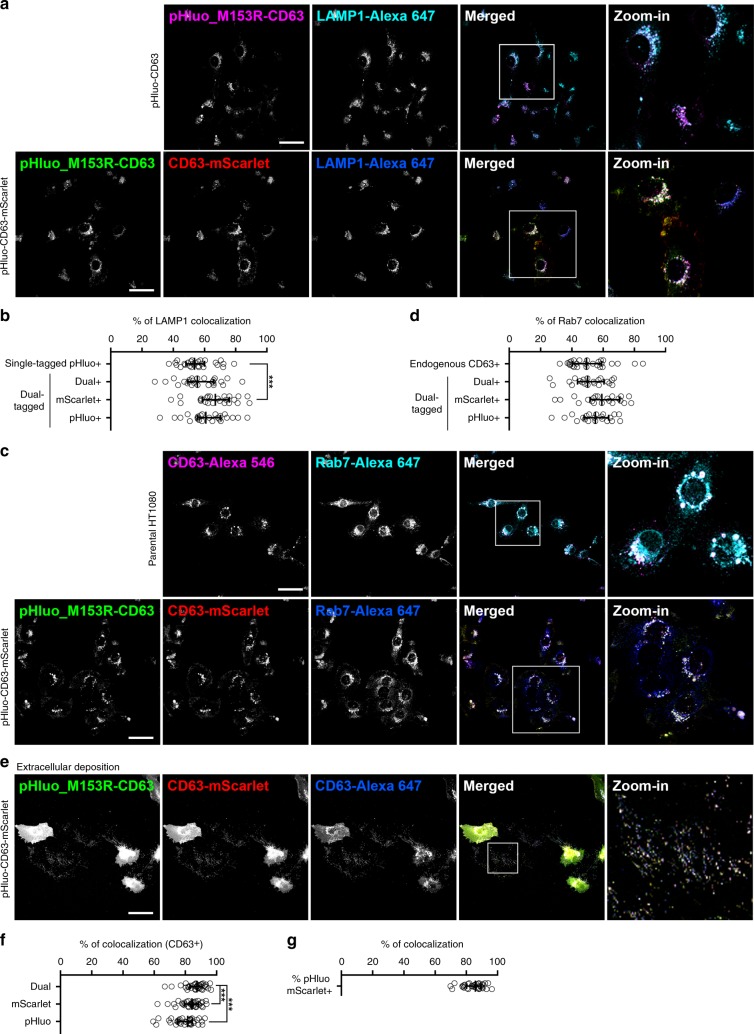
Small extracellular vesicles called exosomes affect multiple autocrine and paracrine cellular phenotypes. Understanding the function of exosomes requires a variety of tools, including live imaging. Our previous live-cell reporter, pHluorin-CD63, allows dynamic subcellular monitoring of exosome secretion in migrating and spreading cells. However, dim fluorescence and the inability to make stably-expressing cell lines limit its use. We incorporated a stabilizing mutation in the pHluorin moiety, M153R, which now exhibits higher, stable expression in cells and superior monitoring of exosome secretion. Using this improved construct, we visualize secreted exosomes in 3D culture and in vivo and identify a role for exosomes in promoting leader-follower behavior in 2D and 3D migration. Incorporating an additional non-pH-sensitive red fluorescent tag allows visualization of the exosome lifecycle, including multivesicular body (MVB) trafficking, MVB fusion, exosome uptake and endosome acidification. This reporter will be a useful tool for understanding both autocrine and paracrine roles of exosomes.
小细胞外囊泡,也被称为外泌体,会影响多种细胞的自分泌和旁分泌表型。要理解外泌体的功能,需要使用多种工具,包括活细胞成像。我们之前的活细胞报告基因 pHluorin-CD63 可以动态监测迁移和扩展细胞中外泌体的分泌情况。然而,其荧光较弱且难以构建稳定表达的细胞系,限制了它的使用。我们在 pHluorin 部分引入了一个稳定突变 M153R,使其在细胞中的表达更高、更稳定,并且能更好地监测外泌体的分泌。使用这种改良的构建体,我们可以在 3D 培养和体内观察到分泌的外泌体,并确定外泌体在促进 2D 和 3D 迁移中的领导-跟随行为中的作用。引入另一个非 pH 敏感的红色荧光标签可以可视化外泌体的生命周期,包括多泡体 (MVB) 转运、MVB 融合、外泌体摄取和内体酸化。该报告基因将成为理解外泌体自分泌和旁分泌作用的有用工具。