Ludwig Boltzmann Institute for Experimental and Clinical Traumatology, Trauma Research Center of AUVA, Vienna, Austria.
Department of Anaesthesia, General Intensive Care and Pain Management, Medical University of Vienna, Vienna, Austria.
Theranostics. 2018 May 23;8(12):3348-3365. doi: 10.7150/thno.23453. eCollection 2018.
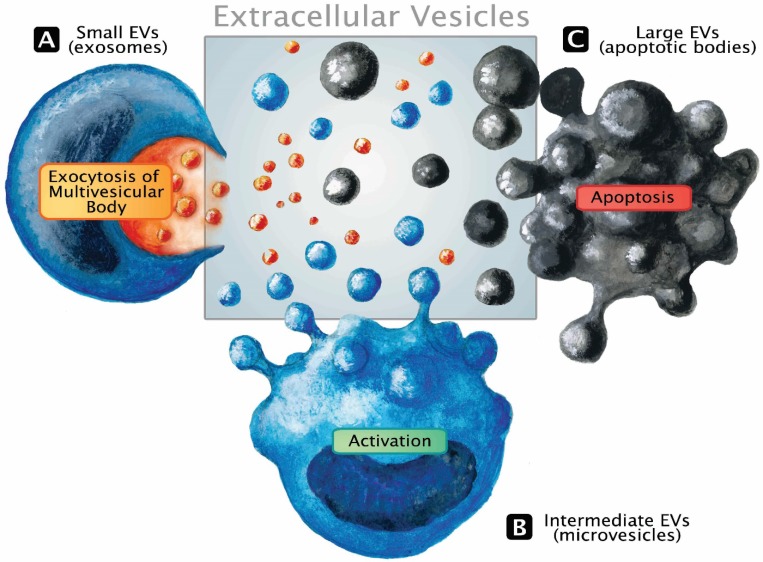
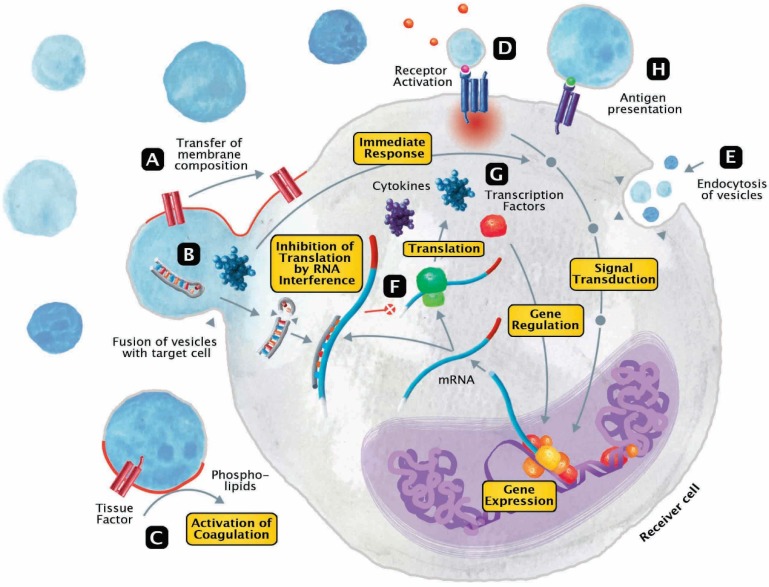
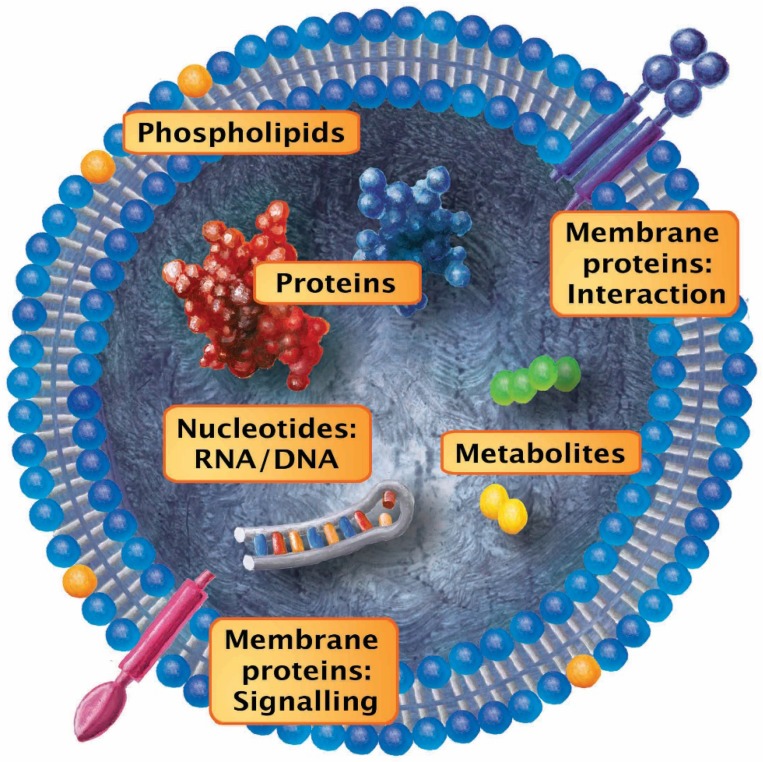
Sepsis is defined as life-threatening organ dysfunction caused by a dysregulated host response to infection. It remains a highly lethal condition in which current tools for early diagnosis and therapeutic decision-making are far from ideal. Extracellular vesicles (EVs), 30 nm to several micrometers in size, are released from cells upon activation and apoptosis and express membrane epitopes specific for their parental cells. Since their discovery two decades ago, their role as biomarkers and mediators in various diseases has been intensively studied. However, their potential importance in the sepsis syndrome has gained attention only recently. Sepsis and EVs are both complex fields in which standardization has long been overdue. In this review, several topics are discussed. First, we review current studies on EVs in septic patients with emphasis on their variable quality and clinical utility. Second, we discuss the diagnostic and therapeutic potential of EVs as well as their role as facilitators of cell communication via micro RNA and the relevance of micro-organism-derived EVs. Third, we give an overview over the potential beneficial but also detrimental roles of EVs in sepsis. Finally, we focus on the role of EVs in selected intensive care scenarios such as coagulopathy, mechanical ventilation and blood transfusion. Overall, the prospect for EV use in septic patients is bright, ranging from rapid and precise (point-of-care) diagnostics, prevention of harmful iatrogenic interventions, to using EVs as guides of individualized therapy. Before the above is achieved, however, the EV research field requires reliable standardization of the current methods and development of new analytical procedures that can close the existing technological gaps.
脓毒症是指由宿主对感染的失调反应引起的危及生命的器官功能障碍。它仍然是一种高度致命的疾病,目前用于早期诊断和治疗决策的工具远非理想。细胞外囊泡(EVs)大小为 30nm 至数微米,在细胞激活和凋亡时释放,并表达其亲代细胞特有的膜表位。自二十年前发现以来,它们作为各种疾病的生物标志物和介质的作用已经得到了深入研究。然而,它们在脓毒症综合征中的潜在重要性最近才引起关注。脓毒症和 EVs 都是复杂的领域,其中标准化早已逾期。在这篇综述中,讨论了几个主题。首先,我们回顾了目前关于脓毒症患者 EVs 的研究,重点是它们的可变质量和临床实用性。其次,我们讨论了 EVs 的诊断和治疗潜力以及它们作为微 RNA 介导细胞通讯的促进者的作用,以及微生物衍生的 EVs 的相关性。第三,我们概述了 EVs 在脓毒症中的潜在有益和有害作用。最后,我们重点介绍了 EVs 在选定的重症监护场景中的作用,如凝血功能障碍、机械通气和输血。总的来说,EV 在脓毒症患者中的应用前景光明,从快速、精确的(床边)诊断、预防有害的医源性干预,到使用 EV 作为个体化治疗的指南。然而,在实现上述目标之前,EV 研究领域需要可靠的标准化当前方法和开发新的分析程序,以缩小现有技术差距。