Burgelman Marlies, Vandendriessche Charysse, Vandenbroucke Roosmarijn E
VIB Center for Inflammation Research, 9052 Ghent, Belgium.
Department of Biomedical Molecular Biology, Ghent University, 9000 Ghent, Belgium.
Pharmaceuticals (Basel). 2021 Aug 23;14(8):829. doi: 10.3390/ph14080829.
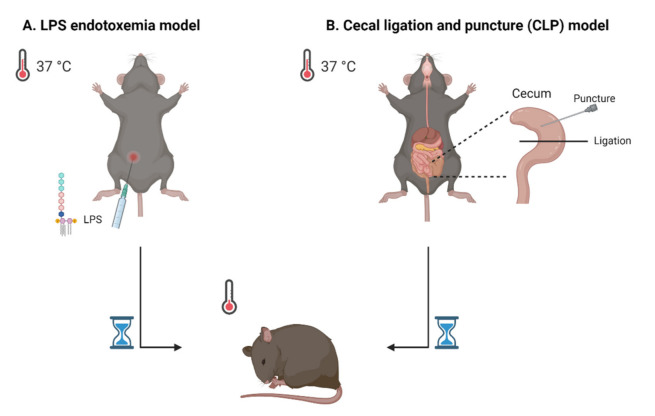
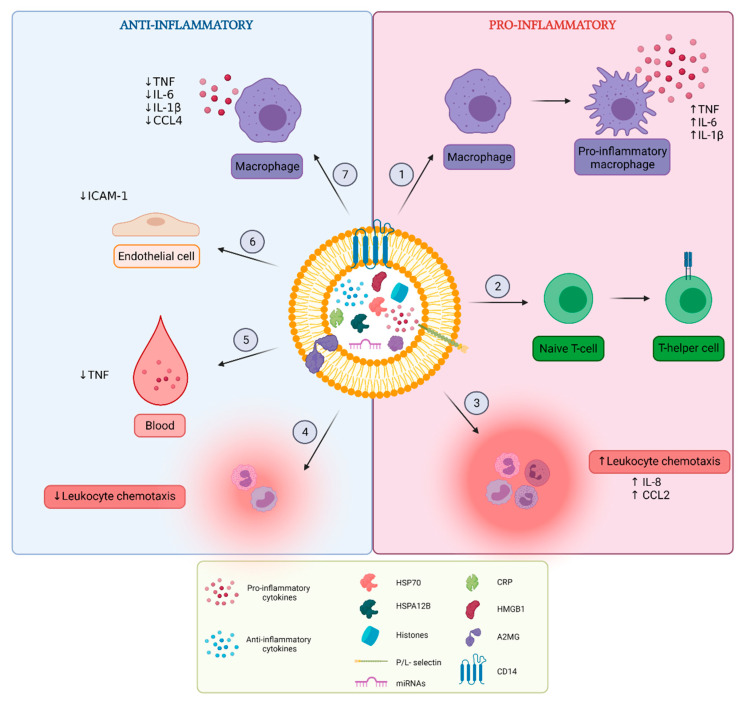
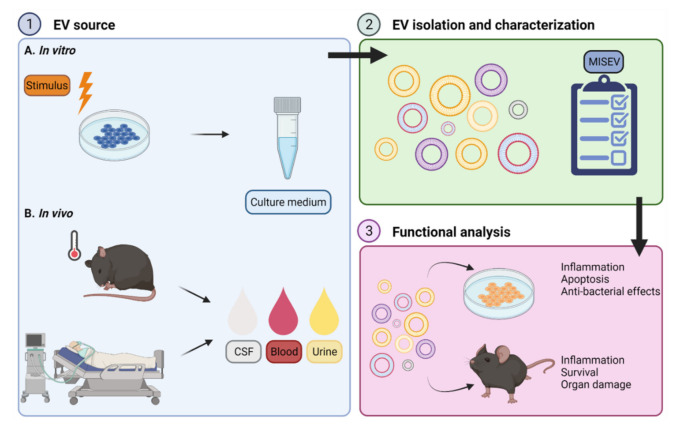
Sepsis is defined as a life-threatening organ dysfunction caused by a dysregulated host response to an infection. Several studies on mouse and patient sepsis samples have revealed that the level of extracellular vesicles (EVs) in the blood is altered compared to healthy controls, but the different functions of EVs during sepsis pathology are not yet completely understood. Sepsis EVs are described as modulators of inflammation, lymphocyte apoptosis, coagulation and organ dysfunction. Furthermore, EVs can influence clinical outcome and it is suggested that EVs can predict survival. Both detrimental and beneficial roles for EVs have been described in sepsis, depending on the EV cellular source and the disease phase during which the EVs are studied. In this review, we summarize the current knowledge of EV sources and functions during sepsis pathology based on in vitro and mouse models, as well as patient samples.
脓毒症被定义为由宿主对感染的失调反应引起的危及生命的器官功能障碍。多项针对小鼠和患者脓毒症样本的研究表明,与健康对照相比,血液中细胞外囊泡(EVs)的水平发生了改变,但脓毒症病理过程中EVs的不同功能尚未完全明了。脓毒症EVs被描述为炎症、淋巴细胞凋亡、凝血和器官功能障碍的调节因子。此外,EVs可影响临床结局,有人提出EVs可预测生存率。在脓毒症中,根据EV的细胞来源以及研究EVs时的疾病阶段,已描述了EVs的有害和有益作用。在本综述中,我们基于体外和小鼠模型以及患者样本,总结了脓毒症病理过程中EV来源和功能的当前知识。