Division of Psychiatry and Applied Psychology, University of Nottingham, Nottingham, UK.
Sir Peter Mansfield Imaging Centre, University of Nottingham, Nottingham, UK.
Mol Psychiatry. 2020 Apr;25(4):873-882. doi: 10.1038/s41380-018-0104-7. Epub 2018 Jun 22.
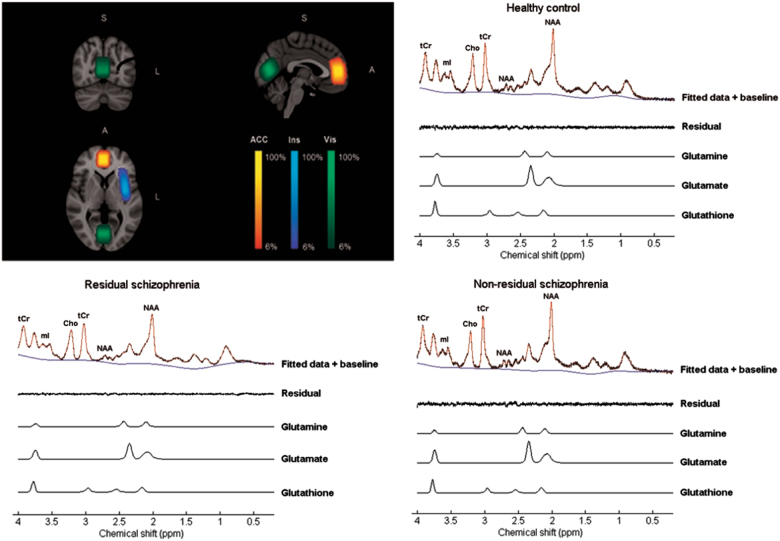
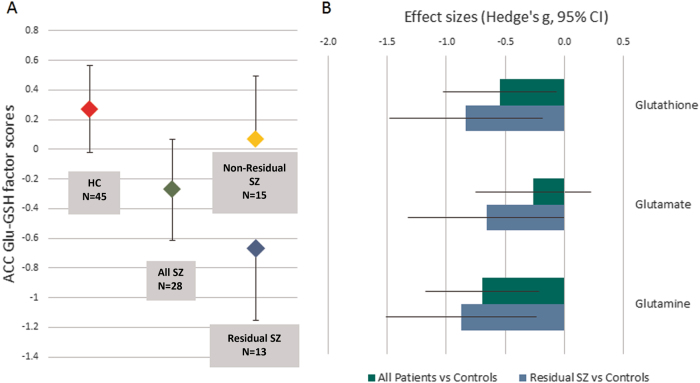
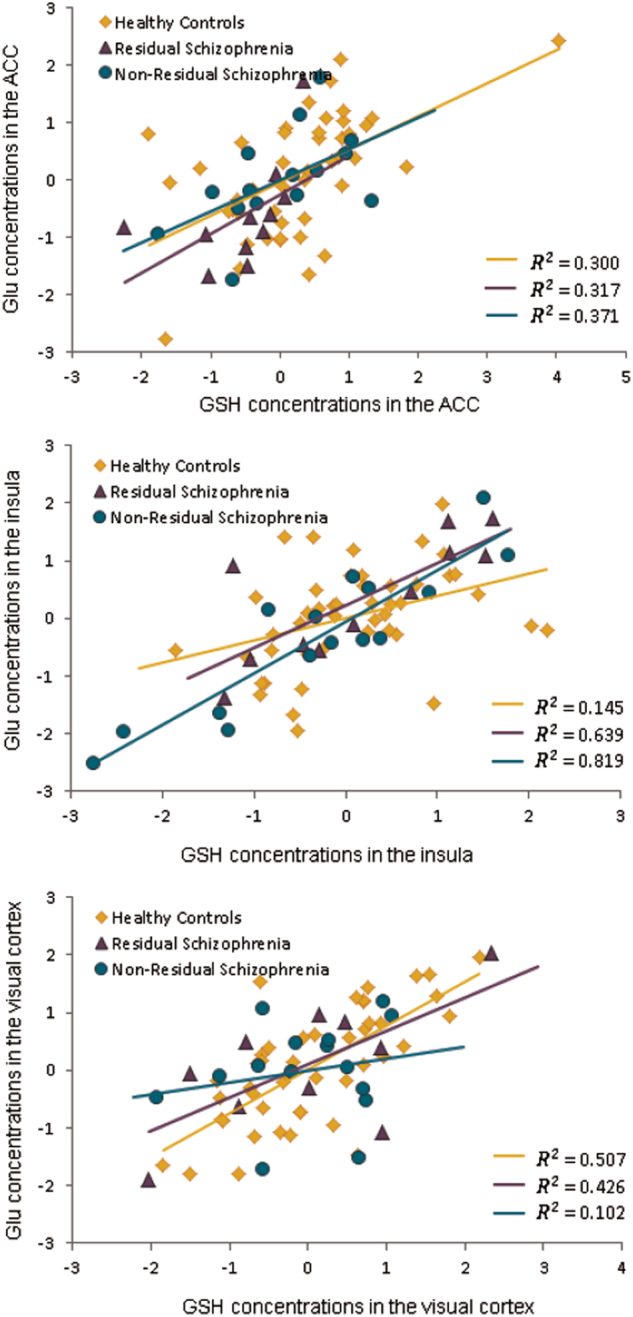
In schizophrenia, abnormal neural metabolite concentrations may arise from cortical damage following neuroinflammatory processes implicated in acute episodes. Inflammation is associated with increased glutamate, whereas the antioxidant glutathione may protect against inflammation-induced oxidative stress. We hypothesized that patients with stable schizophrenia would exhibit a reduction in glutathione, glutamate, and/or glutamine in the cerebral cortex, consistent with a post-inflammatory response, and that this reduction would be most marked in patients with "residual schizophrenia", in whom an early stage with positive psychotic symptoms has progressed to a late stage characterized by long-term negative symptoms and impairments. We recruited 28 patients with stable schizophrenia and 45 healthy participants matched for age, gender, and parental socio-economic status. We measured glutathione, glutamate and glutamine concentrations in the anterior cingulate cortex (ACC), left insula, and visual cortex using 7T proton magnetic resonance spectroscopy (MRS). Glutathione and glutamate were significantly correlated in all three voxels. Glutamine concentrations across the three voxels were significantly correlated with each other. Principal components analysis (PCA) produced three clear components: an ACC glutathione-glutamate component; an insula-visual glutathione-glutamate component; and a glutamine component. Patients with stable schizophrenia had significantly lower scores on the ACC glutathione-glutamate component, an effect almost entirely leveraged by the sub-group of patients with residual schizophrenia. All three metabolite concentration values in the ACC were significantly reduced in this group. These findings are consistent with the hypothesis that excitotoxicity during the acute phase of illness leads to reduced glutathione and glutamate in the residual phase of the illness.
在精神分裂症中,异常的神经代谢物浓度可能源于神经炎症过程引起的皮质损伤,而神经炎症与谷氨酸的增加有关,而抗氧化剂谷胱甘肽可能有助于防止炎症引起的氧化应激。我们假设,稳定期精神分裂症患者的大脑皮质中谷胱甘肽、谷氨酸和/或谷氨酰胺减少,这与炎症后的反应一致,而且这种减少在“残留型精神分裂症”患者中最为明显,这些患者的早期有阳性精神病症状,进展到晚期,表现为长期的阴性症状和功能障碍。我们招募了 28 名稳定期精神分裂症患者和 45 名年龄、性别和父母社会经济地位相匹配的健康参与者。我们使用 7T 质子磁共振波谱(MRS)测量了前扣带皮层(ACC)、左侧岛叶和视觉皮层中的谷胱甘肽、谷氨酸和谷氨酰胺浓度。在所有三个体素中,谷胱甘肽和谷氨酸均显著相关。三个体素中的谷氨酰胺浓度彼此显著相关。主成分分析(PCA)产生了三个清晰的成分:ACC 谷胱甘肽-谷氨酸成分;岛叶-视觉谷胱甘肽-谷氨酸成分;和谷氨酰胺成分。稳定期精神分裂症患者在 ACC 谷胱甘肽-谷氨酸成分上的得分明显较低,这种效应几乎完全由残留型精神分裂症患者亚组承担。该亚组的 ACC 中所有三种代谢物浓度均显著降低。这些发现与以下假设一致,即在疾病的急性期,兴奋性毒性导致疾病残留期的谷胱甘肽和谷氨酸减少。