Maksym Rafał P, Ghirardo Andrea, Zhang Wei, von Saint Paul Veronica, Lange Birgit, Geist Birgit, Hajirezaei Mohammad-Reza, Schnitzler Jörg-Peter, Schäffner Anton R
Institute of Biochemical Plant Pathology, Helmholtz Zentrum München, Munich, Germany.
Research Unit for Environmental Simulation, Helmholtz Zentrum München, Munich, Germany.
Front Plant Sci. 2018 Jun 8;9:766. doi: 10.3389/fpls.2018.00766. eCollection 2018.
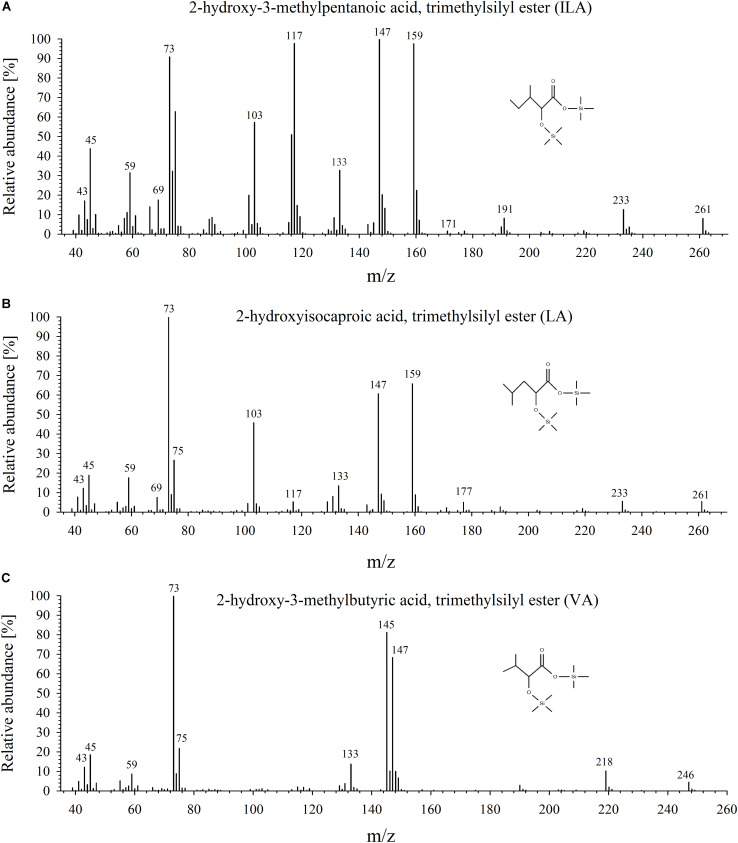
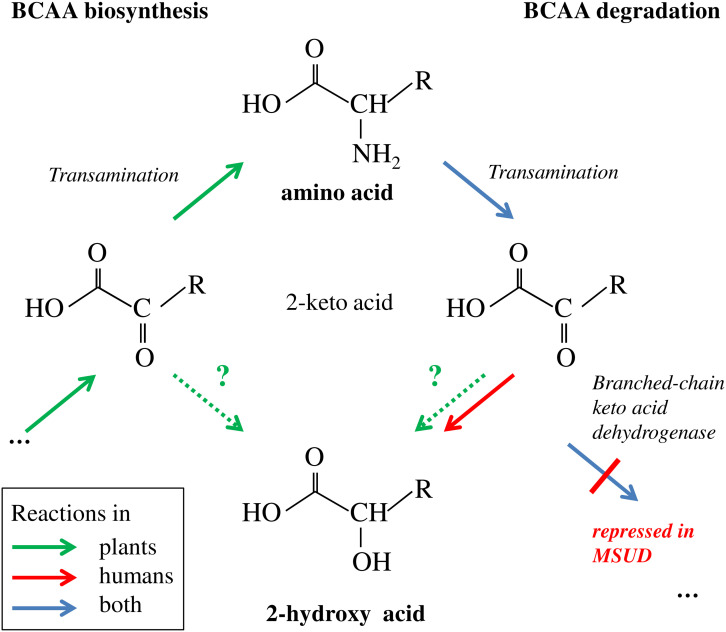
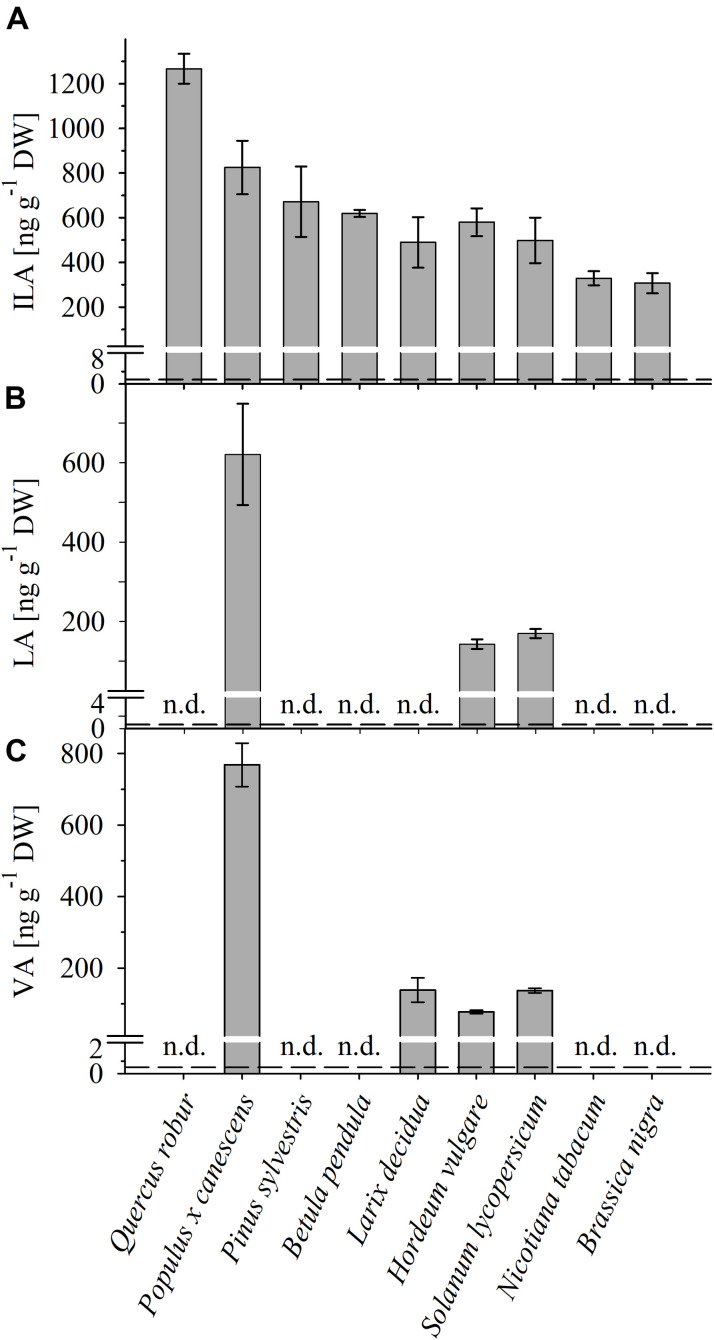
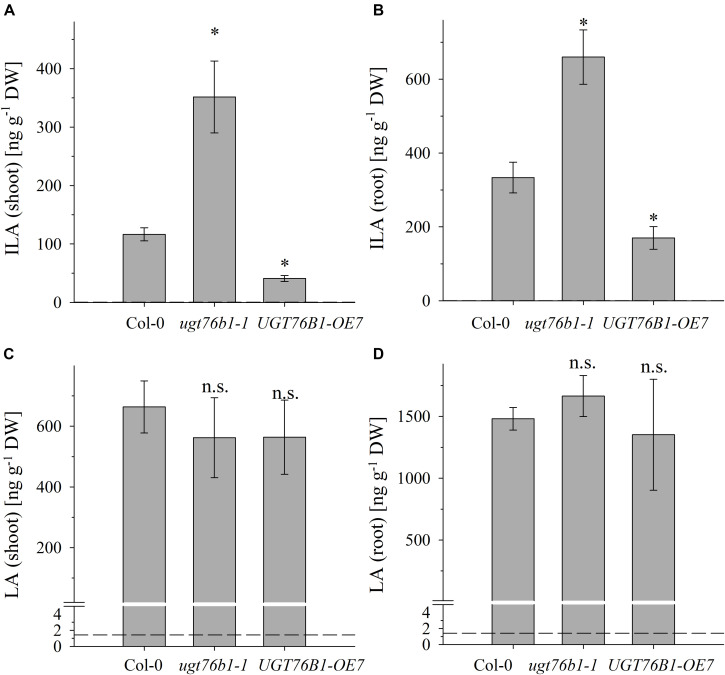
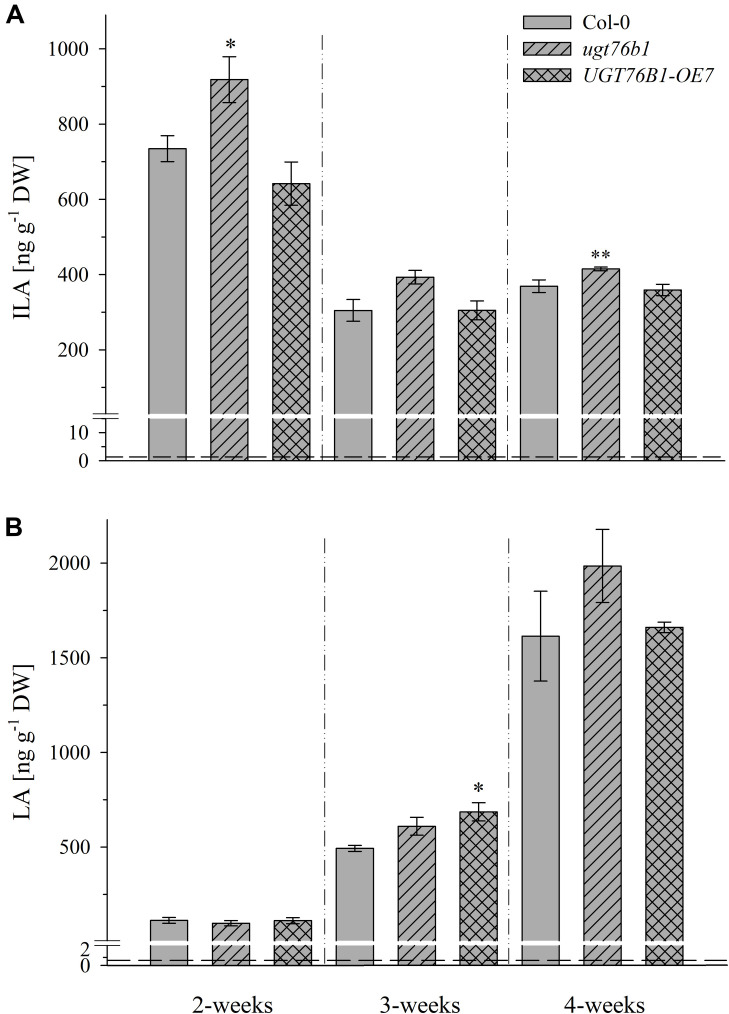
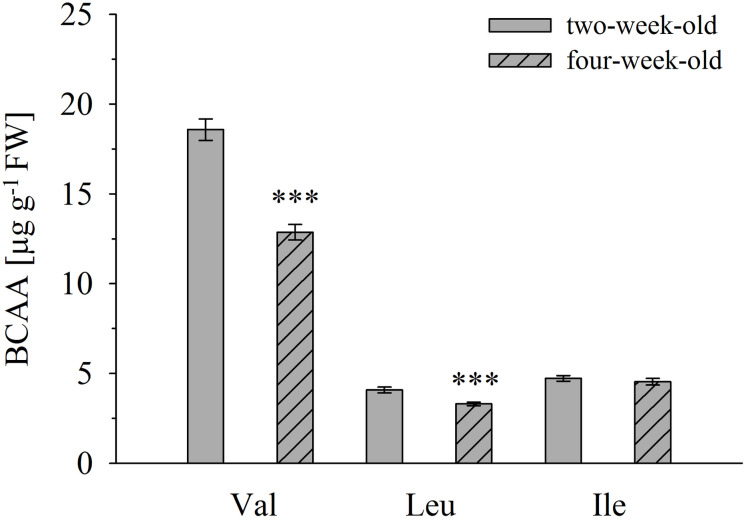
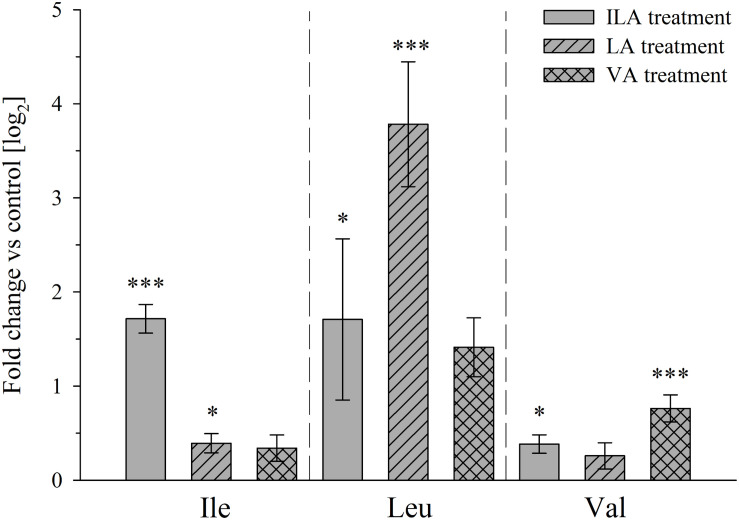
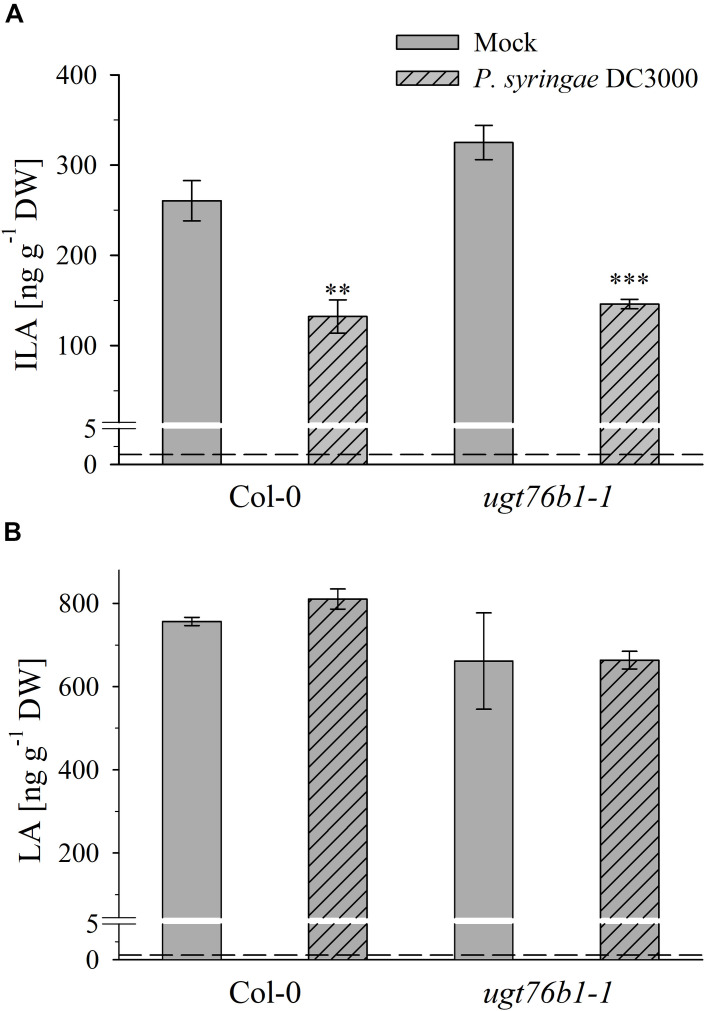
The branched-chain amino acid (BCAA) related 2-hydroxy carboxylic acid isoleucic acid (ILA) enhances salicylic acid-mediated pathogen defense in . ILA has been identified in as its glucose conjugate correlated with the activity of the small-molecule glucosyltransferase UGT76B1, which can glucosylate both salicylic acid and ILA . However, endogenous levels of the ILA aglycon have not yet been determined . To quantify ILA as well as the related leucic acid (LA) and valic acid (VA) in plant extracts, a sensitive method based on the derivatization of small carboxylic acids by silylation and gas chromatography-mass spectrometric analysis was developed. ILA was present in all species tested including several monocotyledonous and dicotyledonous plants as well as broadleaf and coniferous trees, whereas LA and VA were only detectable in a few species. In both ILA and LA were found. However, their levels varied during plant growth and in root vs. leaves. ILA levels were higher in 2-week-old leaves and decreased in older plants, whereas LA exhibited a reverted accumulation pattern. Roots displayed higher ILA and LA levels compared to leaves. ILA was inversely related to expression level indicating that UGT76B1 glucosylates ILA . In contrast, LA was not affected by the expression of To address the relation of both 2-hydroxy acids to plant defense, we studied ILA and LA levels upon infection by LA abundance remained unaffected, whereas ILA was reduced. This change suggests an ILA-related attenuation of the salicylic acid response. Collectively, the BCAA-related ILA and LA differentially accumulated in , supporting a specific role and regulation of the defense-modulating small-molecule ILA among these 2-hydroxy acids. The new sensitive method will pave the way to further unravel their role in plants.
支链氨基酸(BCAA)相关的2-羟基羧酸异亮氨酸(ILA)可增强水杨酸介导的病原体防御。ILA在[具体植物名称未给出]中被鉴定为其葡萄糖共轭物,与小分子葡糖基转移酶UGT76B1的活性相关,该酶可使水杨酸和ILA葡糖基化。然而,ILA苷元的内源性水平尚未确定。为了定量植物提取物中的ILA以及相关的亮氨酸(LA)和缬氨酸(VA),开发了一种基于小羧酸硅烷化衍生化和气相色谱-质谱分析的灵敏方法。ILA存在于所有测试物种中,包括几种单子叶和双子叶植物以及阔叶树和针叶树,而LA和VA仅在少数物种中可检测到。在[具体植物名称未给出]中同时发现了ILA和LA。然而,它们的水平在植物生长过程中以及根与叶中有所不同。ILA水平在2周龄叶片中较高,在较老的植物中降低,而LA表现出相反的积累模式。与叶片相比,根中ILA和LA水平更高。ILA与[具体基因名称未给出]表达水平呈负相关,表明UGT76B1使ILA葡糖基化。相比之下,LA不受[具体基因名称未给出]表达的影响。为了研究这两种2-羟基酸与植物防御的关系,我们研究了感染[具体病原体名称未给出]后ILA和LA的水平。LA丰度未受影响,而ILA减少。这种变化表明ILA相关的水杨酸反应减弱。总体而言,BCAA相关的ILA和LA在[具体植物名称未给出]中差异积累,支持了这种防御调节小分子ILA在这些2-羟基酸中的特定作用和调控。这种新的灵敏方法将为进一步揭示它们在植物中的作用铺平道路。