Psychology Services Limited, PO Box 1735, Croydon, CR97AE, UK.
Reykjavik University, Reykjavik, Iceland.
BMC Psychiatry. 2018 Jun 25;18(1):210. doi: 10.1186/s12888-018-1792-x.
Attention-deficit hyperactivity disorder (ADHD) is highly prevalent amongst prison inmates and the criminal justice system (CJS) likely bears considerable costs for offenders with ADHD. We aimed to examine the relationship between ADHD and health-related quality of life (HRQoL) and quality-adjusted life years (QALY) amongst imprisoned adults; and to estimate the annual expenditure associated with ADHD status in prison.
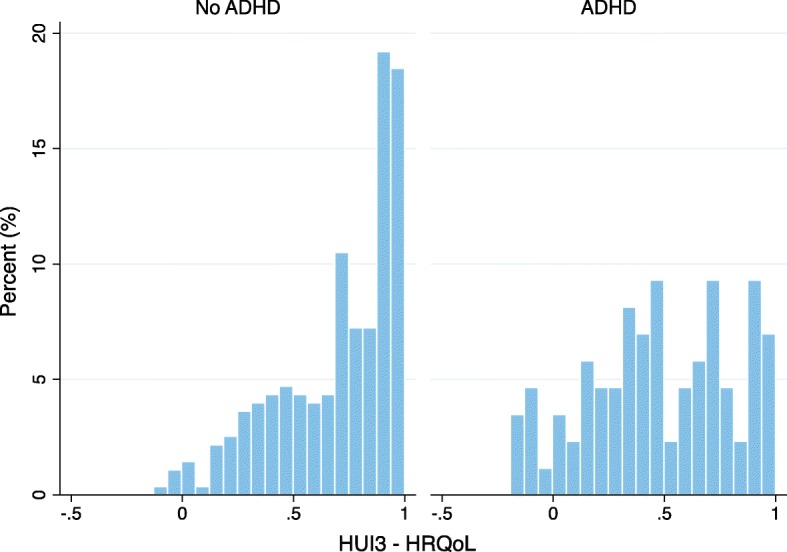
An observational study was performed in 2011-2013, at Porterfield Prison, Inverness, United Kingdom (UK). The all male sample included 390 adult prison inmates with capacity to consent and no history of moderate or severe intellectual disability. Participants were interviewed using the Diagnostic Interview for ADHD in Adults 2.0. The Health Utilities Index Mark 3 (HUI3) was used to measure health status, and to calculate attribute specific HRQoL scores and QALY. Health service utilisation was obtained through inspection of medical prison records. Inmates with ADHD were compared with inmates without ADHD.
Inmates with ADHD had significantly lower QALYs, with a clinically significant adjusted difference of 0.13. Psychiatric co-morbidity accounted for the variation of ADHD on the HUI3 emotion domain only. Medical costs for inmates with ADHD were significantly higher; and behaviour-related prison costs were similar to prisoners without ADHD, reflecting a low frequency of recorded critical incidents.
ADHD may directly contribute to adverse health and quality of life through cognitive and executive function deficits, and co-morbid disorders. The extrapolation of conservative cost estimates suggests that the financial burden of medical and behavior-related prison care for inmates with ADHD in the UK is approximately £11.7 million annually. The reported cost estimates are conservative as there is great variability in recorded critical incidents in prisons. In turn, for some prison establishments the prison care costs associated with prisoners with ADHD may be considerably greater.
注意缺陷多动障碍(ADHD)在监狱囚犯中发病率很高,罪犯的犯罪司法系统(CJS)可能要承担相当大的成本。我们旨在研究 ADHD 与囚犯成年人的健康相关生活质量(HRQoL)和质量调整生命年(QALY)之间的关系;并估计与监狱中 ADHD 状态相关的年度支出。
在 2011-2013 年,在英国因弗内斯的波特菲尔德监狱进行了一项观察性研究。该样本全部为有能力同意且无中度或重度智力障碍史的成年男性囚犯。使用成人 ADHD 诊断访谈 2.0 对参与者进行访谈。使用健康效用指数标记 3(HUI3)来衡量健康状况,并计算特定属性的 HRQoL 评分和 QALY。通过检查医疗监狱记录来获取卫生服务利用情况。将 ADHD 囚犯与无 ADHD 囚犯进行比较。
ADHD 囚犯的 QALY 明显较低,调整后的差异具有临床意义,为 0.13。精神病共病仅解释了 ADHD 对 HUI3 情绪域的影响。ADHD 囚犯的医疗费用明显更高;而与无 ADHD 囚犯的行为相关的监狱费用相似,反映出记录的重大事件的频率较低。
ADHD 可能通过认知和执行功能缺陷以及合并症直接导致不良健康和生活质量。对保守成本估计的推断表明,英国 ADHD 囚犯的医疗和行为相关监狱护理的财务负担每年约为 1170 万英镑。报告的成本估计是保守的,因为监狱中记录的重大事件存在很大的变异性。反过来,对于一些监狱机构,与 ADHD 囚犯相关的监狱护理费用可能要高得多。