Center for Cancer Prevention and Drug Development, Department of Medicine, Hematology/Oncology Section, University of Oklahoma Health Sciences Center (OUHSC), Oklahoma City, Oklahoma.
Stephenson Cancer Center, Department of Medicine, Hematology/Oncology Section, University of Oklahoma Health Sciences Center (OUHSC), Oklahoma City, Oklahoma.
Aging Cell. 2018 Aug;17(4):e12797. doi: 10.1111/acel.12797. Epub 2018 Jun 25.
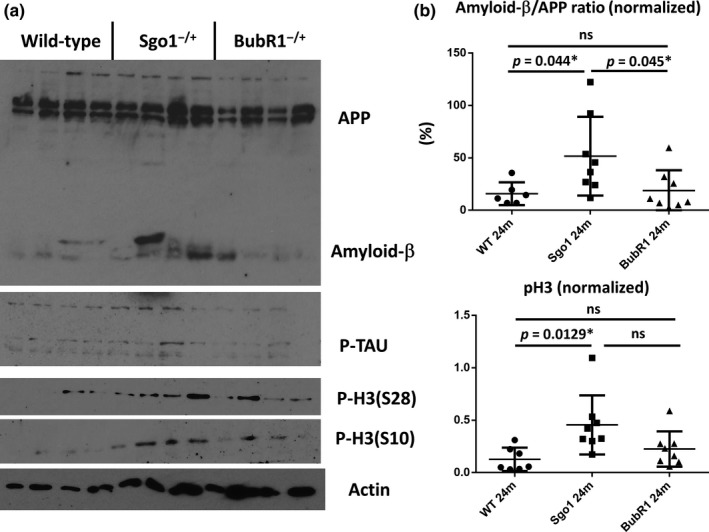
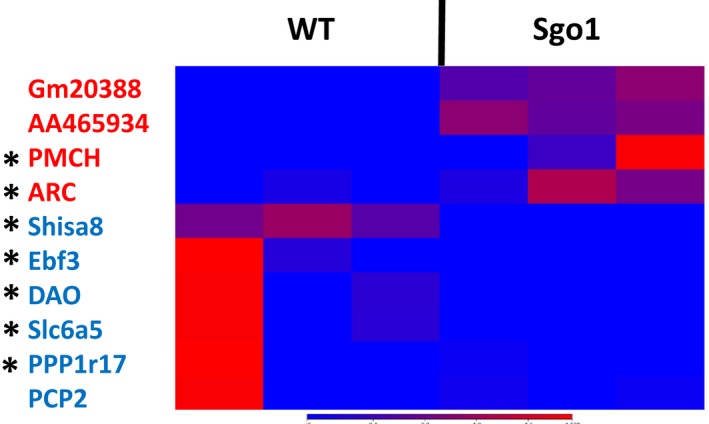
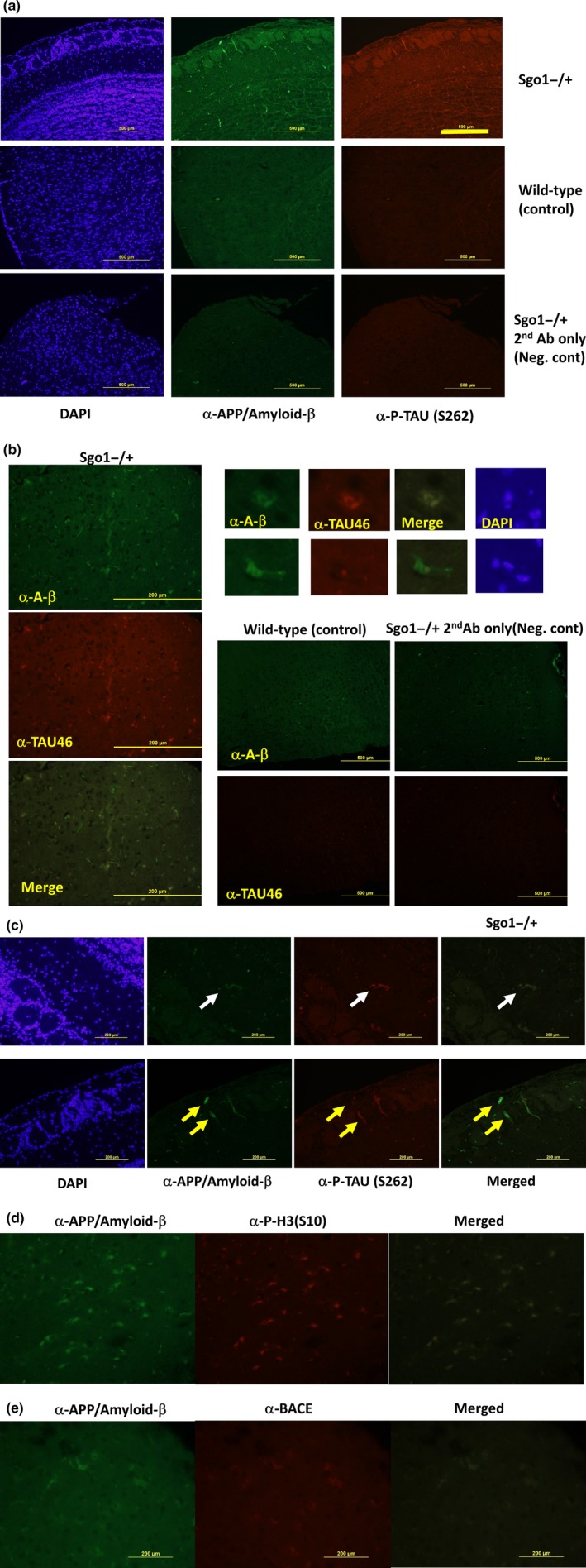
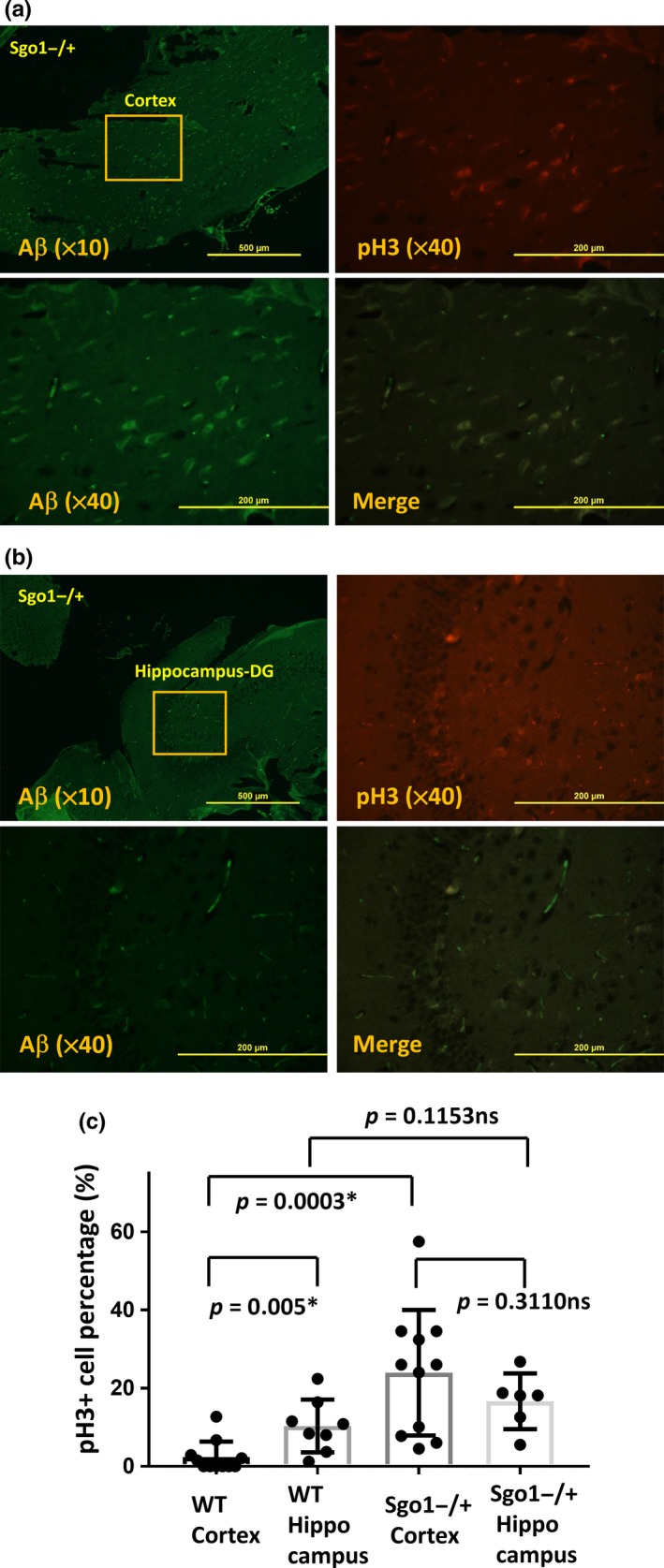
Spontaneous late-onset Alzheimer's disease (LOAD) accounts for more than 95% of all human AD. As mice do not normally develop AD and as understanding on molecular processes leading to spontaneous LOAD has been insufficient to successfully model LOAD in mouse, no mouse model for LOAD has been available. Existing mouse AD models are all early-onset AD (EOAD) models that rely on forcible expression of AD-associated protein(s), which may not recapitulate prerequisites for spontaneous LOAD. This limitation in AD modeling may contribute to the high failure rate of AD drugs in clinical trials. In this study, we hypothesized that genomic instability facilitates development of LOAD and tested two genomic instability mice models in the brain pathology at the old age. Shugoshin-1 (Sgo1) haploinsufficient (∓) mice, a model of chromosome instability (CIN) with chromosomal and centrosomal cohesinopathy, spontaneously exhibited a major feature of AD pathology; amyloid beta accumulation that colocalized with phosphorylated Tau, beta-secretase 1 (BACE), and mitotic marker phospho-Histone H3 (p-H3) in the brain. Another CIN model, spindle checkpoint-defective BubR1 haploinsufficient mice, did not exhibit the pathology at the same age, suggesting the prolonged mitosis-origin of the AD pathology. RNA-seq identified ten differentially expressed genes, among which seven genes have indicated association with AD pathology or neuronal functions (e.g., ARC, EBF3). Thus, the model represents a novel model that recapitulates spontaneous LOAD pathology in mouse. The Sgo1 mouse may serve as a novel tool for investigating mechanisms of spontaneous progression of LOAD pathology, for early diagnosis markers, and for drug development.
自发性晚发性阿尔茨海默病(LOAD)占所有人类 AD 的 95%以上。由于老鼠通常不会患上 AD,并且对于导致自发性 LOAD 的分子过程的理解还不足以成功地在老鼠中模拟 LOAD,因此没有用于 LOAD 的老鼠模型。现有的老鼠 AD 模型都是早发性 AD(EOAD)模型,依赖于 AD 相关蛋白的强制表达,这些模型可能无法重现自发性 LOAD 的先决条件。AD 建模中的这种局限性可能导致 AD 药物在临床试验中的高失败率。在这项研究中,我们假设基因组不稳定性促进了 LOAD 的发展,并在老年时测试了两种基因组不稳定性老鼠模型的脑病理学。Shugoshin-1(Sgo1)杂合不足(∓)老鼠,一种具有染色体和中心体黏合蛋白病的染色体不稳定性(CIN)模型,自发表现出 AD 病理学的主要特征;淀粉样β蛋白积累与磷酸化 Tau、β-分泌酶 1(BACE)和有丝分裂标志物磷酸化组蛋白 H3(p-H3)在大脑中聚集。另一种 CIN 模型,纺锤体检验点缺陷 BubR1 杂合不足老鼠,在相同年龄时没有表现出病理学,这表明 AD 病理学的起源是延长的有丝分裂。RNA-seq 鉴定了十个差异表达的基因,其中七个基因与 AD 病理学或神经元功能有关(例如,ARC、EBF3)。因此,该模型代表了一种在老鼠中重现自发性 LOAD 病理学的新型模型。Sgo1 老鼠可能成为研究自发性 LOAD 病理学进展机制、早期诊断标志物和药物开发的新型工具。