College of Biotechnology and Sericultural Research Institute, Jiangsu University of Science and Technology, Zhenjiang, P.R. China.
Laboratory of Quality and Safty Risk Assessment for Sericulture Products and Edible Insect (Zhenjiang), Ministry of Agriculture, Zhenjiang, P.R. China.
PLoS One. 2018 Jun 26;13(6):e0198072. doi: 10.1371/journal.pone.0198072. eCollection 2018.
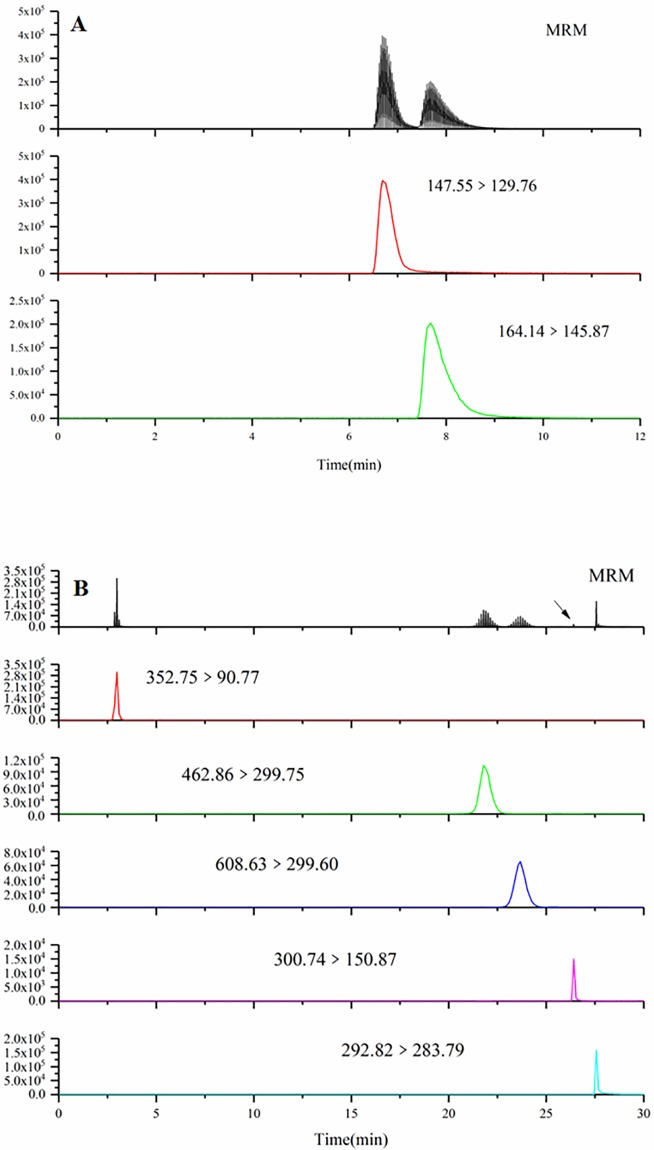
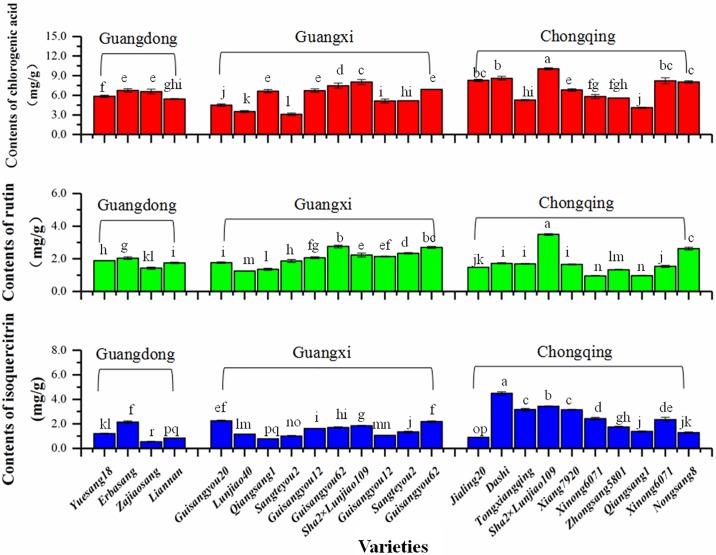
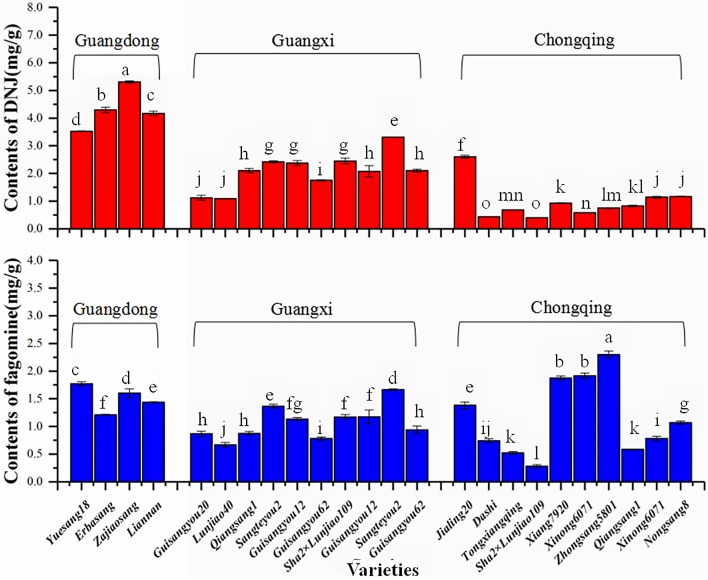
Guangdong, Guangxi and Chongqing are emerging sericulture areas in China where the production of mulberry leaves is huge. In order to identity high quality mulberry leaves that are suitable for healthy products to expand planting, 24 samples from three regions (Guangdong, Guangxi, Chongqing) in the south of China were quantified for two alkaloids (1-deoxynojirimycin and fagomine) and five phenols (chlorogenic acid, rutin, isoquercitrin, etc.) using high-performance liquid chromatography tandem mass spectrometry (HPLC-MS/MS). Additionally, the total phenolic and total flavonoid contents, antioxidant and glycosidase inhibitory activities (hypoglycemic activity) were tested using different assays (DPPH, ABTS, FRAP) to comprehensively evaluate the quality of the mulberry leaves. The contents of DNJ and fagomine ranged from 0.401±0.003 to 5.309±0.036 mg/g and from 0.279±0.031 to 2.300±0.060 mg/g, respectively. The main phenolic constituents were chlorogenic acid, rutin and isoquercitrin, with chlorogenic acid present in the highest concentrations, ranging from 3.104±0.191 to 10.050±0.143 mg/g. The antioxidant activity exhibited a tendency as follows: Guangxi > Guangdong > Chongqing, except for two samples from Chongqing, which showed the highest antioxidant activity. Based on our study, mulberry leaves from Guangdong and Guangxi could be future sources of natural hypoglycemic and antioxidant products.
广东、广西和重庆是中国新兴的蚕桑区,桑叶产量巨大。为了鉴定适合健康产品扩大种植的优质桑叶,采用高效液相色谱-串联质谱法(HPLC-MS/MS)对来自中国南部三个地区(广东、广西、重庆)的 24 个样本中的两种生物碱(1-脱氧野尻霉素和伏康碱)和五种酚类化合物(绿原酸、芦丁、异槲皮苷等)进行了定量分析。此外,还通过不同的测定方法(DPPH、ABTS、FRAP)对总酚和总黄酮含量、抗氧化和糖苷酶抑制活性(降血糖活性)进行了测试,以综合评价桑叶的质量。DNJ 和伏康碱的含量范围分别为 0.401±0.003 至 5.309±0.036 mg/g 和 0.279±0.031 至 2.300±0.060 mg/g。主要的酚类成分是绿原酸、芦丁和异槲皮苷,其中绿原酸的含量最高,范围为 3.104±0.191 至 10.050±0.143 mg/g。抗氧化活性表现出如下趋势:广西>广东>重庆,除了两个来自重庆的样本表现出最高的抗氧化活性。根据我们的研究,广东和广西的桑叶可能是未来天然降血糖和抗氧化产品的来源。