Moroni Francesco, Ammirati Enrico, Rocca Maria A, Filippi Massimo, Magnoni Marco, Camici Paolo G
Cardiothoracic and Vascular Department, San Raffaele Hospital, Milan, Italy.
De Gasperis Heart Center, Ospedale Niguarda Ca' Granda, Milan, Italy.
Int J Cardiol Heart Vasc. 2018 May 14;19:63-69. doi: 10.1016/j.ijcha.2018.04.006. eCollection 2018 Jun.
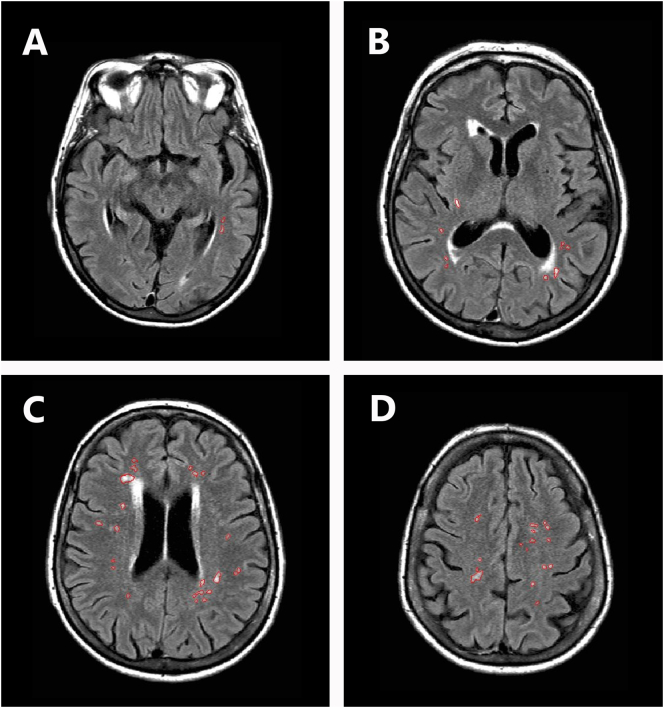
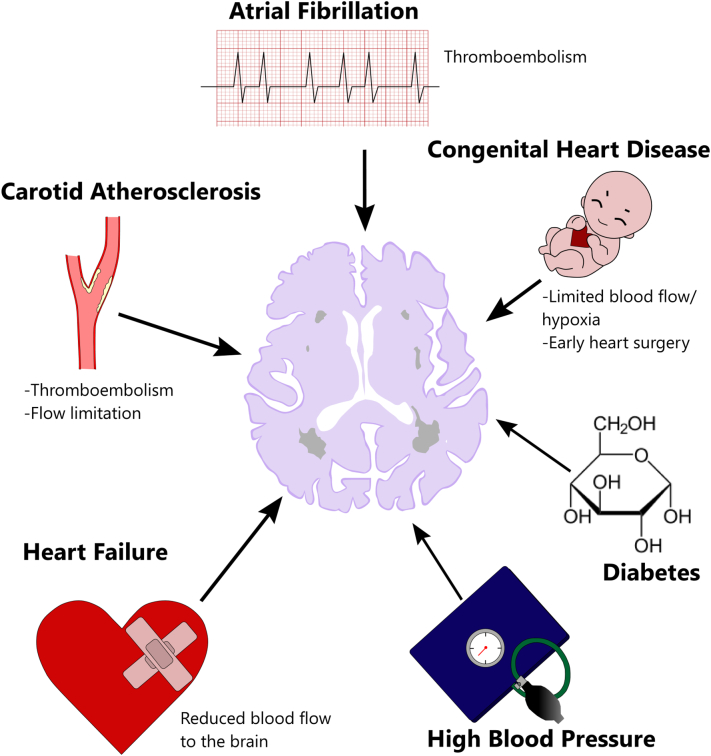
Diseases affecting the brain contribute to a substantial proportion of morbidity and mortality in the general population. Conditions such as stroke, dementia and cognitive impairment have a prominent impact on global public health. Despite the heterogeneous clinical manifestations of these conditions and their diverse prognostic implications, current evidence supports a role for cardiovascular disease as a common pathophysiological ground. Brain white matter hyperintensities (WMH) are patchy white matter signal hyperintensity on T2-weighted magnetic resonance imaging sequences commonly found in elderly individuals. WMH appear to have a vascular pathogenesis and have been shown to confer an increased risk of stroke and cognitive decline. Indeed, they were proposed as a marker for central nervous system frailty. Cardiovascular diseases seem to play a key role in the etiology of WMH. Carotid atherosclerosis and atrial fibrillation were shown to be associated with higher WMH burden, while adequate blood pressure control has been reported reducing WMH progression. Aim of the present work is to review the available evidence linking WMH to cardiovascular disease, highlighting the complex interplay between cerebral and cardiovascular health.
影响大脑的疾病在普通人群的发病率和死亡率中占相当大的比例。中风、痴呆和认知障碍等病症对全球公共卫生有显著影响。尽管这些病症的临床表现各异且预后影响多样,但目前的证据支持心血管疾病作为常见病理生理基础的作用。脑白质高信号(WMH)是在T2加权磁共振成像序列上出现的斑片状白质信号高增强,常见于老年人。WMH似乎具有血管发病机制,并已被证明会增加中风和认知衰退的风险。事实上,它们被提议作为中枢神经系统衰弱的标志物。心血管疾病似乎在WMH的病因中起关键作用。颈动脉粥样硬化和心房颤动与更高的WMH负担相关,而据报道,适当控制血压可减少WMH的进展。本研究的目的是回顾将WMH与心血管疾病联系起来的现有证据,强调大脑健康与心血管健康之间的复杂相互作用。