Maus Irena, Rumming Madis, Bergmann Ingo, Heeg Kathrin, Pohl Marcel, Nettmann Edith, Jaenicke Sebastian, Blom Jochen, Pühler Alfred, Schlüter Andreas, Sczyrba Alexander, Klocke Michael
1Dept. Bioengineering, Leibniz Institute for Agricultural Engineering and Bioeconomy (ATB), Max-Eyth-Allee 100, 14469 Potsdam, Germany.
2Center for Biotechnology (CeBiTec), Bielefeld University, Universitätsstrasse 27, 33615 Bielefeld, Germany.
Biotechnol Biofuels. 2018 Jun 19;11:167. doi: 10.1186/s13068-018-1162-4. eCollection 2018.
Previous studies on the , recently assigned to the novel archaeal phylum , reported on the dominance of these within the anaerobic carbohydrate cycle performed by the deep marine biosphere. For the first time, members of this phylum were identified also in mesophilic and thermophilic biogas-forming biofilms and characterized in detail.
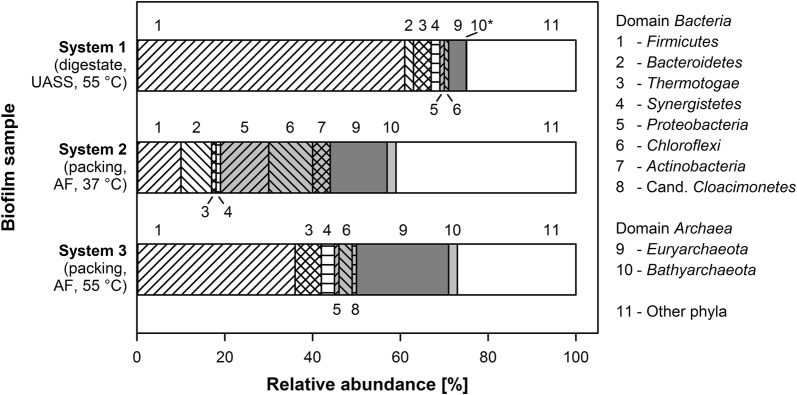
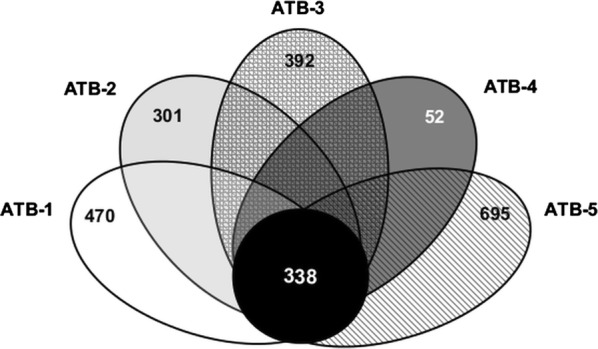
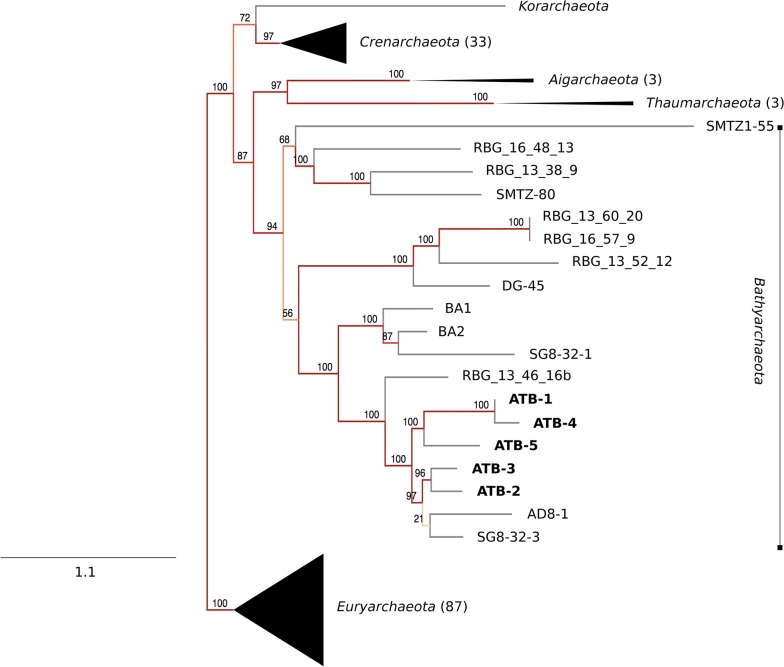
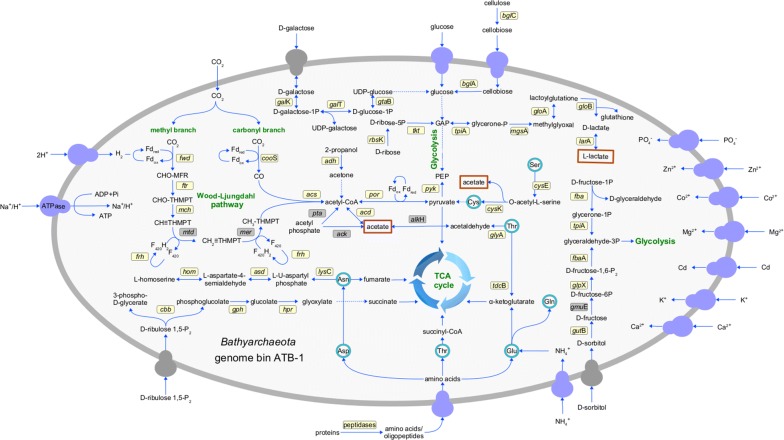
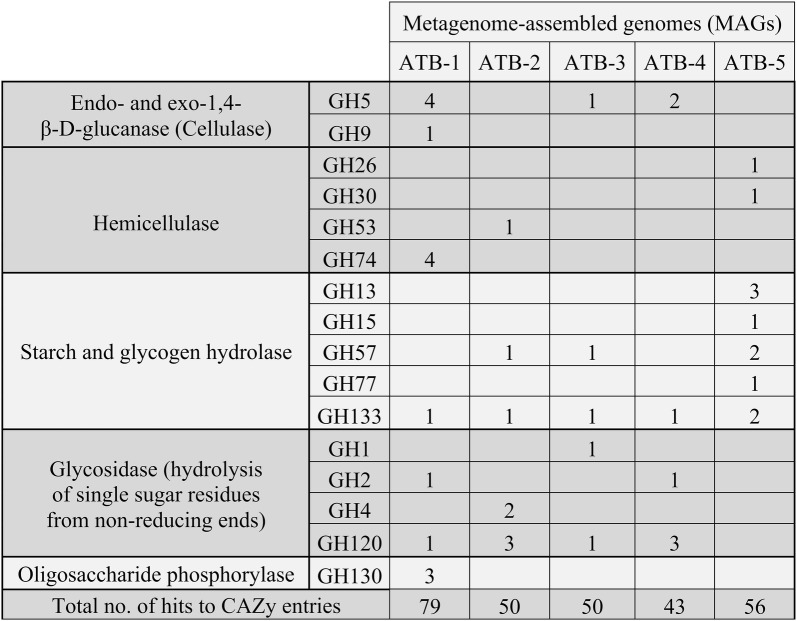
Metagenome shotgun libraries of biofilm microbiomes were sequenced using the Illumina MiSeq system. Taxonomic classification revealed that between 0.1 and 2% of all classified sequences were assigned to Individual metagenome assemblies followed by genome binning resulted in the reconstruction of five metagenome-assembled genomes (MAGs) of . MAGs were estimated to be 65-92% complete, ranging in their genome sizes from 1.1 to 2.0 Mb. Phylogenetic classification based on core gene sets confirmed their placement within the phylum clustering as a separate group diverging from most of the recently known clusters. The genetic repertoire of these MAGs indicated an energy metabolism based on carbohydrate and amino acid fermentation featuring the potential for extracellular hydrolysis of cellulose, cellobiose as well as proteins. In addition, corresponding transporter systems were identified. Furthermore, genes encoding enzymes for the utilization of carbon monoxide and/or carbon dioxide via the Wood-Ljungdahl pathway were detected.
For the members of detected in the biofilm microbiomes, a hydrolytic lifestyle is proposed. This is the first study indicating that members contribute presumably to hydrolysis and subsequent fermentation of organic substrates within biotechnological biogas production processes.
先前关于最近被归入新古菌门的研究报告了这些微生物在深海生物圈进行的厌氧碳水化合物循环中的优势地位。首次在中温及嗜热的沼气生成生物膜中也鉴定出了该门的成员,并对其进行了详细表征。
使用Illumina MiSeq系统对生物膜微生物群落的宏基因组鸟枪法文库进行了测序。分类学分析表明,所有分类序列中有0.1%至2%被归为[具体微生物名称未给出]。对各个宏基因组进行组装,随后进行基因组分箱,从而重建了5个[具体微生物名称未给出]的宏基因组组装基因组(MAG)。估计MAG的完整性为65%至92%,其基因组大小在1.1至2.0 Mb之间。基于核心基因集的系统发育分类证实了它们在该门中的位置,聚为一个与大多数最近已知的[具体微生物名称未给出]簇不同的单独类群。这些MAG的基因库表明其能量代谢基于碳水化合物和氨基酸发酵,具有对纤维素、纤维二糖以及蛋白质进行细胞外水解的潜力。此外,还鉴定出了相应的转运系统。此外,还检测到了通过伍德-Ljungdahl途径利用一氧化碳和/或二氧化碳的酶的编码基因。
对于在生物膜微生物群落中检测到的[具体微生物名称未给出]成员,提出了一种水解型生活方式。这是第一项表明[具体微生物名称未给出]成员可能在生物技术沼气生产过程中对有机底物的水解及后续发酵有贡献的研究。