Delgoshaei Bahram, Mobinizadeh Mohammadreza, Mojdekar Reyhaneh, Afzal Elham, Arabloo Jalal, Mohamadi Efat
Department of Health Services Administration, Iran University of Medical Sciences, Tehran, Iran.
National Institute for Health Research, Tehran University of Medical Sciences, Tehran, Iran.
Med J Islam Repub Iran. 2017 Dec 20;31:113. doi: 10.14196/mjiri.31.113. eCollection 2017.
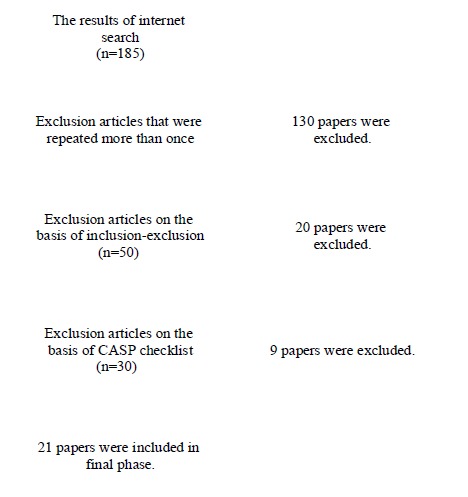
Telemedicine is an expanded term in health information technology that comprises procedures for transmitting medical information electronically to improve patients' health status. The objective of this research is to evaluate the cost-effectiveness of telemedicine interventions in various specialty areas. The Cochrane Library and Centre for Review and Dissemination were searched up to February 2013 using Mesh. Studies that compared any kind of telemedicine with any other routine care technique and used cost per health utility unit's outcomes were included. Twenty-one articles were included. According to the included studies, it seems that using telemedicine in cardiology can be effective and cost-effective enough but pre-hospital telemedicine diagnostics program are likely to have little impact on acute myocardial infarction fatality. In pulmonary, telemedicine can be a cost-effective strategy for delivering outpatient pulmonary care to rural populations which have limited access to specialized services, but telemedicine is not cost- effective in asthma and airways cancer. In ophthalmology, especially in the diagnosis of diabetic retinopathy, the use of telemedicine is a cost-effective tool. In dermatology, telemedicine is not cost-effective enough in comparison of conventional cares. In other fields such as physical activity and diet, eating disorder, tele-ICU, psychotherapy for depression and telemedicine on ships, telemedicine can be used as a cost-effective tool for treatments or cares. Most of the included studies confirmed that telemedicine is cost-effective for applying in major medical fields such as cardiology; but in dermatology, papers could not confirm the positive capability of telemedicine.
远程医疗是健康信息技术中一个扩展的术语,它包括以电子方式传输医疗信息以改善患者健康状况的程序。本研究的目的是评估远程医疗干预在各个专业领域的成本效益。截至2013年2月,使用医学主题词(Mesh)对考克兰图书馆和循证医学图书馆进行了检索。纳入了比较任何类型的远程医疗与任何其他常规护理技术并使用每健康效用单位结果成本的研究。共纳入21篇文章。根据纳入的研究,在心脏病学中使用远程医疗似乎足够有效且具有成本效益,但院前远程医疗诊断项目可能对急性心肌梗死死亡率影响不大。在肺病领域,对于难以获得专科服务的农村人口,远程医疗可以作为提供门诊肺部护理的一种具有成本效益的策略,但在哮喘和气道癌方面,远程医疗并不具有成本效益。在眼科,尤其是在糖尿病视网膜病变的诊断中,使用远程医疗是一种具有成本效益的工具。在皮肤科,与传统护理相比,远程医疗的成本效益不够高。在其他领域,如身体活动与饮食、饮食失调、远程重症监护病房、抑郁症心理治疗以及船上远程医疗等方面,远程医疗可作为治疗或护理的一种具有成本效益的工具。大多数纳入的研究证实,远程医疗在心脏病学等主要医学领域的应用具有成本效益;但在皮肤科,文献未能证实远程医疗的积极作用。