Center for Alternatives to Animal Testing (CAAT), Johns Hopkins Bloomberg School of Public Health, Baltimore, MD, USA.
Center for Alternatives to Animal Testing (CAAT) Europe, Department of Biology, University of Konstanz, Konstanz, Germany.
Arch Toxicol. 2018 Aug;92(8):2587-2606. doi: 10.1007/s00204-018-2250-8. Epub 2018 Jun 28.
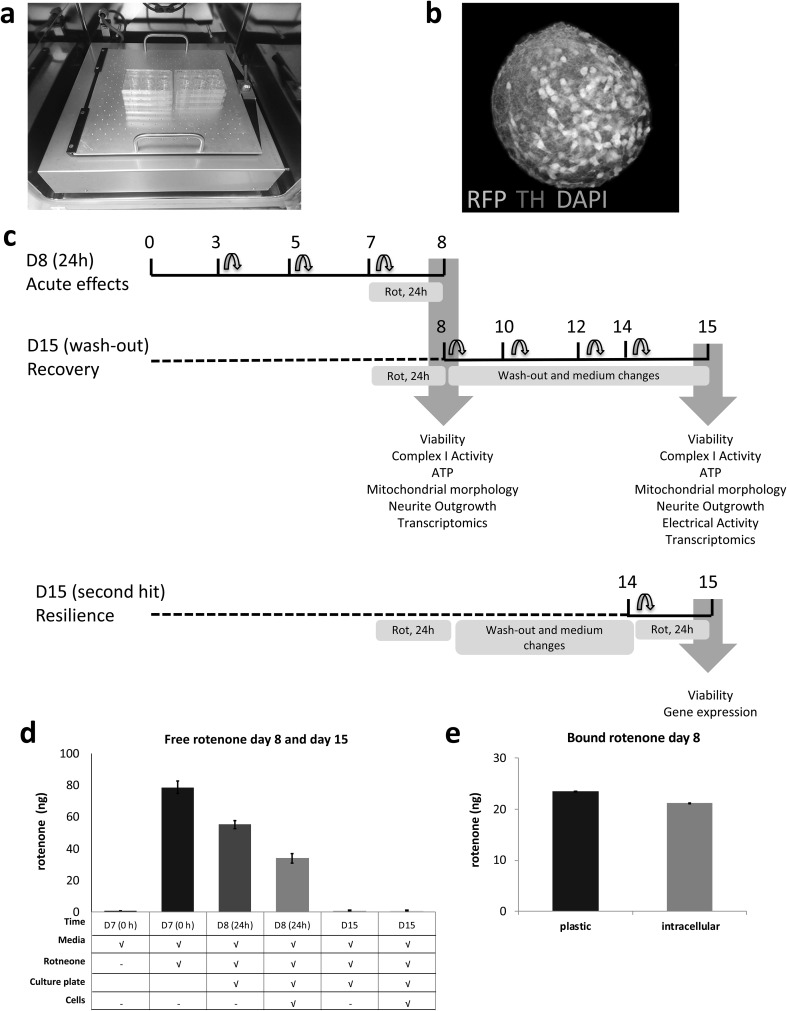
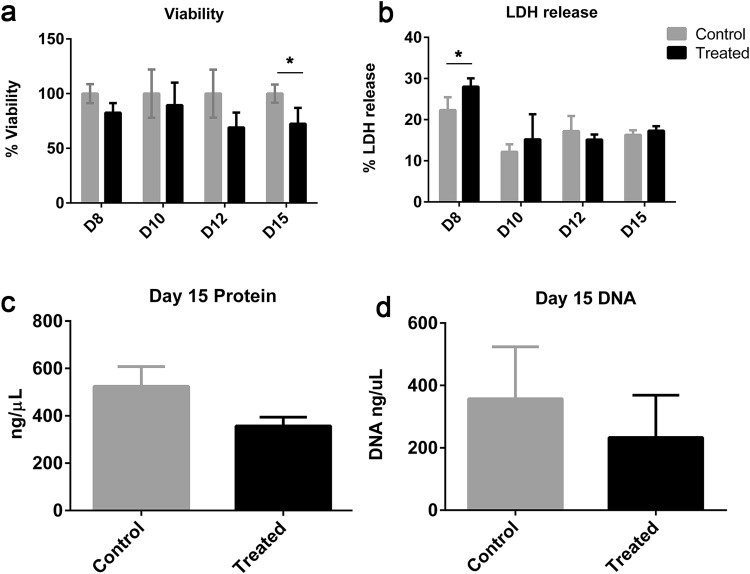
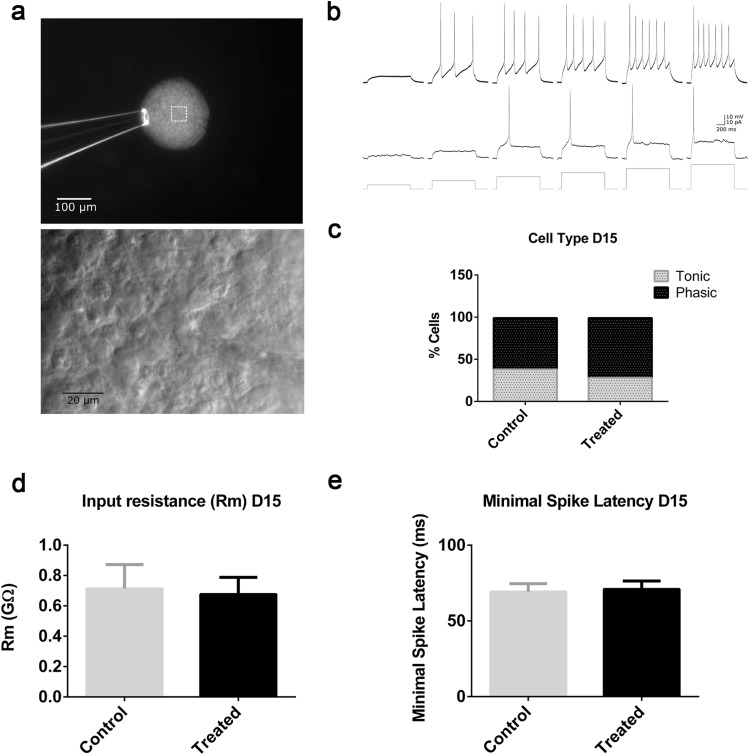
To date, most in vitro toxicity testing has focused on acute effects of compounds at high concentrations. This testing strategy does not reflect real-life exposures, which might contribute to long-term disease outcome. We used a 3D-human dopaminergic in vitro LUHMES cell line model to determine whether effects of short-term rotenone exposure (100 nM, 24 h) are permanent or reversible. A decrease in complex I activity, ATP, mitochondrial diameter, and neurite outgrowth were observed acutely. After compound removal, complex I activity was still inhibited; however, ATP levels were increased, cells were electrically active and aggregates restored neurite outgrowth integrity and mitochondrial morphology. We identified significant transcriptomic changes after 24 h which were not present 7 days after wash-out. Our results suggest that testing short-term exposures in vitro may capture many acute effects which cells can overcome, missing adaptive processes, and long-term mechanisms. In addition, to study cellular resilience, cells were re-exposed to rotenone after wash-out and recovery period. Pre-exposed cells maintained higher metabolic activity than controls and presented a different expression pattern in genes previously shown to be altered by rotenone. NEF2L2, ATF4, and EAAC1 were downregulated upon single hit on day 14, but unchanged in pre-exposed aggregates. DAT and CASP3 were only altered after re-exposure to rotenone, while TYMS and MLF1IP were downregulated in both single-exposed and pre-exposed aggregates. In summary, our study shows that a human cell-based 3D model can be used to assess cellular adaptation, resilience, and long-term mechanisms relevant to neurodegenerative research.
迄今为止,大多数体外毒性测试都集中在高浓度化合物的急性效应上。这种测试策略不能反映实际的暴露情况,而实际暴露情况可能会导致长期的疾病结果。我们使用了一种 3D 人多巴胺能体外 LUHMES 细胞系模型,以确定短期鱼藤酮暴露(100 nM,24 小时)的影响是永久性的还是可逆的。我们观察到细胞色素 C 氧化酶活性、ATP、线粒体直径和神经突生长的急性下降。化合物去除后,细胞色素 C 氧化酶活性仍然受到抑制;然而,ATP 水平增加,细胞具有电活性,聚集物恢复了神经突生长的完整性和线粒体形态。我们在 24 小时后发现了显著的转录组变化,而在洗脱 7 天后则没有发现这些变化。我们的结果表明,在体外测试短期暴露可能会捕捉到许多细胞可以克服的急性效应,而这些效应可能会错过适应性过程和长期机制。此外,为了研究细胞的恢复能力,细胞在洗脱和恢复阶段后再次暴露于鱼藤酮。与对照组相比,预暴露细胞保持了更高的代谢活性,并且在以前被鱼藤酮改变的基因中表现出不同的表达模式。NEF2L2、ATF4 和 EAAC1 在第 14 天的单次打击时下调,但在预暴露的聚集物中不变。DAT 和 CASP3 仅在再次暴露于鱼藤酮时发生改变,而 TYMS 和 MLF1IP 在单次暴露和预暴露的聚集物中都下调。总之,我们的研究表明,基于人类细胞的 3D 模型可用于评估与神经退行性研究相关的细胞适应性、恢复能力和长期机制。