Basil Adeline H, Sim Joan P L, Lim Grace G Y, Lin Shuping, Chan Hui Ying, Engelender Simone, Lim Kah-Leong
Neurodegeneration Research Laboratory, National Neuroscience InstituteSingapore, Singapore.
Department of Physiology, National University of SingaporeSingapore, Singapore.
Front Cell Neurosci. 2017 Aug 10;11:241. doi: 10.3389/fncel.2017.00241. eCollection 2017.
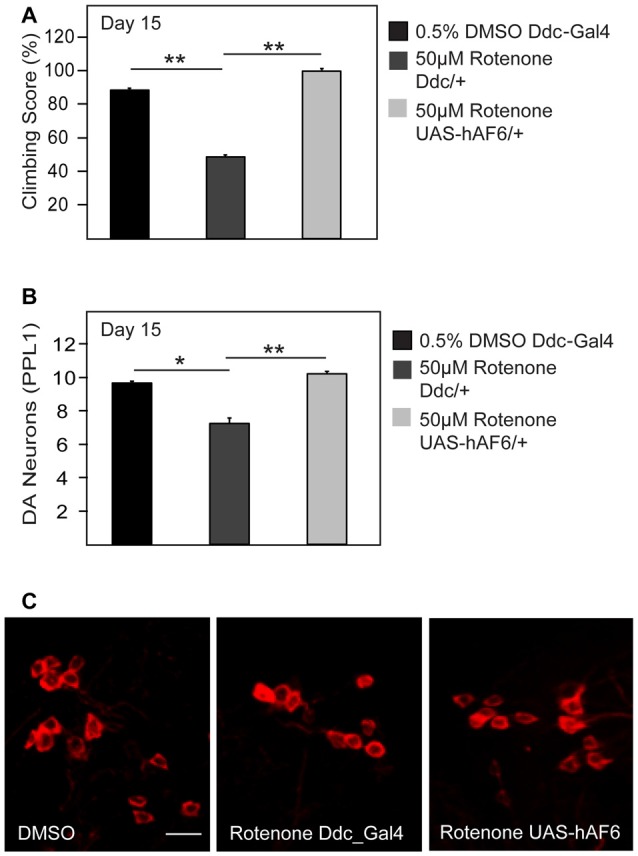
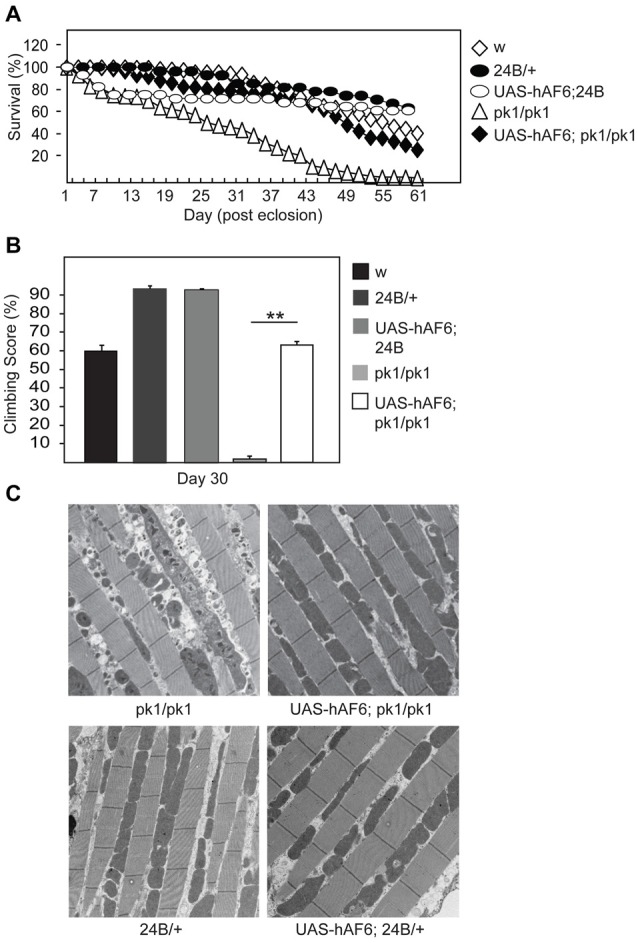
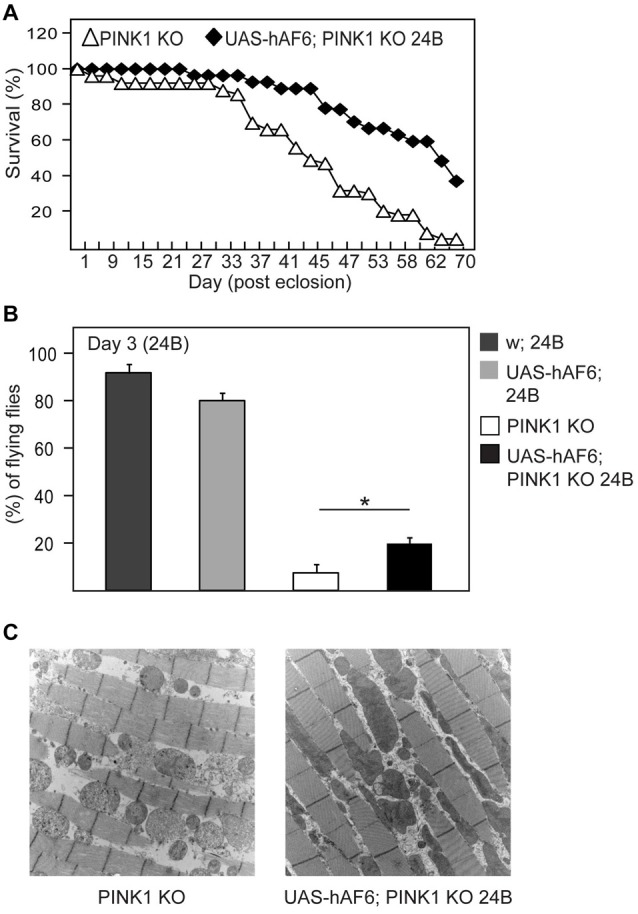
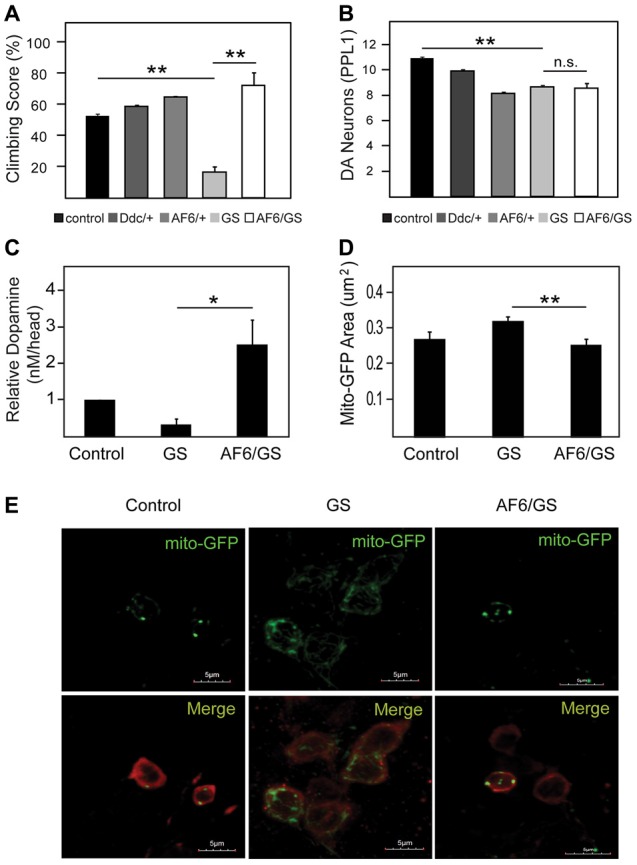
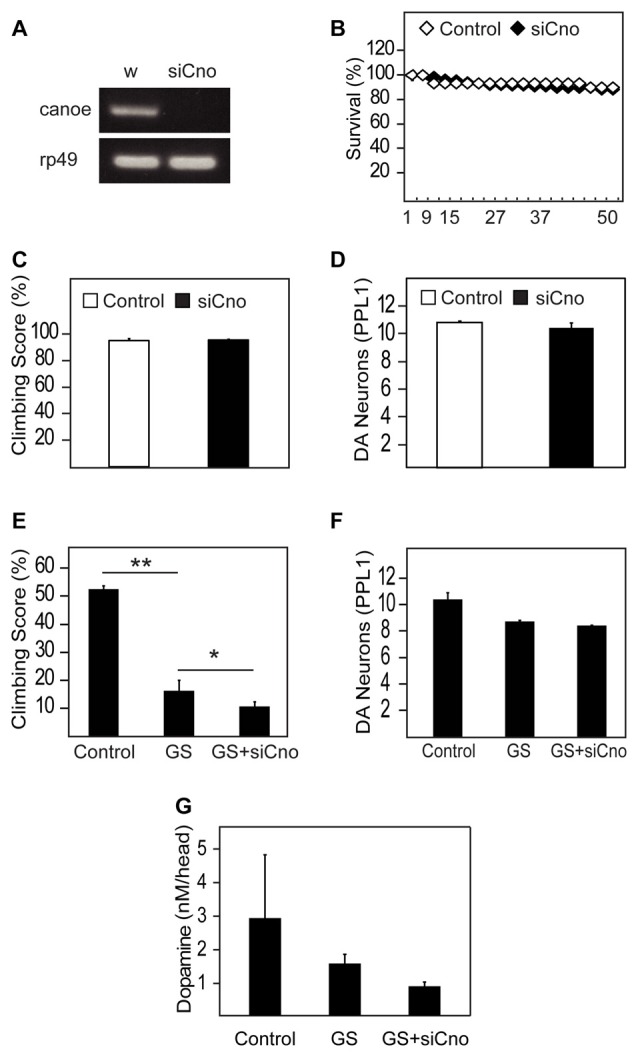
Afadin 6 (AF-6) is an F-actin binding multidomain-containing scaffolding protein that is known for its function in cell-cell adhesion. Interestingly, besides this well documented role, we recently found that AF-6 is a Parkin-interacting protein that augments Parkin/PINK1-mediated mitophagy. Notably, mutations in Parkin and PINK1 are causative of recessively inherited forms of Parkinson's disease (PD) and aberrant mitochondrial homeostasis is thought to underlie PD pathogenesis. Given the novel role of AF-6 in mitochondrial quality control (QC), we hypothesized that AF-6 overexpression may be beneficial to PD. Using the as a model system, we demonstrate in this study that transgenic overexpression of human AF-6 in parkin and also pink1 null flies rescues their mitochondrial pathology and associated locomotion deficit, which results in their improved survival over time. Similarly, AF-6 overexpression also ameliorates the pathological phenotypes in flies expressing the Leucine Rich Repeat Kinase 2 (LRRK2) G2019S mutant, a mutation that is associated with dominantly-inherited PD cases in humans. Conversely, when endogenous AF-6 expression is silenced, it aggravates the disease phenotypes of LRRK2 mutant flies. Aside from these genetic models, we also found that AF-6 overexpression is protective against the loss of dopaminergic neurons in flies treated with rotenone, a mitochondrial complex I inhibitor commonly used to generate animal models of PD. Taken together, our results demonstrate that AF-6 protects against dopaminergic dysfunction and mitochondrial abnormalities in multiple models of PD, and suggest the therapeutic value of AF-6-related pathways in mitigating PD pathogenesis.
Afadin 6(AF-6)是一种含多个结构域的F-肌动蛋白结合支架蛋白,因其在细胞间黏附中的功能而闻名。有趣的是,除了这一有充分文献记载的作用外,我们最近发现AF-6是一种与帕金蛋白相互作用的蛋白,可增强帕金蛋白/粉红1蛋白介导的线粒体自噬。值得注意的是,帕金蛋白和粉红1蛋白的突变是隐性遗传形式帕金森病(PD)的病因,异常的线粒体稳态被认为是PD发病机制的基础。鉴于AF-6在线粒体质量控制(QC)中的新作用,我们推测AF-6的过表达可能对PD有益。在本研究中,我们以[具体模型系统未给出]为模型系统,证明在帕金蛋白和粉红1蛋白缺失的果蝇中转基因过表达人AF-6可挽救其线粒体病理及相关的运动缺陷,从而随着时间推移提高其存活率。同样,AF-6的过表达也改善了表达富含亮氨酸重复激酶2(LRRK2)G2019S突变体的果蝇的病理表型,该突变与人类显性遗传的PD病例相关。相反,当内源性AF-6表达被沉默时,它会加重LRRK2突变果蝇的疾病表型。除了这些遗传模型外,我们还发现AF-6的过表达可保护用鱼藤酮处理的果蝇中多巴胺能神经元的丢失,鱼藤酮是一种常用于生成PD动物模型的线粒体复合体I抑制剂。综上所述,我们的结果表明AF-6在多种PD模型中可防止多巴胺能功能障碍和线粒体异常,并提示AF-6相关途径在减轻PD发病机制方面的治疗价值。