DNA Replication Group, Molecular Oncology Programme, Spanish National Cancer Research Centre, 3 Melchor Fernández Almagro, 28029 Madrid, Spain.
DNA Replication Group, Molecular Oncology Programme, Spanish National Cancer Research Centre, 3 Melchor Fernández Almagro, 28029 Madrid, Spain.
J Biol Chem. 2018 Aug 17;293(33):12855-12861. doi: 10.1074/jbc.RA118.003740. Epub 2018 Jun 29.
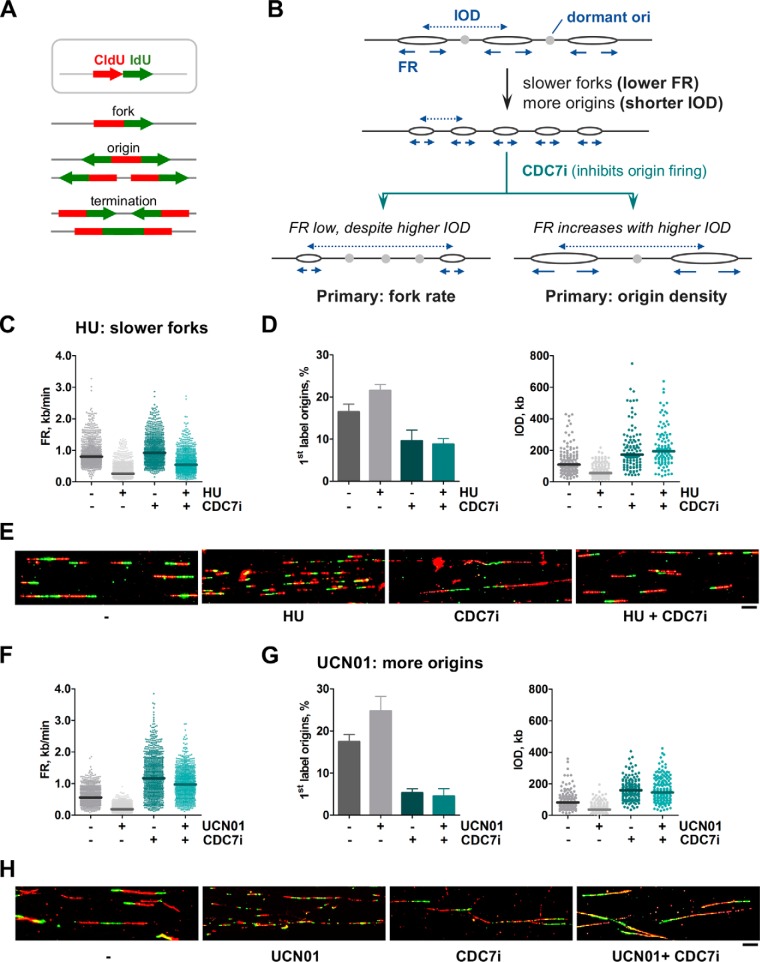
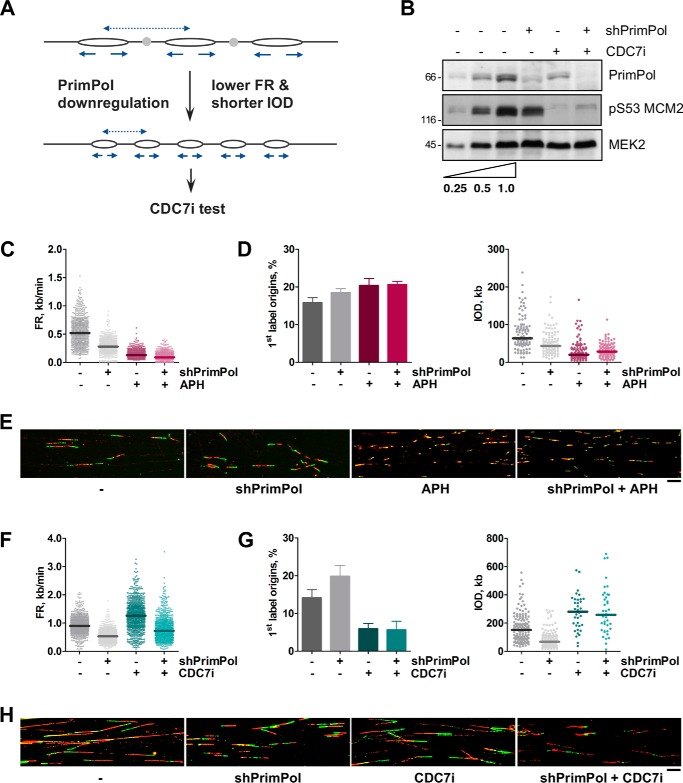
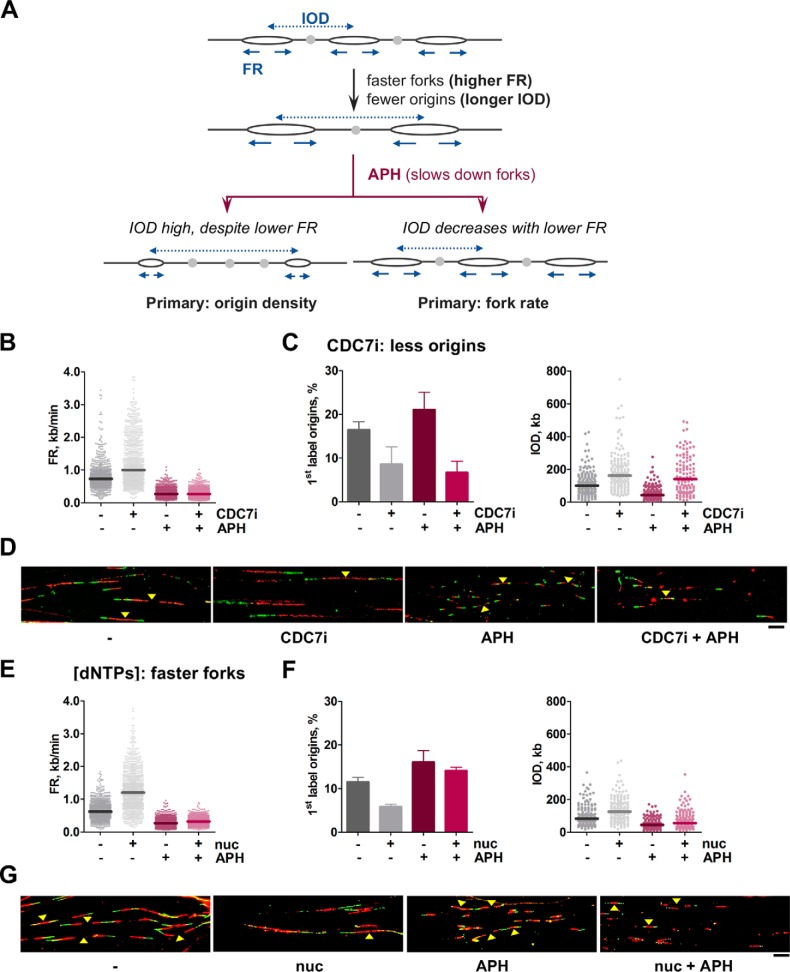
In growing cells, DNA replication precedes mitotic cell division to transmit genetic information to the next generation. The slowing or stalling of DNA replication forks at natural or exogenous obstacles causes "replicative stress" that promotes genomic instability and affects cellular fitness. Replicative stress phenotypes can be characterized at the single-molecule level with DNA combing or stretched DNA fibers, but interpreting the results obtained with these approaches is complicated by the fact that the speed of replication forks is connected to the frequency of origin activation. Primary alterations in fork speed trigger secondary responses in origins, and, conversely, primary alterations in the number of active origins induce compensatory changes in fork speed. Here, by employing interventions that temporally restrict either fork speed or origin firing while still allowing interrogation of the other variable, we report a set of experimental conditions to separate cause and effect in any manipulation that affects DNA replication dynamics. Using HeLa cells and chemical inhibition of origin activity (through a CDC7 kinase inhibitor) and of DNA synthesis (via the DNA polymerase inhibitor aphidicolin), we found that primary effects of replicative stress on velocity of replisomes (fork rate) can be readily distinguished from primary effects on origin firing. Identifying the primary cause of replicative stress in each case as demonstrated here may facilitate the design of methods to counteract replication stress in primary cells or to enhance it in cancer cells to increase their susceptibility to therapies that target DNA repair.
在生长中的细胞中,DNA 复制先于有丝分裂细胞分裂,将遗传信息传递给下一代。在自然或外源性障碍处,DNA 复制叉的减速或停滞会导致“复制应激”,从而促进基因组不稳定性并影响细胞适应性。可以使用 DNA 梳理或拉伸 DNA 纤维在单分子水平上对复制应激表型进行特征描述,但这些方法的结果解释很复杂,因为复制叉的速度与原点激活的频率有关。叉速的主要变化会引发原点的次要反应,反之,活跃原点数量的主要变化会诱导叉速的补偿性变化。在这里,我们通过采用暂时限制叉速或原点激发的干预措施,同时仍然允许对另一个变量进行检测,报告了一组实验条件,以在任何影响 DNA 复制动力学的操作中分离因果关系。使用 HeLa 细胞和化学抑制原点活性(通过 CDC7 激酶抑制剂)和 DNA 合成(通过 DNA 聚合酶抑制剂 aphidicolin),我们发现复制应激对复制体速度(叉速)的主要影响很容易与对原点激发的主要影响区分开来。如本文所示,确定每种情况下复制应激的主要原因可能有助于设计方法来对抗原代细胞中的复制应激或增强癌细胞中的复制应激,以增加它们对靶向 DNA 修复的治疗方法的敏感性。