Section of Gastroenterology, Hepatology and Nutrition, Department of Medicine, University of Chicago, Chicago, Illinois.
Department of Human Genetics, University of Chicago, Chicago, Illinois.
Gastroenterology. 2018 Oct;155(4):1192-1204.e9. doi: 10.1053/j.gastro.2018.06.049. Epub 2018 Jun 30.
BACKGROUND & AIMS: African Americans have the greatest colorectal cancer (CRC) burden in the United States; interethnic differences in protective effects of vitamin D might contribute to disparities. 1α,25(OH)D vitamin D (the active form of vitamin D) induces transcription of the uridine phosphorylase gene (UPP1) in colon tissues of European Americans but to a lesser extent in colon tissues of African Americans. UPP1-knockout mice have increased intestinal concentrations of uridine and Deoxyuridine triphosphate (dUTP), have increased uridine-induced DNA damage, and develop colon tumors. We studied 1α,25(OH)D regulation of UPP1 and uridine-induced DNA damage in the colon and differences in these processes between African and European Americans.
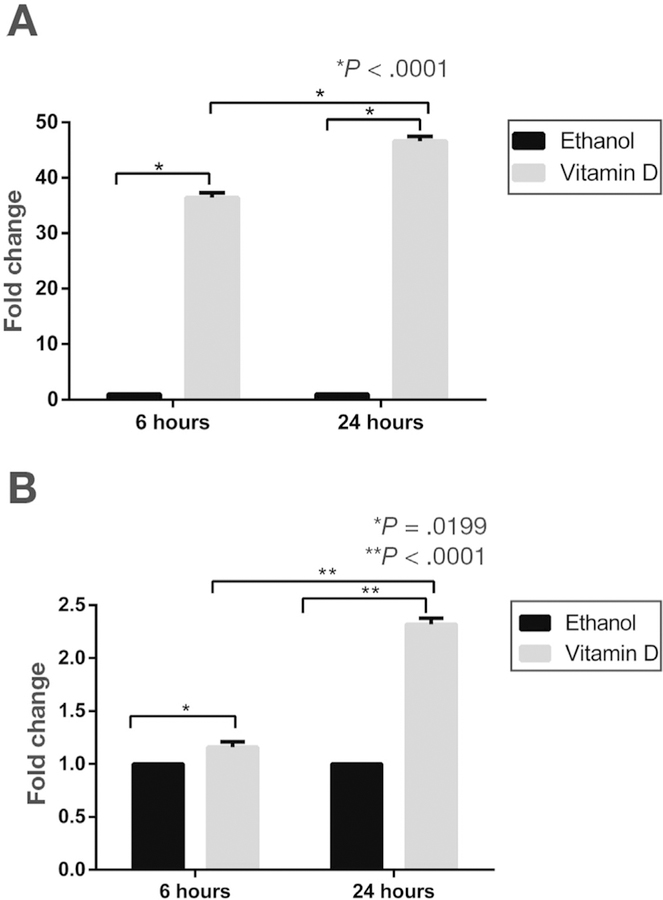
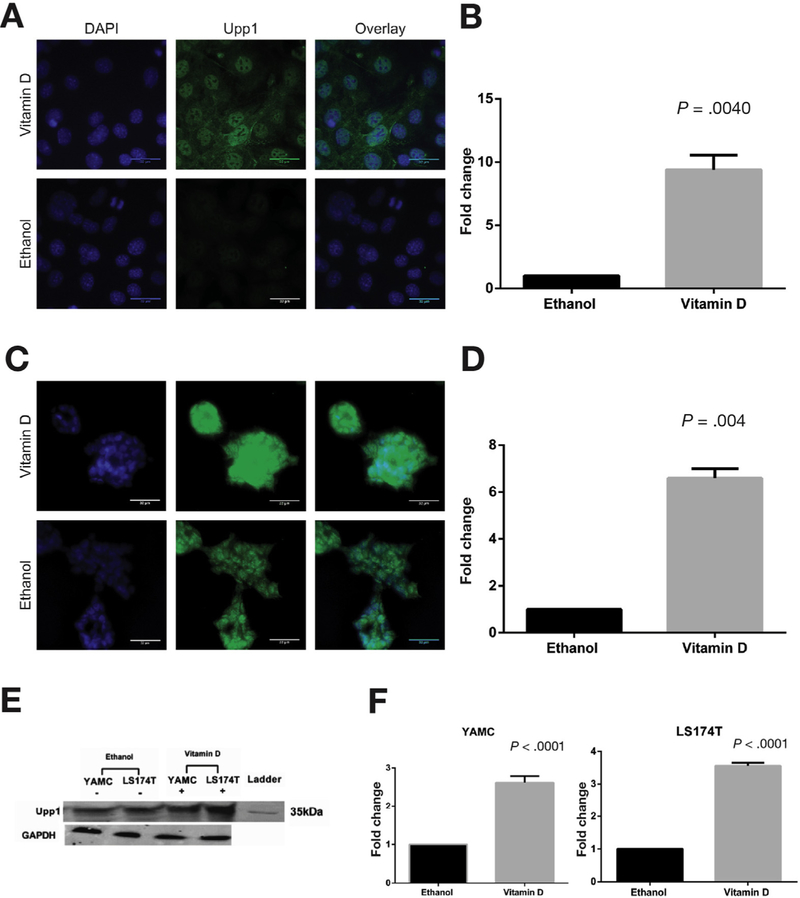
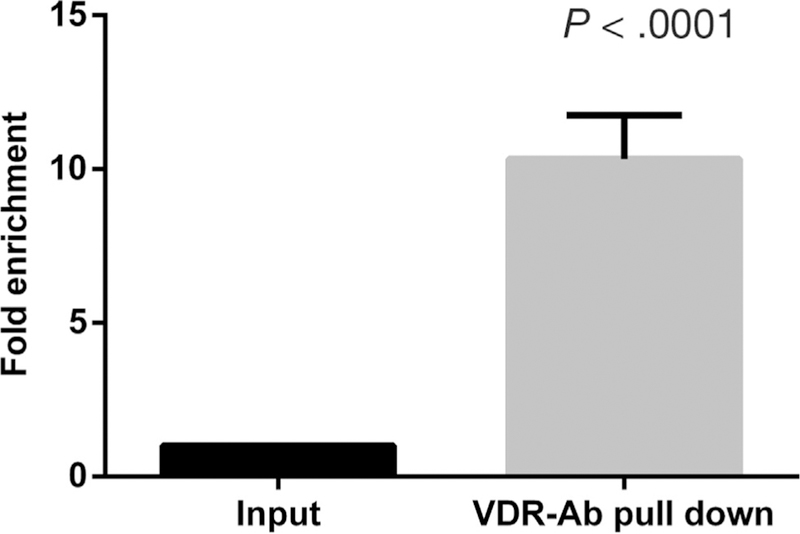
We quantified expression and activity of UPP1 in response to 1α,25(OH)D in young adult mouse colonic cells, human CRC cells (LS174T), and organoids (derived from rectosigmoid biopsy samples of healthy individuals undergoing colonoscopies) using quantitative polymerase chain reaction, immunoblot, and immunocytochemistry assays. Binding of the vitamin D receptor to UPP1 was tested by chromatin immunoprecipitation. Uridine-induced DNA damage was measured by fragment-length analysis in repair enzyme assays. Allele-specific 1α,25(OH)D responses were tested using luciferase assays.
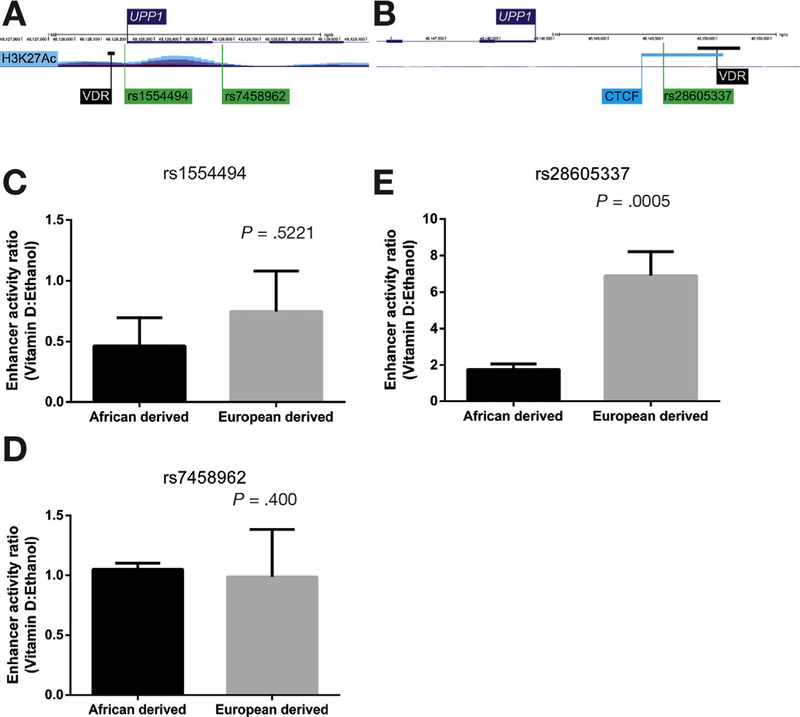
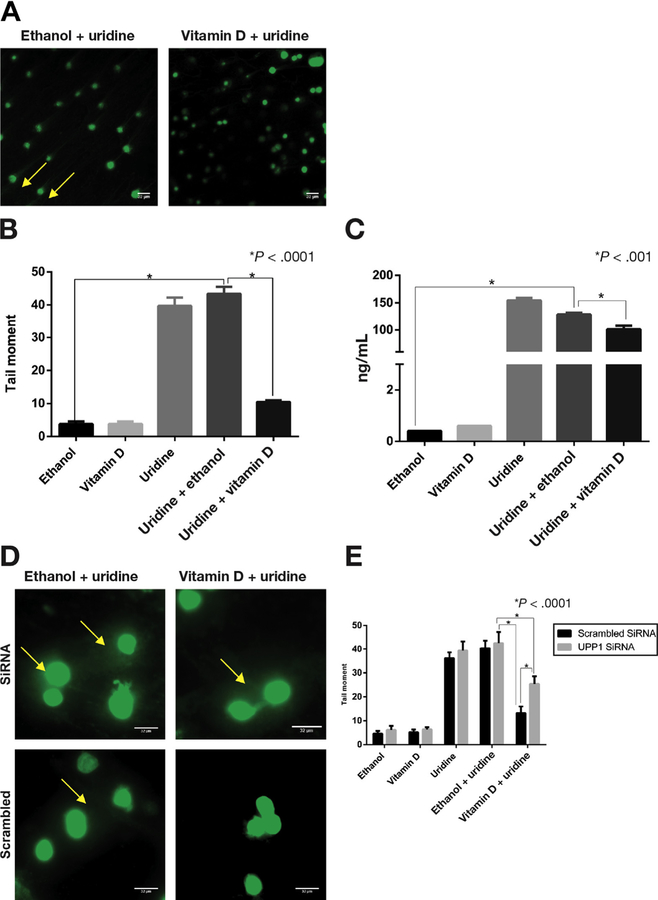
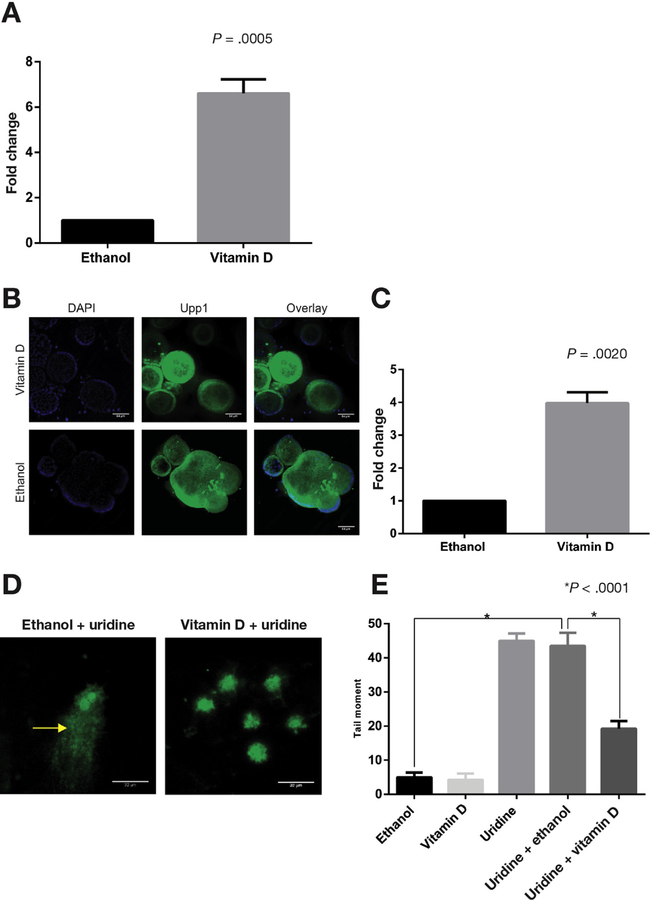
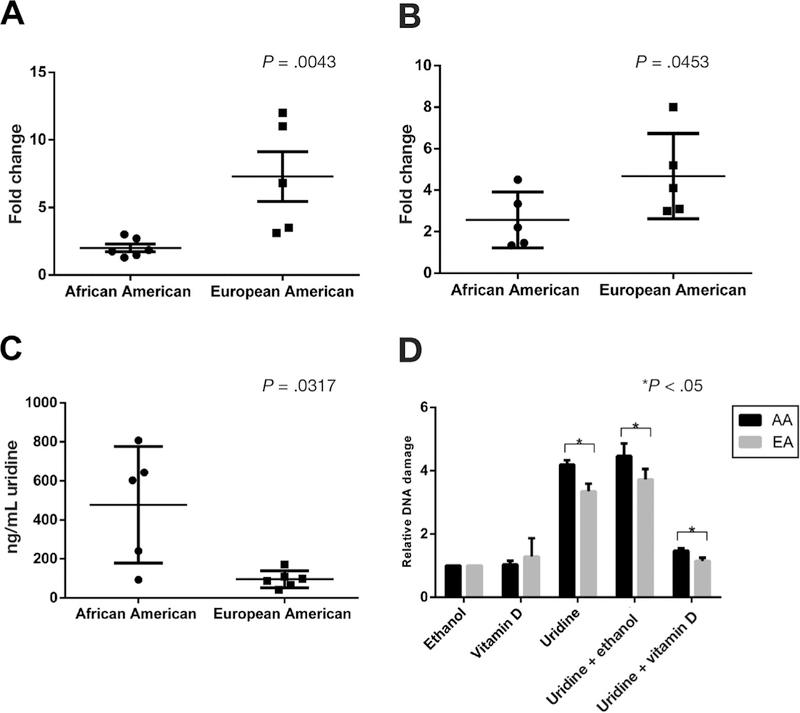
Vitamin D increased levels of UPP1 mRNA, protein, and enzymatic activity and increased vitamin D receptor binding to the UPP1 promoter in young adult mouse colonic cells, LS174T cells, and organoids. 1α,25(OH)D significantly reduced levels of uridine and uridine-induced DNA damage in these cells, which required UPP1 expression. Organoids derived from colon tissues of African Americans expressed lower levels of UPP1 after exposure to 1α,25(OH)D and had increased uridine-induced DNA damage compared with organoids derived from tissues of European Americans. Luciferase assays with the T allele of single nucleotide polymorphism rs28605337 near UPP1, which is found more frequently in African Americans than European Americans, expressed lower levels of UPP1 after exposure to 1α,25(OH)D than assays without this variant.
We found vitamin D to increase expression of UPP1, leading to reduce uridine-induced DNA damage, in colon cells and organoids. A polymorphism in UPP1 found more frequently in African Americans than European Americans reduced UPP1 expression upon cell exposure to 1α,25(OH)D. Differences in expression of UPP1 in response to vitamin D could contribute to the increased risk of CRC in African Americans.
非裔美国人是美国结直肠癌(CRC)负担最重的人群;维生素 D 的种族间保护作用差异可能导致这种差异。1α,25(OH)D 维生素 D(维生素 D 的活性形式)可诱导欧洲裔美国人结肠组织中转录尿嘧啶磷酸化酶基因(UPP1),但在非裔美国人结肠组织中的诱导作用较小。UPP1 基因敲除小鼠的肠道中尿嘧啶和脱氧尿嘧啶三磷酸(dUTP)浓度增加,尿嘧啶诱导的 DNA 损伤增加,并形成结肠肿瘤。我们研究了 1α,25(OH)D 对 UPP1 的调节作用以及 UPP1 在结肠中的尿嘧啶诱导 DNA 损伤,并研究了这些过程在非洲裔和欧洲裔美国人之间的差异。
我们使用定量聚合酶链反应、免疫印迹和免疫细胞化学检测年轻成年小鼠结肠细胞、CRC 细胞(LS174T)和类器官(源自接受结肠镜检查的健康个体的直肠乙状结肠活检样本)对 1α,25(OH)D 反应后 UPP1 的表达和活性。通过染色质免疫沉淀试验检测维生素 D 受体与 UPP1 的结合。通过修复酶测定中的片段长度分析测量尿嘧啶诱导的 DNA 损伤。使用荧光素酶测定检测等位基因特异性 1α,25(OH)D 反应。
维生素 D 增加了年轻成年小鼠结肠细胞、LS174T 细胞和类器官中 UPP1 mRNA、蛋白和酶活性的水平,并增加了维生素 D 受体与 UPP1 启动子的结合。1α,25(OH)D 显著降低了这些细胞中尿嘧啶和尿嘧啶诱导的 DNA 损伤的水平,而这些水平需要 UPP1 的表达。与源自欧洲裔美国人组织的类器官相比,源自非洲裔美国人结肠组织的类器官在暴露于 1α,25(OH)D 后表达的 UPP1 水平较低,且尿嘧啶诱导的 DNA 损伤增加。在 UPP1 附近的单核苷酸多态性 rs28605337 处进行无 T 等位基因的荧光素酶测定,该多态性在非洲裔美国人中比在欧洲裔美国人中更常见,与无此变体的测定相比,暴露于 1α,25(OH)D 后 UPP1 的表达水平较低。
我们发现维生素 D 可增加结肠细胞和类器官中 UPP1 的表达,从而减少尿嘧啶诱导的 DNA 损伤。在非洲裔美国人中比在欧洲裔美国人中更常见的 UPP1 多态性降低了细胞暴露于 1α,25(OH)D 时 UPP1 的表达。维生素 D 对 UPP1 表达的反应差异可能导致非洲裔美国人 CRC 风险增加。