Department of Ophthalmology, Massachusetts Eye and Ear Infirmary, Harvard Medical School.
Channing Division of Network Medicine, Brigham and Women's Hospital, Harvard Medical School, Boston, MA.
J Glaucoma. 2018 Jul;27 Suppl 1(Suppl 1):S20-S23. doi: 10.1097/IJG.0000000000000915.
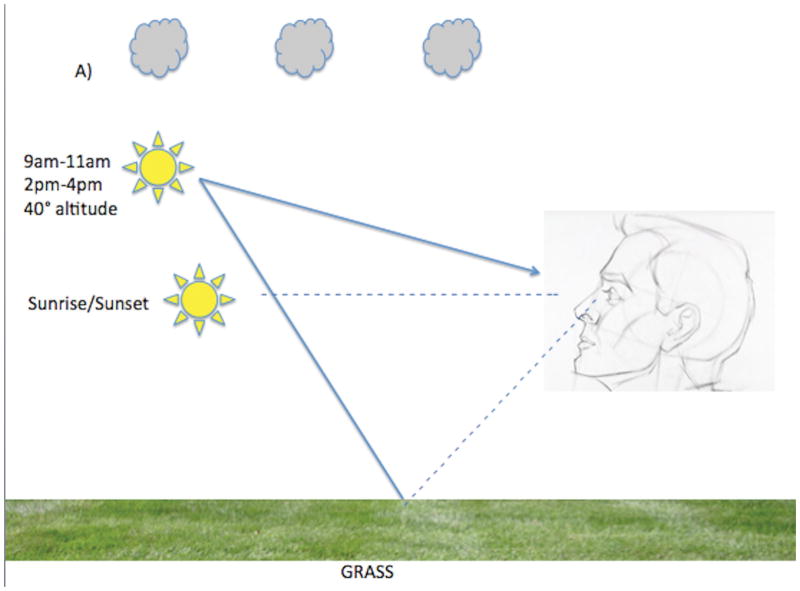
An agnostic high throughput search of the genome revealed a robust association between LOXL1 genetic polymorphisms and exfoliation syndrome (XFS), a discovery that likely would not have been possible with candidate or family-based gene search strategies. While questions remain regarding how LOXL1 gene variants contribute to XFS pathogenesis, it is clear that the frequencies of disease-related alleles do not track with the varying disease burden throughout the world, prompting a search for environmental risk factors. A geo-medicine approach revealed that disease load seemed to increase as a function of the distance from the equator. The exact reason for this extraequatorial disease distribution pattern remains unclear, but a greater amount of time spent outdoors is a robust risk factor for XFS, suggesting climatic factors such as ocular solar exposure and colder ambient temperature may be involved in disease pathogenesis. Prospective studies have also implicated higher coffee consumption and lower dietary folate intake in association with incident XFS. The discovery of environmental risk factors for XFS suggests that preventive measures may help to reduce ocular morbidity from XFS.
一项针对基因组的不可知论高通量搜索发现,LOXL1 基因多态性与剥脱综合征(XFS)之间存在强有力的关联,如果采用候选基因或基于家族的基因搜索策略,这一发现可能是不可能的。虽然关于 LOXL1 基因突变如何导致 XFS 发病机制仍存在疑问,但很明显,与疾病相关的等位基因的频率与世界各地不同的疾病负担并不一致,这促使人们寻找环境风险因素。地理医学方法显示,疾病负担似乎随着与赤道的距离增加而增加。这种赤道以外疾病分布模式的确切原因尚不清楚,但更多的户外活动时间是 XFS 的一个强有力的风险因素,这表明眼部太阳暴露和较低的环境温度等气候因素可能与疾病发病机制有关。前瞻性研究还表明,较高的咖啡摄入量和较低的饮食叶酸摄入量与 XFS 的发生有关。XFS 环境风险因素的发现表明,预防措施可能有助于降低 XFS 引起的眼部发病率。