Department of Biological Chemistry , University of Michigan , Ann Arbor , Michigan 48109 , United States.
Université de Bordeaux, IBGC, UMR 5095, F-33077 Bordeaux , France.
ACS Chem Biol. 2018 Aug 17;13(8):2300-2307. doi: 10.1021/acschembio.8b00463. Epub 2018 Jul 18.
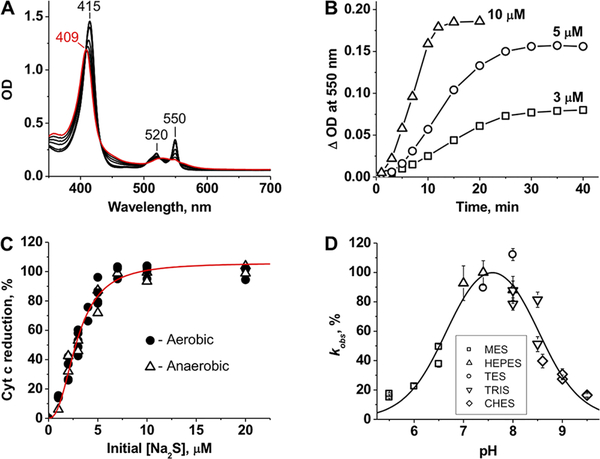
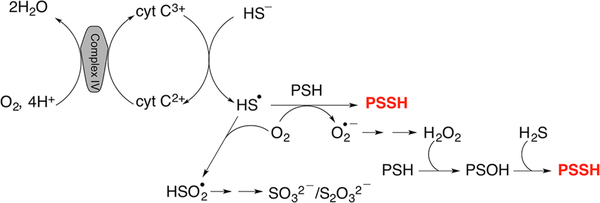
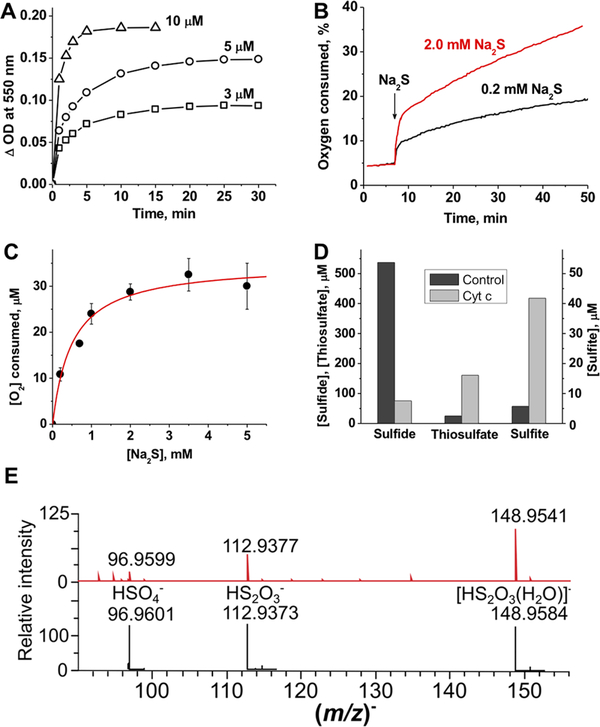
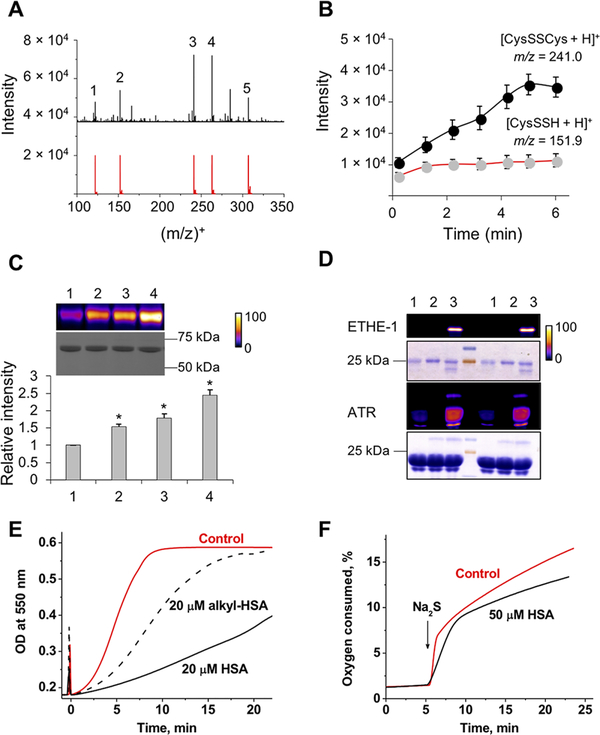
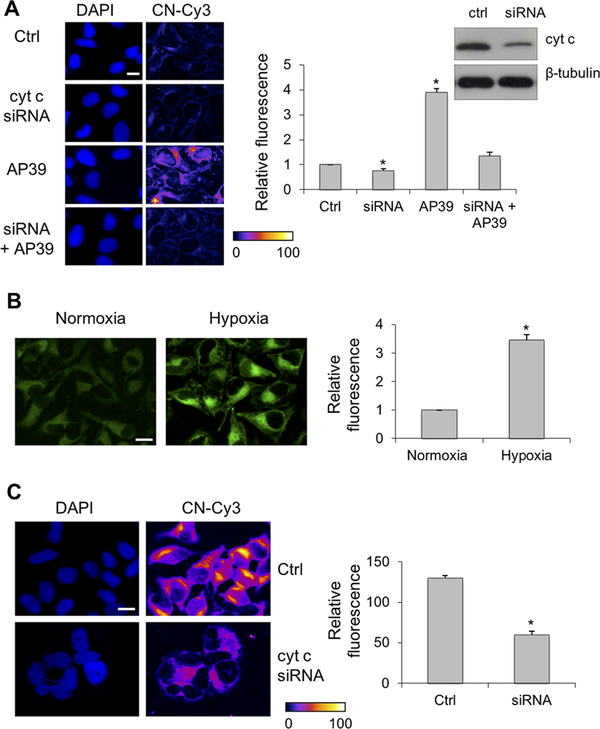
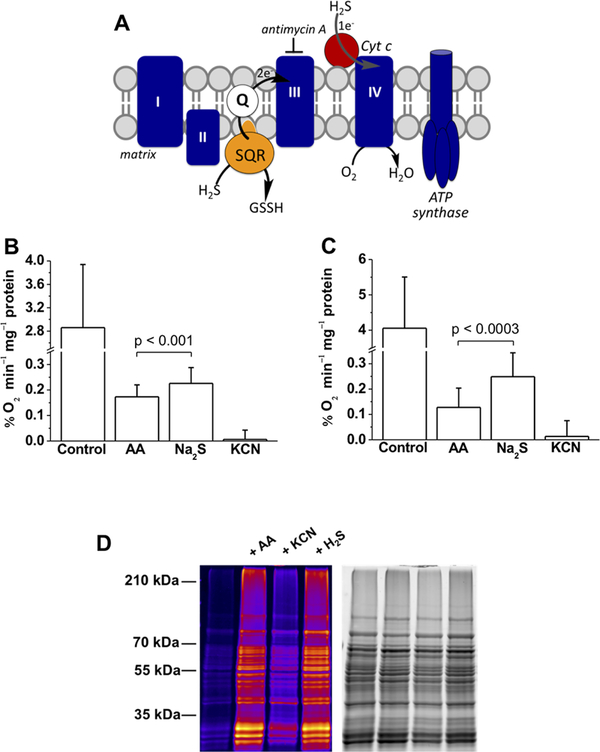
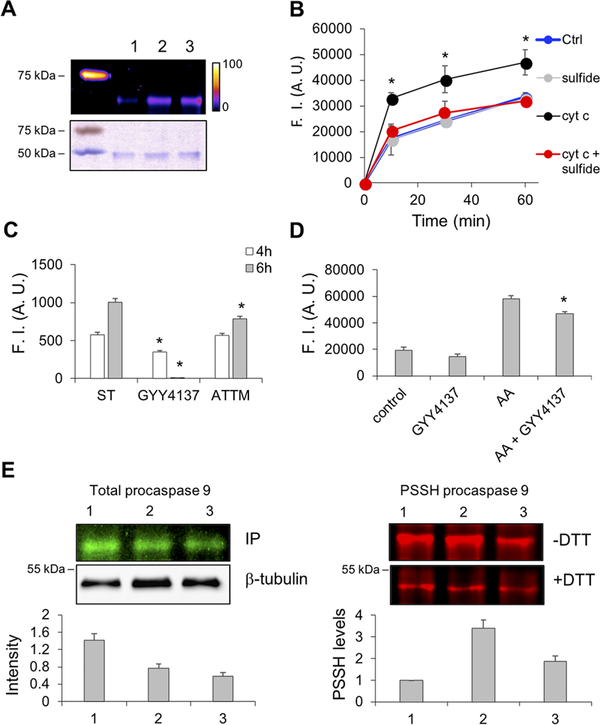
Hydrogen sulfide (HS) is an endogenously produced gas that is toxic at high concentrations. It is eliminated by a dedicated mitochondrial sulfide oxidation pathway, which connects to the electron transfer chain at the level of complex III. Direct reduction of cytochrome c (Cyt C) by HS has been reported previously but not characterized. In this study, we demonstrate that reduction of ferric Cyt C by HS exhibits hysteretic behavior, which suggests the involvement of reactive sulfur species in the reduction process and is consistent with a reaction stoichiometry of 1.5 mol of Cyt C reduced/mol of HS oxidized. HS increases O consumption by human cells (HT29 and HepG2) treated with the complex III inhibitor antimycin A, which is consistent with the entry of sulfide-derived electrons at the level of complex IV. Cyt C-dependent HS oxidation stimulated protein persulfidation in vitro, while silencing of Cyt C expression decreased mitochondrial protein persulfidation in a cell culture. Cyt C released during apoptosis was correlated with persulfidation of procaspase 9 and with loss of its activity. These results reveal a potential role for the electron transfer chain in general, and Cyt C in particular, for potentiating sulfide-based signaling.
硫化氢(HS)是一种内源性产生的气体,在高浓度下具有毒性。它通过专门的线粒体硫化物氧化途径消除,该途径在复合物 III 水平与电子传递链连接。先前已经报道了 HS 直接还原细胞色素 c(Cyt C),但尚未进行表征。在这项研究中,我们证明了 HS 还原高铁 Cyt C 表现出滞后行为,这表明反应性硫物种参与了还原过程,并且与 1.5 摩尔 Cyt C 还原/mol HS 氧化的反应计量一致。HS 增加了用复合物 III 抑制剂antimycin A 处理的人细胞(HT29 和 HepG2)的 O 消耗,这与在复合物 IV 水平上进入硫化物衍生电子一致。Cyt C 依赖性 HS 氧化在体外刺激蛋白质过硫化,而 Cyt C 表达沉默降低了细胞培养物中线粒体蛋白的过硫化。凋亡过程中释放的 Cyt C 与 procaspase 9 的过硫化以及其活性丧失相关。这些结果揭示了电子传递链在一般情况下,特别是 Cyt C 在增强基于硫化物的信号转导中的潜在作用。