Department of Biochemical Sciences, Sapienza University of Rome, Rome, Italy.
CNR Institute of Molecular Biology and Pathology, Rome, Italy.
Oxid Med Cell Longev. 2019 Jan 29;2019:8102936. doi: 10.1155/2019/8102936. eCollection 2019.
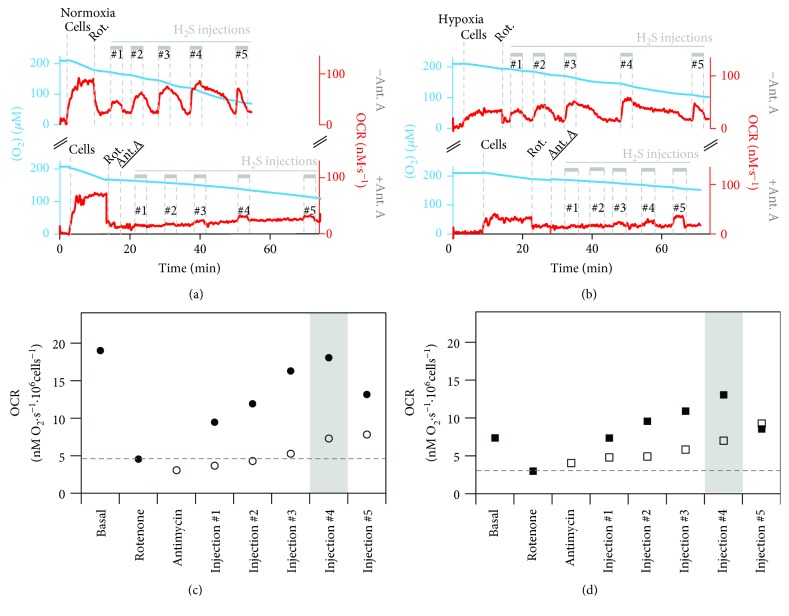
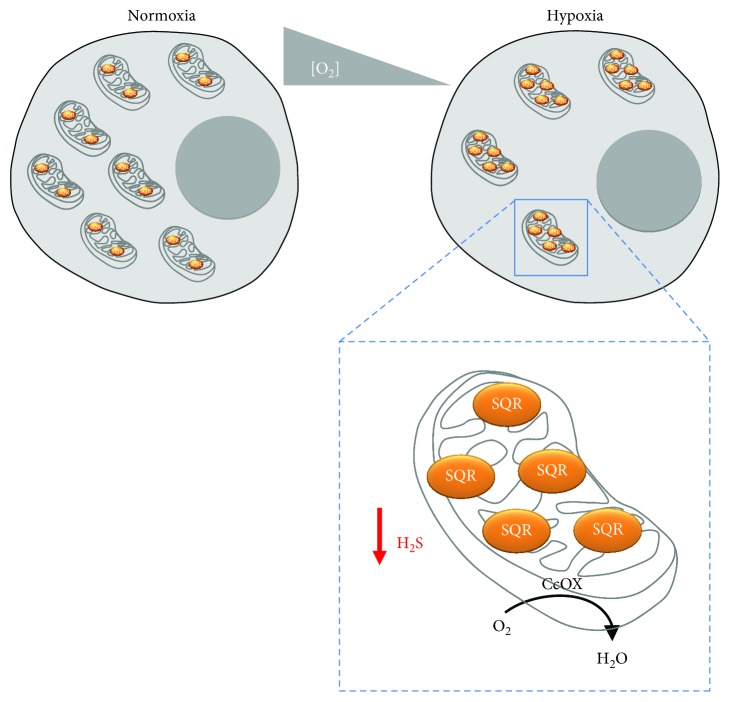
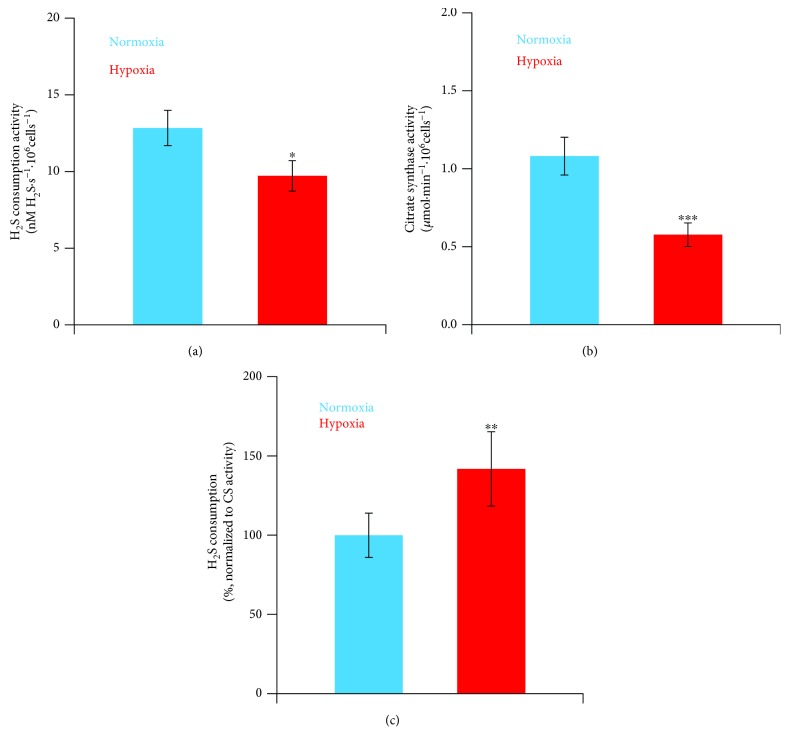
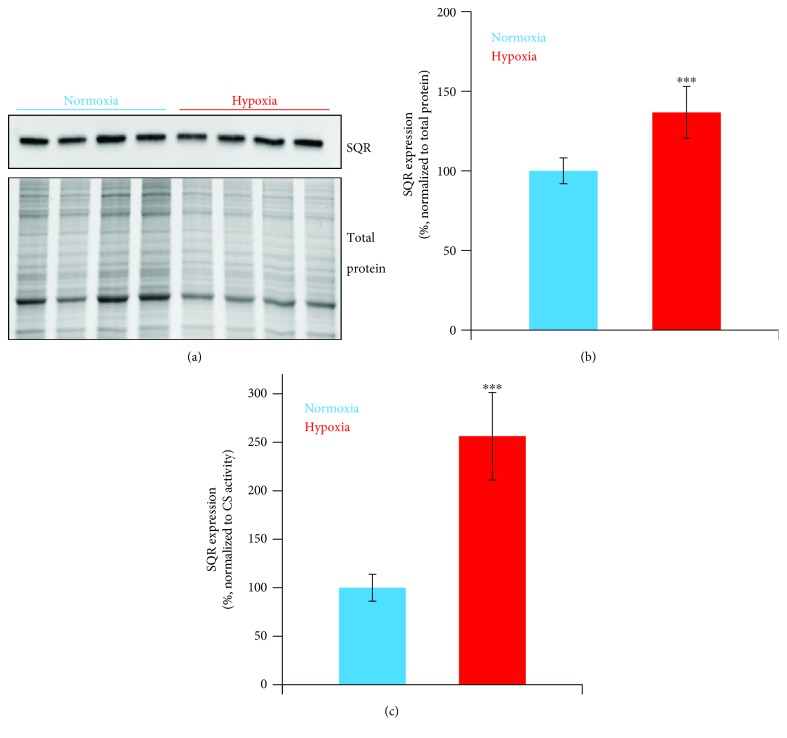
Hydrogen sulfide (HS), a known inhibitor of cytochrome oxidase (CcOX), plays a key signaling role in human (patho)physiology. HS is synthesized endogenously and mainly metabolized by a mitochondrial sulfide-oxidizing pathway including sulfide:quinone oxidoreductase (SQR), whereby HS-derived electrons are injected into the respiratory chain stimulating O consumption and ATP synthesis. Under hypoxic conditions, HS has higher stability and is synthesized at higher levels with protective effects for the cell. Herein, working on SW480 colon cancer cells, we evaluated the effect of hypoxia on the ability of cells to metabolize HS. The sulfide-oxidizing activity was assessed by high-resolution respirometry, measuring the stimulatory effect of sulfide on rotenone-inhibited cell respiration in the absence or presence of antimycin A. Compared to cells grown under normoxic conditions (air O), cells exposed for 24 h to hypoxia (1% O) displayed a 1.3-fold reduction in maximal sulfide-oxidizing activity and 2.7-fold lower basal O respiration. Based on citrate synthase activity assays, mitochondria of hypoxia-treated cells were 1.8-fold less abundant and displayed 1.4-fold higher maximal sulfide-oxidizing activity and 2.6-fold enrichment in SQR as evaluated by immunoblotting. We speculate that under hypoxic conditions mitochondria undergo these adaptive changes to protect cell respiration from HS poisoning.
硫化氢 (HS) 是细胞色素氧化酶 (CcOX) 的已知抑制剂,在人体 (病理) 生理学中发挥关键信号作用。HS 是内源性合成的,主要通过包括硫化物:醌氧化还原酶 (SQR) 的线粒体硫化物氧化途径代谢,其中 HS 衍生的电子被注入呼吸链,刺激 O 消耗和 ATP 合成。在缺氧条件下,HS 更稳定,合成水平更高,对细胞具有保护作用。在此,我们在 SW480 结肠癌细胞上评估了缺氧对细胞代谢 HS 能力的影响。通过高分辨率呼吸测定法评估硫化物氧化活性,测量硫化物对鱼藤酮抑制的细胞呼吸的刺激作用,有无抗霉素 A。与在常氧条件(空气 O)下生长的细胞相比,暴露于缺氧(1% O) 24 小时的细胞最大硫化物氧化活性降低了 1.3 倍,基础 O 呼吸降低了 2.7 倍。基于柠檬酸合酶活性测定,缺氧处理细胞的线粒体丰度降低了 1.8 倍,最大硫化物氧化活性增加了 1.4 倍,免疫印迹评估的 SQR 富集了 2.6 倍。我们推测,在缺氧条件下,线粒体发生这些适应性变化,以保护细胞呼吸免受 HS 中毒。