Yerzhebayeva Raushan, Abekova Alfiya, Konysbekov Kerimkul, Bastaubayeva Sholpan, Kabdrakhmanova Aynur, Absattarova Aiman, Shavrukov Yuri
Kazakh Research Institute of Agriculture and Plant Growing, Almalybak, Almaty District, Kazakhstan.
Taldykorgan Branch, Kazakh Research Institute of Agriculture and Plant Growing, Taldykorgan, Almaty District, Kazakhstan.
PeerJ. 2018 Jun 27;6:e5127. doi: 10.7717/peerj.5127. eCollection 2018.
The pathogens from species can cause Fusarium root rot (RR) and other diseases in plant species including sugar beet ( L.), and they have a strong negative impact on sugar beet yield and quality.
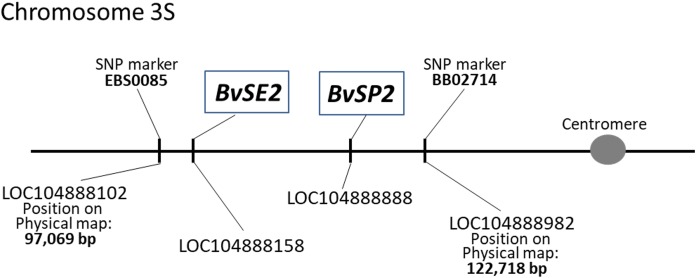
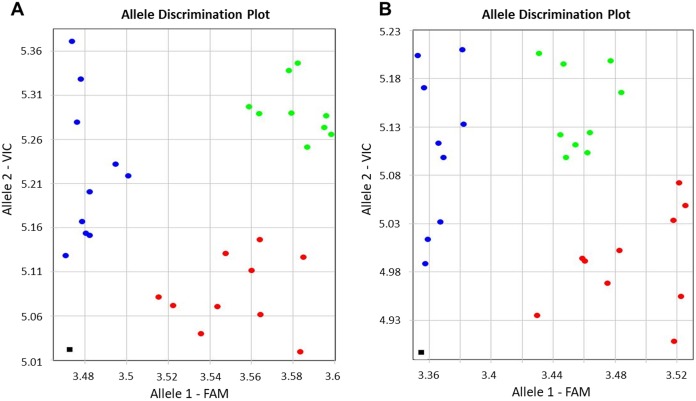
A total of 22 sugar beet breeding lines were evaluated for the symptoms of RR after inoculation with Sch., isolate No. 5, and growth in a field trial. Two candidate genes for RR resistance, and , encoding chitinases Class IV and III, respectively, were previously identified in sugar beet, and used for genotyping using modern Amplifluor-like single nucleotide polymorphism (SNP) genotyping approach. The qPCR expression analysis was used to verify responses of the candidate genes for RR infections.
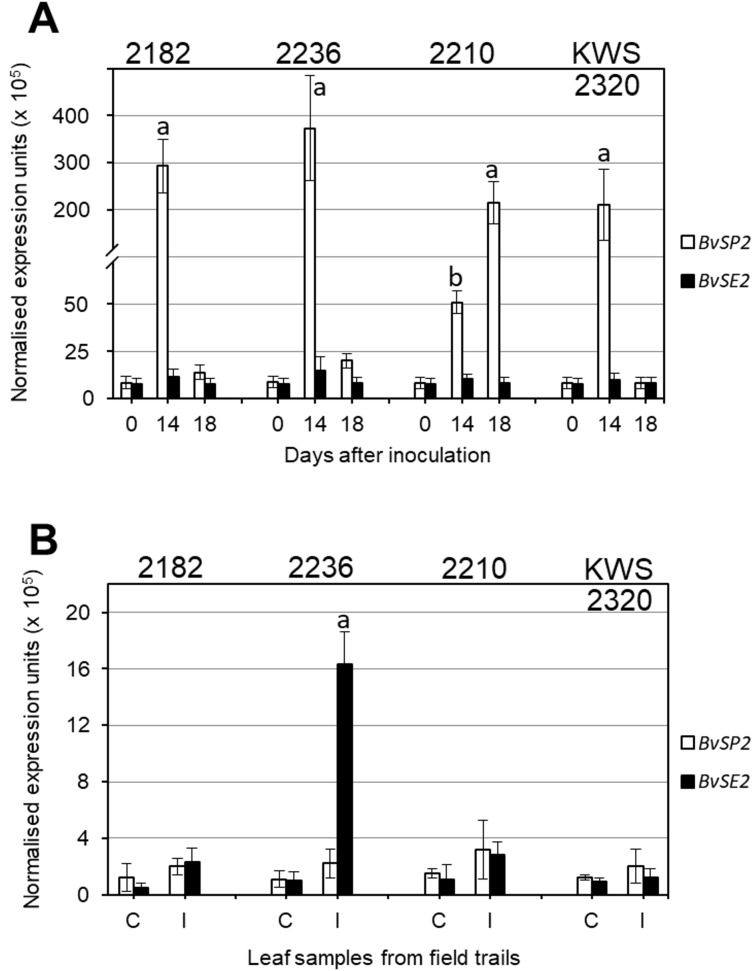
A strong association of two SNP markers for and with resistance to RR in sugar beet was found in our study. Very high expression (100-fold compared to Controls) was observed in three RR resistant accessions (2182, 2236 and KWS2320) 14 days after inoculation which returned to the control level on Day 18. RR sensitive breeding line 2210 showed a delay in mRNA level, reaching maximal expression of 18 days after inoculation. The gene , showed a strong expression level in leaf samples from the infected field trial only in the breeding line 2236, which showed symptoms of RR, and this may be a response to other strains of .
来自某些物种的病原体可导致包括甜菜(Beta vulgaris L.)在内的植物物种发生镰刀菌根腐病(RR)及其他病害,对甜菜产量和品质产生严重负面影响。
用尖孢镰刀菌(Fusarium oxysporum Sch.)5号分离株接种22个甜菜育种系,评估其RR症状,并在田间试验中观察其生长情况。先前已在甜菜中鉴定出两个RR抗性候选基因,分别为编码IV类几丁质酶的BvCHI4和编码III类几丁质酶的BvCHI3,并采用现代类荧光定量单核苷酸多态性(SNP)基因分型方法进行基因分型。采用qPCR表达分析来验证候选基因对RR感染的反应。
本研究发现了两个与甜菜RR抗性相关的SNP标记,分别与BvCHI4和BvCHI3相关。接种后14天,在三个RR抗性材料(2182、2236和KWS2320)中观察到BvCHI4的表达非常高(与对照相比高100倍),在第18天恢复到对照水平。RR敏感育种系2210在mRNA水平上出现延迟,接种后18天达到BvCHI4的最大表达。BvCHI3基因仅在表现出RR症状的育种系2236的感染田间试验叶样中表现出强表达水平,这可能是对其他尖孢镰刀菌菌株的反应。