Organs-on-Chip Technologies Laboratory, ARTORG Center, University of Bern, Bern, Switzerland.
Vascular Biology Program, Harvard Medical School, Boston Children's Hospital, Boston, MA, USA.
Angiogenesis. 2018 Nov;21(4):861-871. doi: 10.1007/s10456-018-9631-8. Epub 2018 Jul 2.
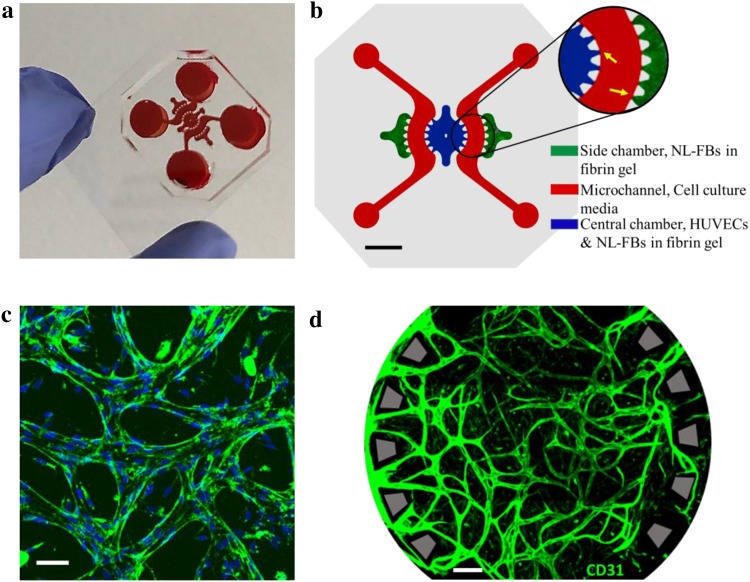
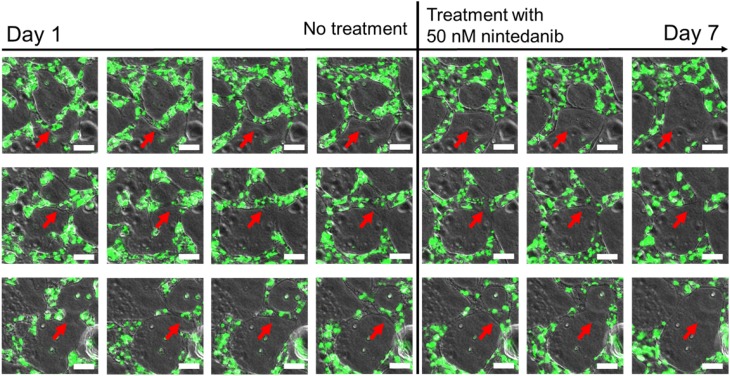
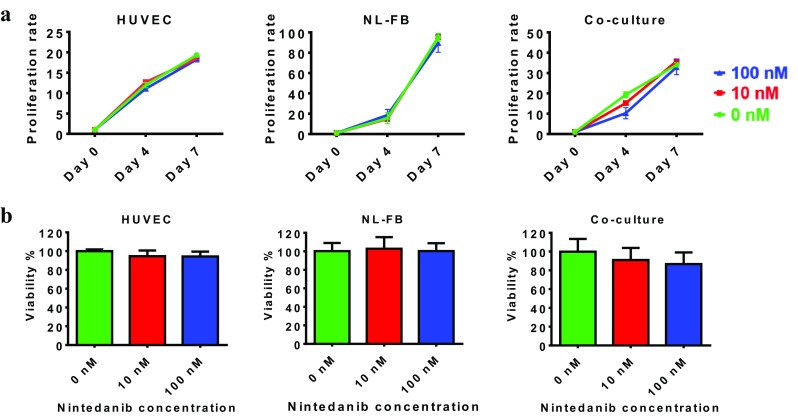
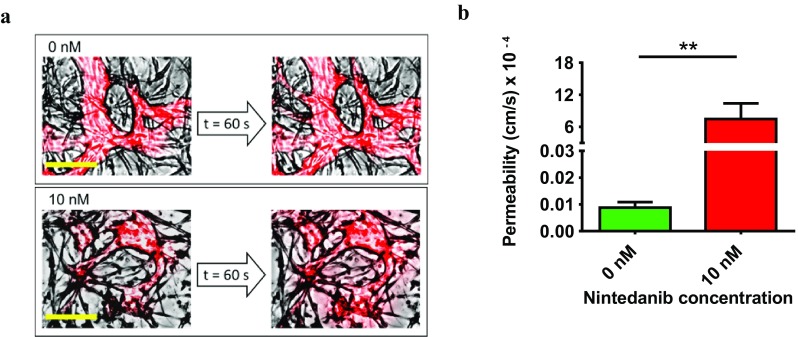
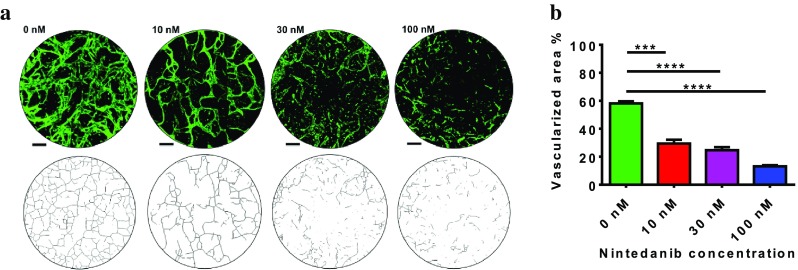
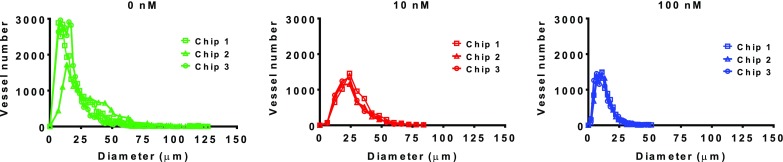
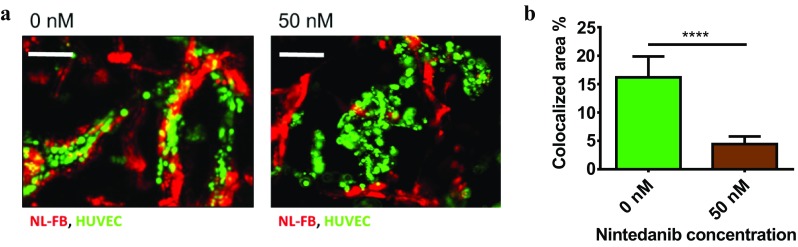
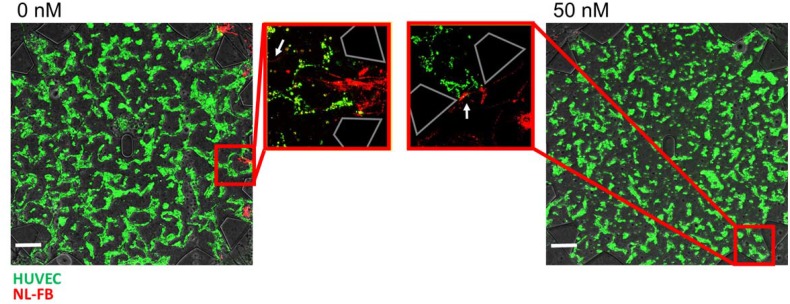
Idiopathic pulmonary fibrosis is characterized by a progressive scarring and stiffening of the peripheral lung tissue that decreases lung function. Over the course of the disease, the lung microvasculature undergoes extensive remodeling. There is increased angiogenesis around fibrotic foci and an absence of microvessels within the foci. To elucidate how the anti-fibrotic drug nintedanib acts on vascular remodeling, we used an in vitro model of perfusable microvessels made with primary endothelial cells and primary lung fibroblasts in a microfluidic chip. The microvasculature model allowed us to study the impact of nintedanib on permeability, vascularized area, and cell-cell interactions. The anti-vasculogenic impact of nintedanib was visible at the minimal concentrations of 10 nM, showing a significant increase in vessel permeability. Furthermore, nintedanib decreased microvessel density, diameter, and influenced fibroblast organization around endothelial microvessels. These results show that nintedanib acts on the endothelial network formation and endothelial-perivascular interactions. Advanced in vitro microvasculature models may thus serve to pinpoint the mechanistic effect of anti-fibrotic drugs on the microvascular remodeling in 3D and refine findings from animal studies.
特发性肺纤维化的特征是外周肺组织的进行性瘢痕和僵硬,导致肺功能下降。在疾病过程中,肺微血管经历广泛的重塑。纤维化灶周围有增加的血管生成,而灶内没有微血管。为了阐明抗纤维化药物尼达尼布对血管重塑的作用机制,我们使用了一种在微流控芯片中由原代内皮细胞和原代肺成纤维细胞制成的可灌注微血管体外模型。该微血管模型使我们能够研究尼达尼布对通透性、血管化区域和细胞-细胞相互作用的影响。尼达尼布在最小浓度 10 nM 时就显示出抗血管生成的作用,显著增加了血管通透性。此外,尼达尼布降低了微血管密度、直径,并影响了内皮周围的成纤维细胞组织。这些结果表明,尼达尼布作用于内皮网络形成和内皮-周细胞相互作用。因此,先进的体外微血管模型可用于确定抗纤维化药物对 3D 中微血管重塑的机制作用,并从动物研究中得出更精确的结论。