Bioinformatics Centre, Institute of Microbial Technology, Chandigarh, 160036, India.
Centre for Computational Biology, Indraprastha Institute of Information Technology, Okhla Industrial Estate, Phase III, New Delhi, 110020, India.
J Transl Med. 2018 Jul 3;16(1):181. doi: 10.1186/s12967-018-1560-1.
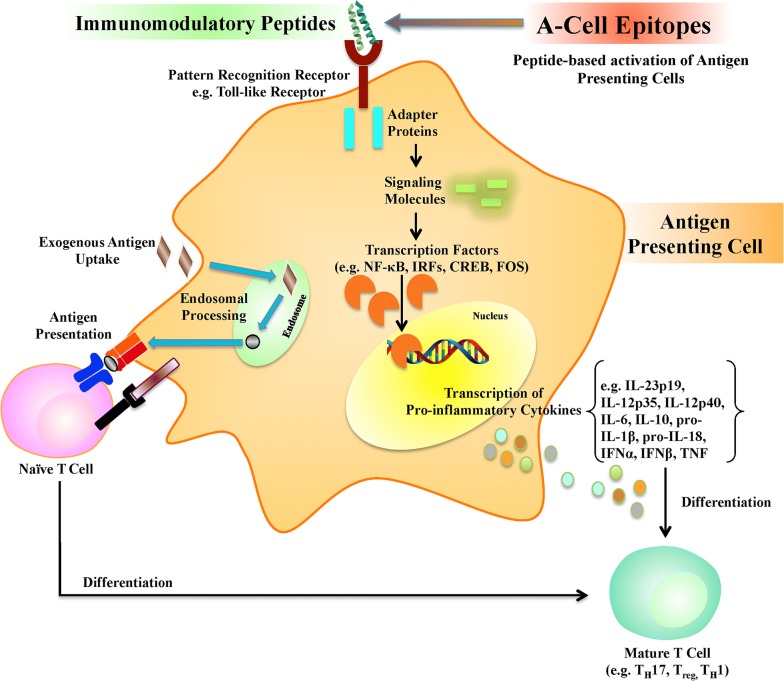
Evidences in literature strongly advocate the potential of immunomodulatory peptides for use as vaccine adjuvants. All the mechanisms of vaccine adjuvants ensuing immunostimulatory effects directly or indirectly stimulate antigen presenting cells (APCs). While numerous methods have been developed in the past for predicting B cell and T-cell epitopes; no method is available for predicting the peptides that can modulate the APCs.
We named the peptides that can activate APCs as A-cell epitopes and developed methods for their prediction in this study. A dataset of experimentally validated A-cell epitopes was collected and compiled from various resources. To predict A-cell epitopes, we developed support vector machine-based machine learning models using different sequence-based features.
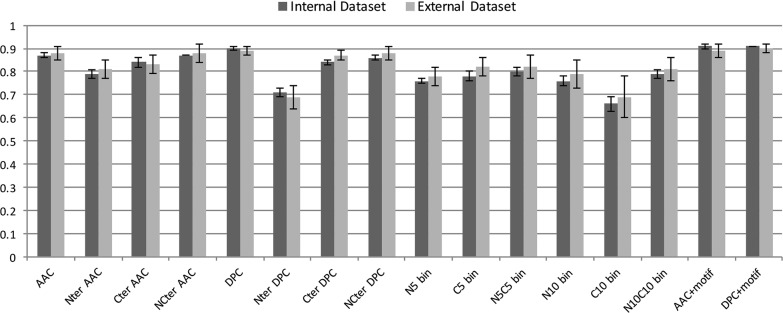
A hybrid model developed on a combination of sequence-based features (dipeptide composition and motif occurrence), achieved the highest accuracy of 95.71% with Matthews correlation coefficient (MCC) value of 0.91 on the training dataset. We also evaluated the hybrid models on an independent dataset and achieved a comparable accuracy of 95.00% with MCC 0.90.
The models developed in this study were implemented in a web-based platform VaxinPAD to predict and design immunomodulatory peptides or A-cell epitopes. This web server available at http://webs.iiitd.edu.in/raghava/vaxinpad/ will facilitate researchers in designing peptide-based vaccine adjuvants.
文献中的证据强烈主张免疫调节肽有潜力用作疫苗佐剂。所有导致免疫刺激作用的疫苗佐剂机制直接或间接地刺激抗原呈递细胞(APC)。虽然过去已经开发了许多用于预测 B 细胞和 T 细胞表位的方法;但是,还没有方法可用于预测可调节 APC 的肽。
我们将能够激活 APC 的肽命名为 A 细胞表位,并在本研究中开发了预测它们的方法。从各种资源中收集和编译了经过实验验证的 A 细胞表位数据集。为了预测 A 细胞表位,我们使用不同的基于序列的特征开发了基于支持向量机的机器学习模型。
在基于序列的特征(二肽组成和基序出现)的组合上开发的混合模型在训练数据集上实现了最高的准确性为 95.71%,马修斯相关系数(MCC)值为 0.91。我们还在独立数据集上评估了混合模型,并且具有可比的准确性为 95.00%,MCC 为 0.90。
本研究中开发的模型已在基于网络的平台 VaxinPAD 中实现,用于预测和设计免疫调节肽或 A 细胞表位。该网络服务器可在 http://webs.iiitd.edu.in/raghava/vaxinpad/ 上获得,将方便研究人员设计基于肽的疫苗佐剂。