Wildlife Zoonoses and Vector-borne Diseases Research Group, Animal and Plant Health Agency, Woodham Lane, New Haw, Addlestone, Surrey, KT15 3NB, UK.
Faculty of Health and Medical Science, University of Surrey, Guildford, Surrey, GU2 XH, UK.
Parasit Vectors. 2018 Jul 3;11(1):381. doi: 10.1186/s13071-018-2959-5.
Usutu virus (USUV) is an emerging zoonotic virus originally from sub-Saharan Africa. It has been introduced into Europe on multiple occasions, causing substantial mortality within the Eurasian blackbird (Turdus merula) population. It is transmitted by the mosquito species Culex pipiens in Europe and Africa. Vector competence studies indicate that European strains of USUV are readily transmitted by indigenous Cx. pipiens. However, there is limited information on the ability of an African strain to infect European mosquitoes.
We evaluated the ability of African strain SAAR-1776 to infect two lines of Cx. pipiens colonised within the United Kingdom (UK). Mosquitoes were fed blood meals containing this virus and maintained at 25 °C for up to 21 days. Individual mosquitoes were tested for the presence of virus in the body, legs and an expectorate saliva sample. Changes to the consensus of the virus genome were monitored in samples derived from infected mosquitoes using amplicon based next generation sequencing.
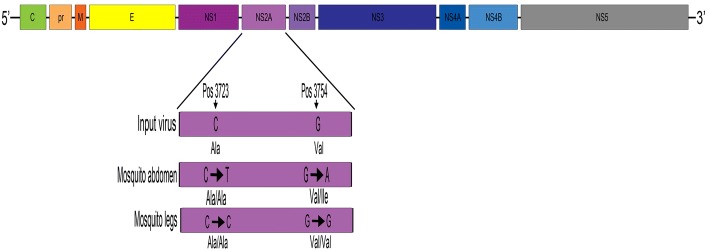
Infection, dissemination and the presence of virus in saliva in one mosquito line was observed, but no evidence for dissemination in the second mosquito line. This suggests a strong barrier to infection in UK Cx. pipiens for this strain of USUV. When comparing the genome of input virus within the blood meal with USUV recovered from an infected mosquito, we observed limited changes in the consensus genome sequence.
The evaluation of vector competence of UK populations of Cx. pipiens for Usutu virus suggests a limited susceptibility to infection with USUV strain SAAR-1776 of African origin. However, within a single mosquito there was complete dissemination and expectoration of USUV, indicating that infection, and potentially transmission, is possible. Sequence changes were observed that may represent early adaption to the mosquito host and could reflect the early events of USUV establishment in European mosquito populations.
乌苏图病毒(USUV)是一种源自撒哈拉以南非洲的新兴人畜共患病原体。它已经多次传入欧洲,导致欧亚大陆黑鹂(Turdus merula)种群大量死亡。它通过欧洲和非洲的库蚊属(Culex)蚊子传播。媒介效能研究表明,欧洲的 USUV 株易于由本地库蚊属(Culex)传播。然而,关于非洲株感染欧洲蚊子的能力的信息有限。
我们评估了非洲株 SAAR-1776 感染在英国(UK)定殖的两个库蚊属(Culex pipiens)品系的能力。蚊子喂食含有这种病毒的血液餐,并在 25°C 下维持长达 21 天。个体蚊子进行了身体、腿部和吐出的唾液样本中是否存在病毒的检测。使用基于扩增子的下一代测序监测从感染蚊子中获得的样本中病毒基因组共识的变化。
观察到在一个蚊子品系中观察到感染、传播和唾液中存在病毒,但在第二个蚊子品系中没有传播的证据。这表明该株 USUV 在英国库蚊属(Culex pipiens)中存在很强的感染障碍。当比较血液餐中的输入病毒基因组与从感染蚊子中回收的 USUV 时,我们观察到共识基因组序列的变化有限。
对英国库蚊属(Culex pipiens)种群对乌苏图病毒的媒介效能评估表明,对非洲起源的 USUV 株 SAAR-1776 的感染敏感性有限。然而,在单个蚊子中,完全传播和吐出 USUV,表明感染和潜在传播是可能的。观察到的序列变化可能代表对蚊子宿主的早期适应,可能反映了 USUV 在欧洲蚊子种群中的早期建立事件。