Gayed Aimée, LaMontagne Anthony D, Milner Allison, Deady Mark, Calvo Rafael A, Christensen Helen, Mykletun Arnstein, Glozier Nick, Harvey Samuel B
School of Psychiatry, Faculty of Medicine, University of New South Wales, Randwick, Australia.
School of Population and Global Health, The University of Melbourne, Melbourne, Australia.
JMIR Ment Health. 2018 Jul 3;5(3):e10517. doi: 10.2196/10517.
Mental health has become the leading cause of sickness absence in high-income countries. Managers can play an important role in establishing mentally healthy workplaces and coordinating their organization's response to a mentally ill worker.
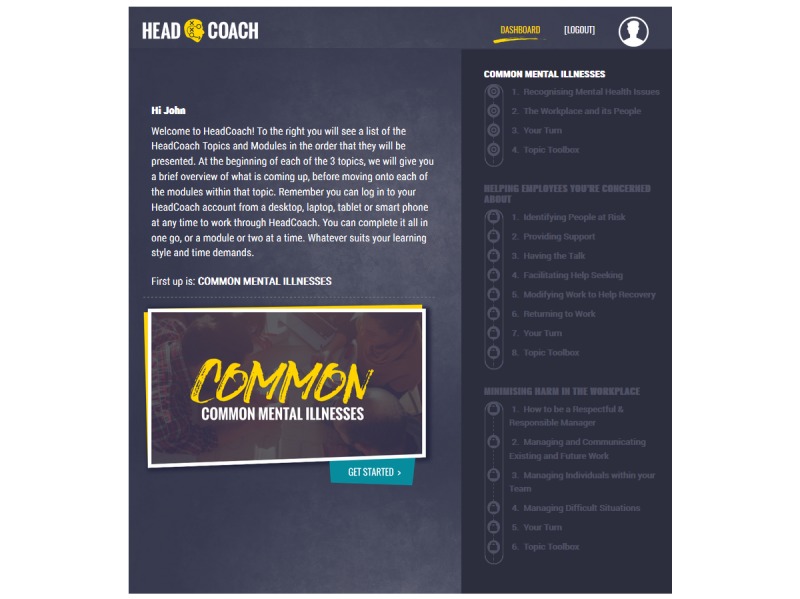
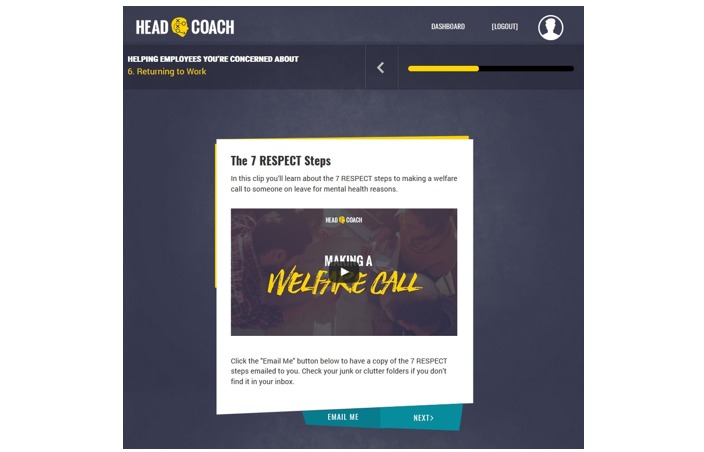
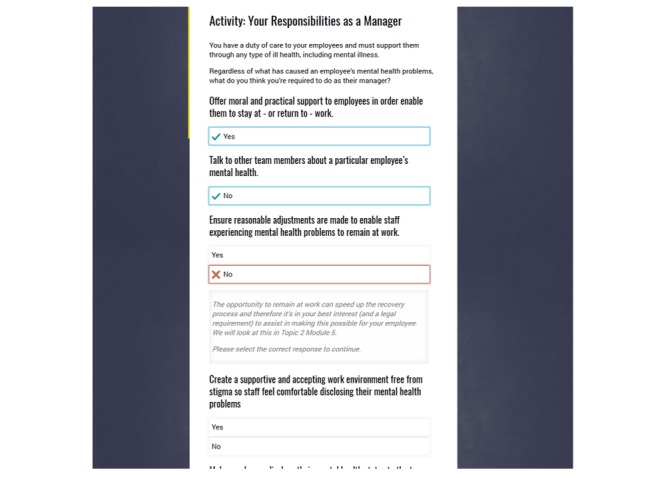
This pilot study aims to evaluate the feasibility, usability, and likely effectiveness of a newly developed online training program for managers called HeadCoach. HeadCoach aims to build managers' confidence in supporting the mental health needs of staff and promote managerial behavior most likely to result in a more mentally healthy workplace.
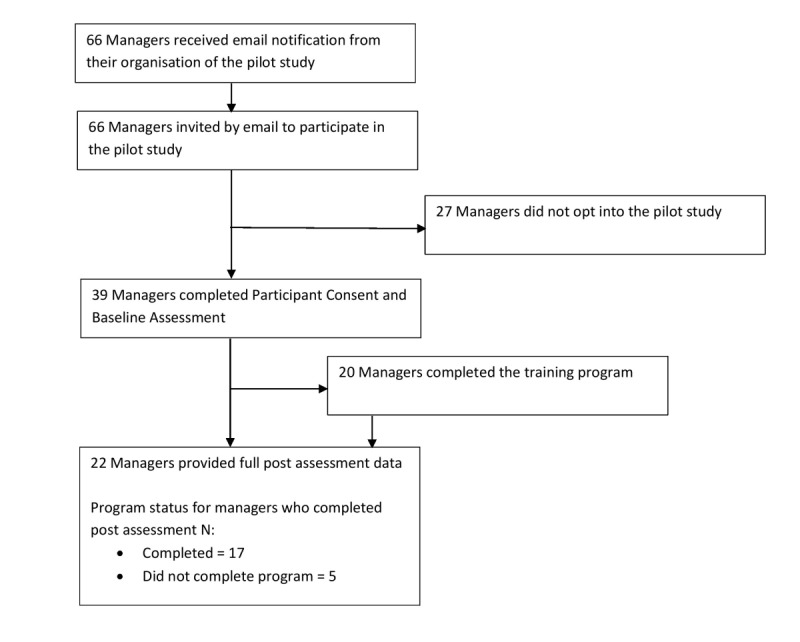
In total, 66 managers from two organizations were invited to participate in this pre-post pilot study of HeadCoach, which was made available to managers to complete at their own pace over a 4-week period. Data were collected at baseline and post intervention via an online research platform. The difference in mean scores for each outcome between these two time points was calculated using paired samples t tests.
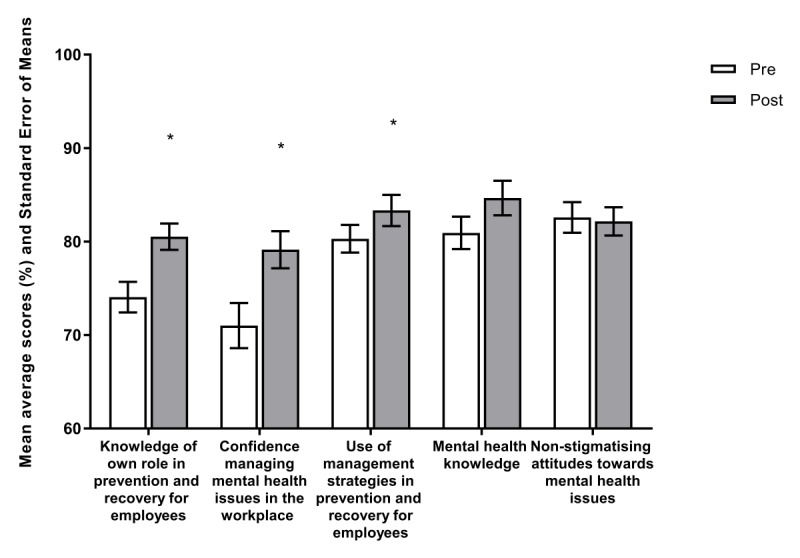
Of all the invited managers, 59.1% (39/66) participated in the trial, with complete pre-post data available for 56.4% (22/39) of the participants. The majority of respondents reported positive engagement with the program. During the study period, managers' knowledge regarding their role in managing mental health issues (P=.01) and their confidence in communicating with employees regarding mental illness (P<.001) significantly increased. In addition, a significant increase was observed from the baseline in managers' self-reported actions to use strategies to prevent and decrease stress among their team members (P=.02).
Although caution is needed due to the absence of a control group, preliminary results of this study suggest that HeadCoach could be a feasible, acceptable, and efficient method of training managers in best workplace practices to help support the mental health needs of their staff.
在高收入国家,心理健康已成为员工因病缺勤的首要原因。管理者在营造心理健康的工作场所及协调组织对患病员工的应对措施方面可发挥重要作用。
本试点研究旨在评估一项新开发的面向管理者的在线培训项目“HeadCoach”的可行性、易用性及可能的有效性。“HeadCoach”旨在增强管理者支持员工心理健康需求的信心,并促进最有可能营造更心理健康工作场所的管理行为。
总共邀请了来自两个组织的66名管理者参与“HeadCoach”的这项前后测试点研究,该培训项目可供管理者按照自己的节奏在4周内完成。通过在线研究平台在基线和干预后收集数据。使用配对样本t检验计算这两个时间点之间每个结果的平均得分差异。
在所有受邀管理者中,59.1%(39/66)参与了试验,56.4%(22/39)的参与者有完整的前后测数据。大多数受访者表示积极参与了该项目。在研究期间,管理者关于其在管理心理健康问题中角色的知识(P = 0.01)以及他们与员工就精神疾病进行沟通的信心(P < 0.001)显著增加。此外,管理者自我报告的使用策略预防和减轻团队成员压力的行为从基线有显著增加(P = 0.02)。
尽管由于缺乏对照组需要谨慎,但本研究的初步结果表明,“HeadCoach”可能是一种可行、可接受且有效的方法,用于培训管理者掌握最佳工作场所实践,以帮助满足员工的心理健康需求。