MRC Epidemiology Unit, Box 285 Institute of Metabolic Science, Cambridge Biomedical Campus, University of Cambridge School of Clinical Medicine, Cambridge, CB2 0QQ, UK.
Nat Commun. 2018 Jul 3;9(1):2457. doi: 10.1038/s41467-018-04930-1.
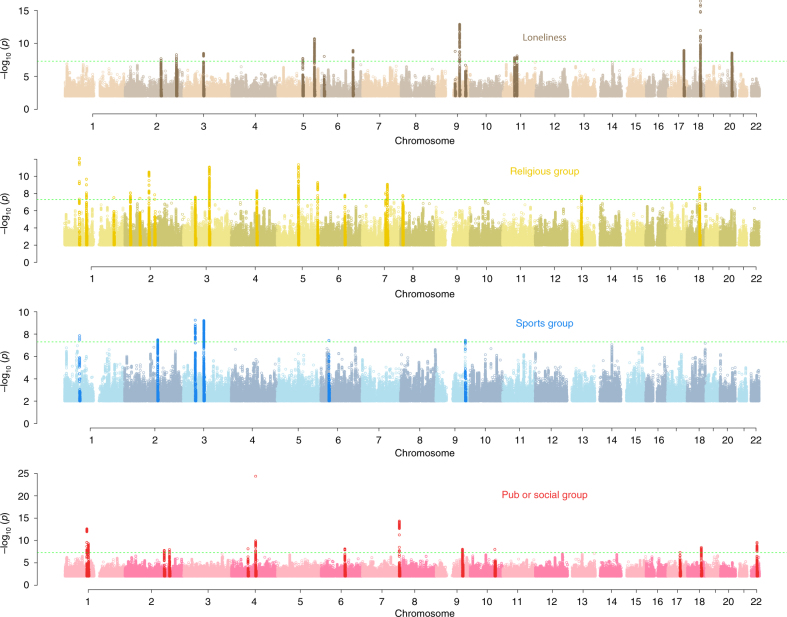
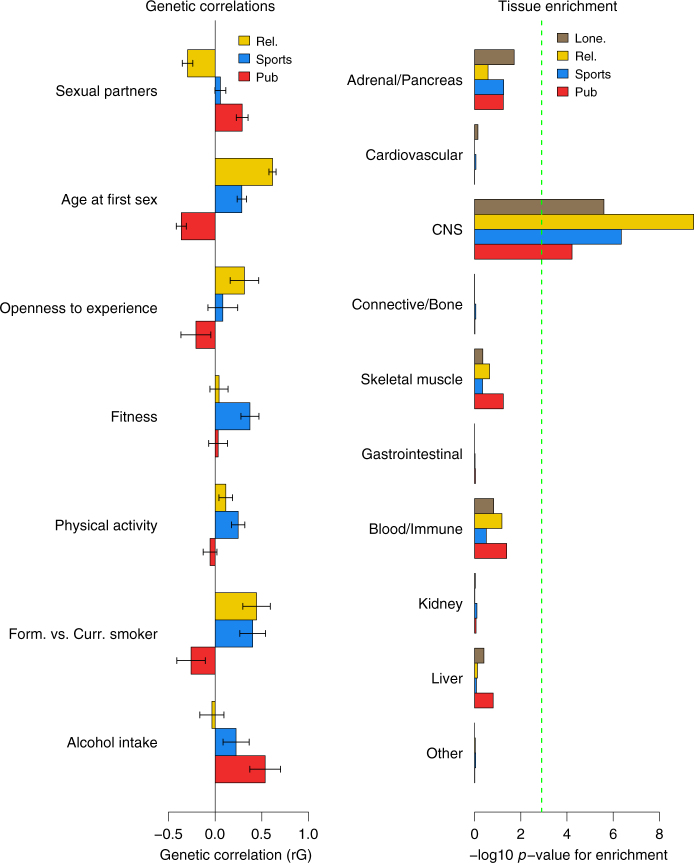
The negative impacts of social isolation and loneliness on health are well documented. However, little is known about their possible biological determinants. In up to 452,302 UK Biobank study participants, we perform genome-wide association study analyses for loneliness and regular participation in social activities. We identify 15 genomic loci (P < 5 × 10) for loneliness, and demonstrate a likely causal association between adiposity and increased susceptibility to loneliness and depressive symptoms. Further loci were identified for regular attendance at a sports club or gym (N = 6 loci), pub or social club (N = 13) or religious group (N = 18). Across these traits there was strong enrichment for genes expressed in brain regions that control emotional expression and behaviour. We demonstrate aetiological mechanisms specific to each trait, in addition to identifying loci that are pleiotropic across multiple complex traits. Further study of these traits may identify novel modifiable risk factors associated with social withdrawal and isolation.
社交孤立和孤独对健康的负面影响已得到充分证实。然而,人们对其可能的生物学决定因素知之甚少。在多达 452302 名英国生物库研究参与者中,我们对孤独感和定期参与社交活动进行了全基因组关联研究分析。我们确定了 15 个孤独感的基因组位点(P<5×10),并证明肥胖与孤独感和抑郁症状的易感性增加之间可能存在因果关系。还确定了经常参加体育俱乐部或健身房(N=6 个位点)、酒吧或社交俱乐部(N=13)或宗教团体(N=18)的相关基因位点。在这些特征中,与控制情绪表达和行为的大脑区域表达的基因有很强的富集。除了确定在多个复杂特征中具有多效性的基因座外,我们还证明了每个特征的病因机制是特定的。进一步研究这些特征可能会确定与社交退缩和孤立相关的新的可改变风险因素。