Guangdong Provincial Key Laboratory of Malignant Tumor Epigenetics and Gene Regulation, Sun Yat-Sen Memorial Hospital, Sun Yat-Sen University, Guangzhou, 510120, China.
Department of Neurosurgery, Sun Yat-sen Memorial Hospital, Sun Yat-sen University, Guangzhou, 510120, China.
Cell Death Dis. 2018 Jul 3;9(7):742. doi: 10.1038/s41419-018-0793-5.
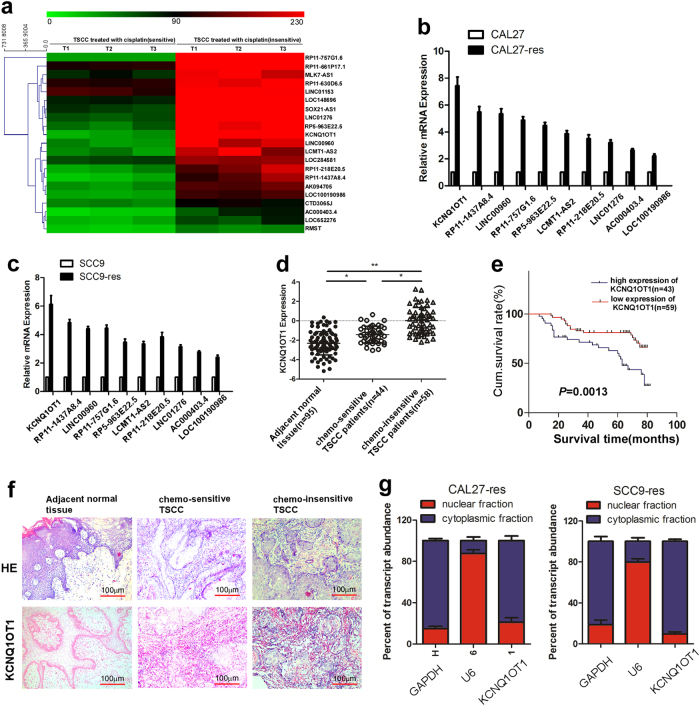
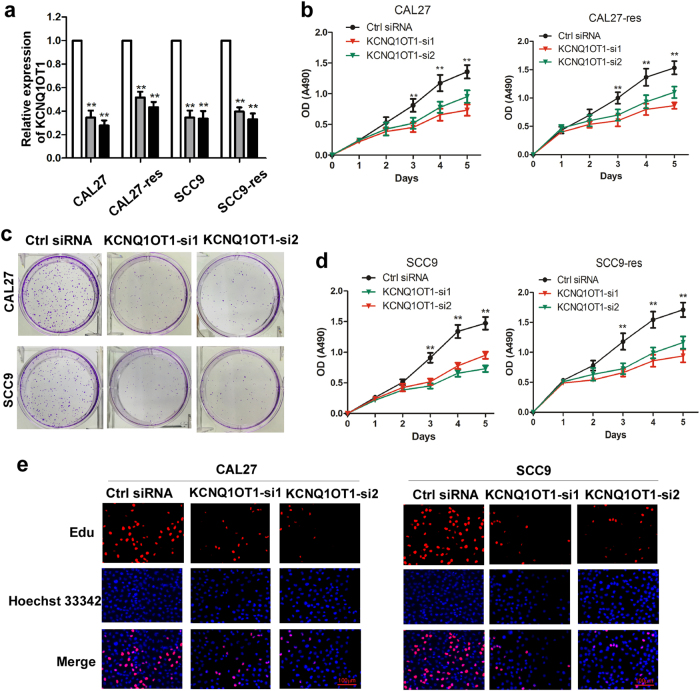
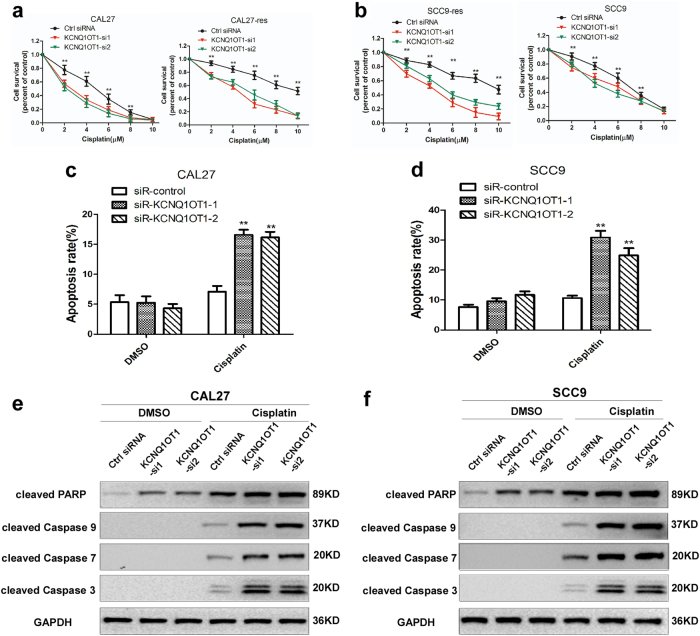
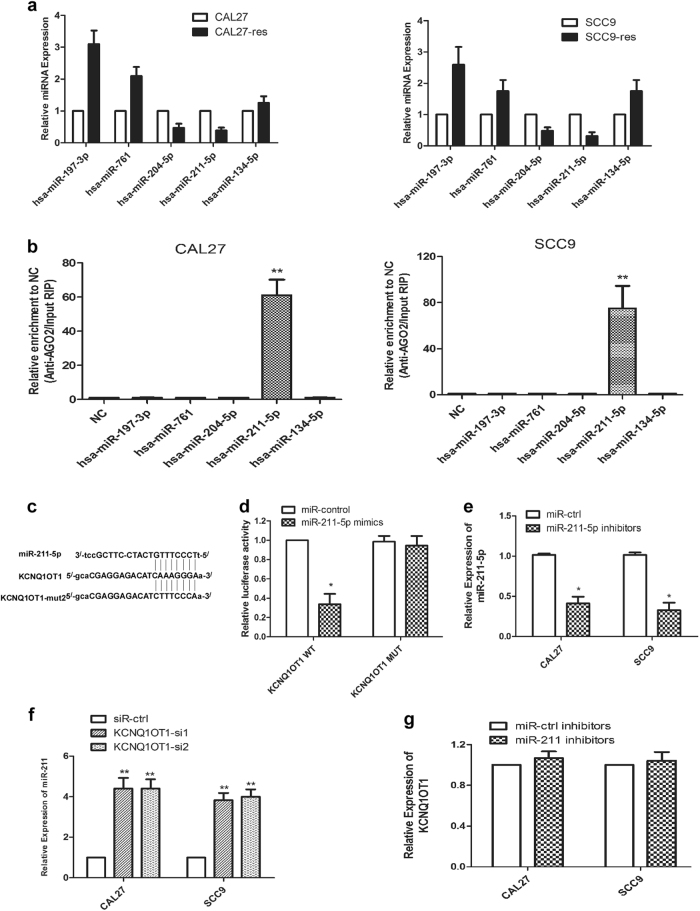
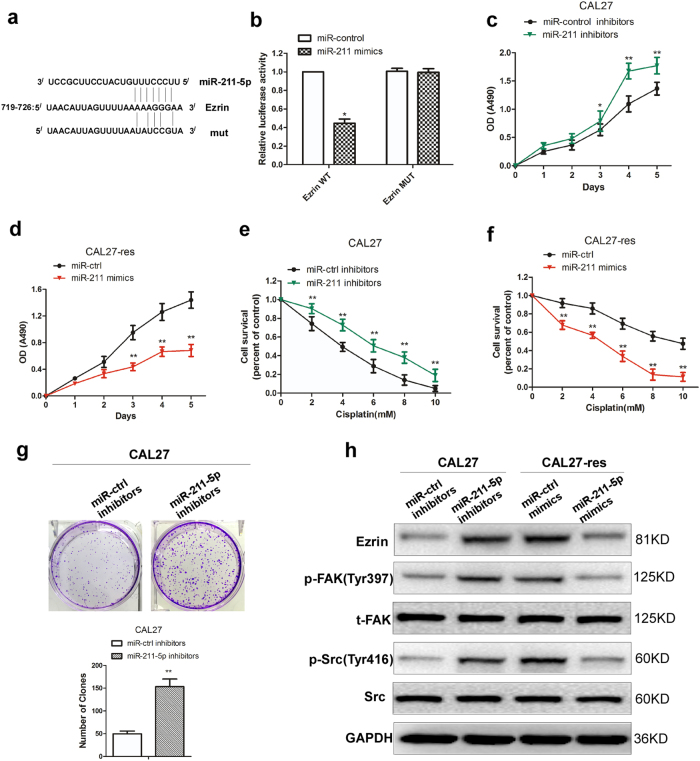
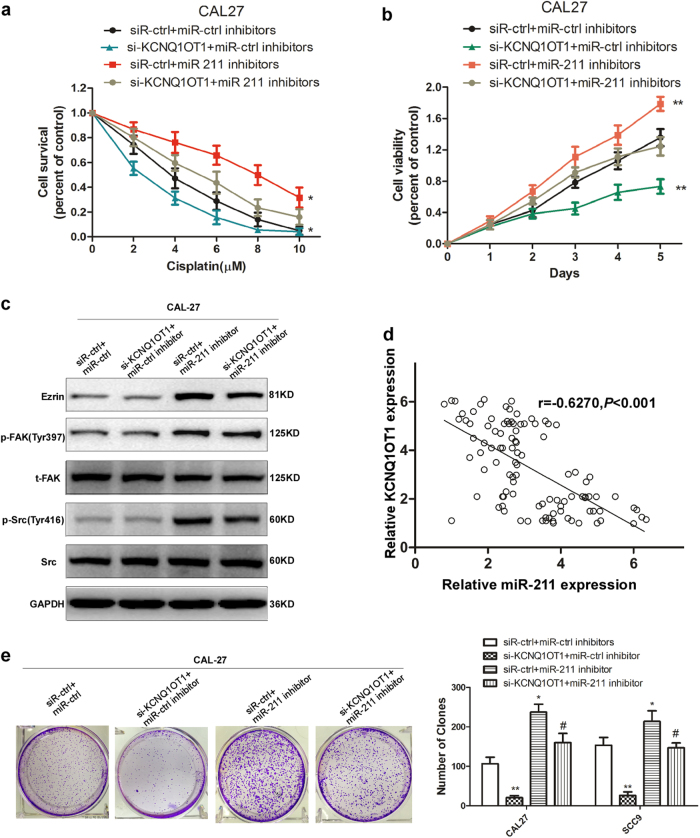
Numerous findings have demonstrated that long noncoding RNA (lncRNA) dysregulation plays a key role in many human neoplasms, including tongue squamous cell carcinoma (TSCC), yet the potential mechanisms of lncRNAs in chemo-resistance remain elusive. Our research showed that the lncRNA KCNQ1OT1 was upregulated in chemo-insensitive TSCC tissues compared with chemo-sensitive TSCC specimens. Meanwhile, high KCNQ1OT1 expression was closely correlated with poor prognosis. Furthermore, KCNQ1OT1 promoted TSCC proliferation and conferred TSCC resistance to cisplatin-induced apoptosis in vitro and in vivo. Using online database analysis, we predicted that the lncRNA KCNQ1OT1 facilitates tumor growth and chemo-resistance by acting as a competing endogenous RNA (ceRNA) to modulate the expression of miR-211-5p. And miR-211-5p upregulation significantly impaired TSCC proliferation and resumed TSCC chemo-sensitivity, which is contrary to the function of lncRNA KCNQ1OT1. Luciferase experiments confirmed that miR-211-5p harbor binding sites for the 3'-UTRof Ezrin mRNA, and Ezrin/Fak/Src signaling was activated in cisplatin-resistant TSCC cells. Finally, miR-211-5p inhibition in sh-KCNQ1OT1-expressing TSCC cells rescued the suppressed cell proliferation and cisplatin resistance induced by KCNQ1OT1 knockdown. In summary, our study has elucidated the role of the oncogenic lncRNA KCNQ1OT1 in TSCC growth and chemo-resistance, which may serve as a new target for TSCC therapy.
大量研究结果表明,长链非编码 RNA(lncRNA)失调在许多人类肿瘤中发挥关键作用,包括舌鳞状细胞癌(TSCC),但 lncRNA 在化疗耐药中的潜在机制仍难以捉摸。我们的研究表明,lncRNA KCNQ1OT1 在化疗不敏感的 TSCC 组织中上调,与化疗敏感的 TSCC 标本相比。同时,高 KCNQ1OT1 表达与预后不良密切相关。此外,KCNQ1OT1 促进 TSCC 增殖,并在体外和体内赋予 TSCC 对顺铂诱导的细胞凋亡的耐药性。通过在线数据库分析,我们预测 lncRNA KCNQ1OT1 通过作为竞争性内源性 RNA(ceRNA)来调节 miR-211-5p 的表达,从而促进肿瘤生长和化疗耐药。miR-211-5p 的上调显著损害了 TSCC 的增殖,并恢复了 TSCC 的化疗敏感性,这与 lncRNA KCNQ1OT1 的功能相反。荧光素酶实验证实 miR-211-5p 与 Ezrin mRNA 的 3'-UTR 结合,并激活顺铂耐药 TSCC 细胞中的 Ezrin/Fak/Src 信号通路。最后,在表达 sh-KCNQ1OT1 的 TSCC 细胞中抑制 miR-211-5p 挽救了 KCNQ1OT1 敲低诱导的抑制细胞增殖和顺铂耐药性。总之,我们的研究阐明了致癌 lncRNA KCNQ1OT1 在 TSCC 生长和化疗耐药中的作用,可能成为 TSCC 治疗的新靶点。