Liu Yudong, Zhu Yaxing, Liu Jingyu, Zhang Yang, Liu Juan, Zhai Junyi
CAS Center for Excellence in Nanoscience, Beijing Institute of Nanoenergy and Nanosystems, Chinese Academy of Sciences, Beijing, 100083, China.
School of Nanoscience and Technology, University of Chinese Academy of Sciences, Beijing, 100049, China.
Nanoscale Res Lett. 2018 Jul 3;13(1):191. doi: 10.1186/s11671-018-2593-3.
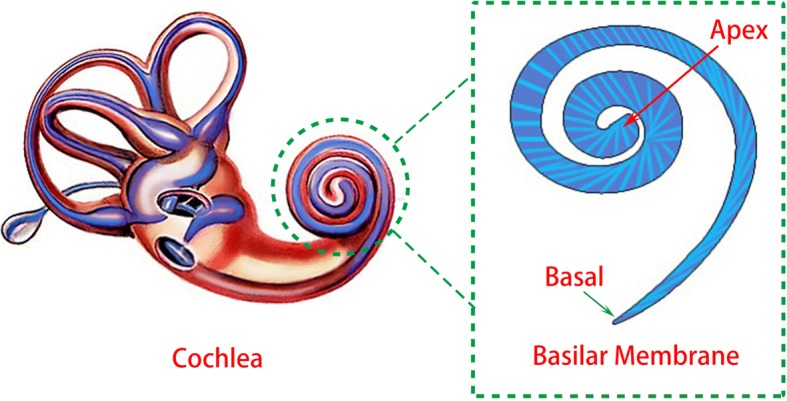
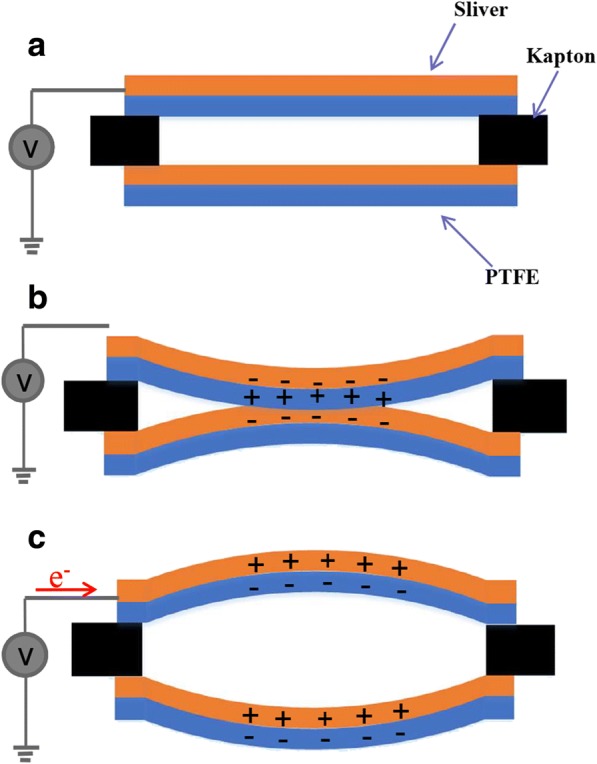
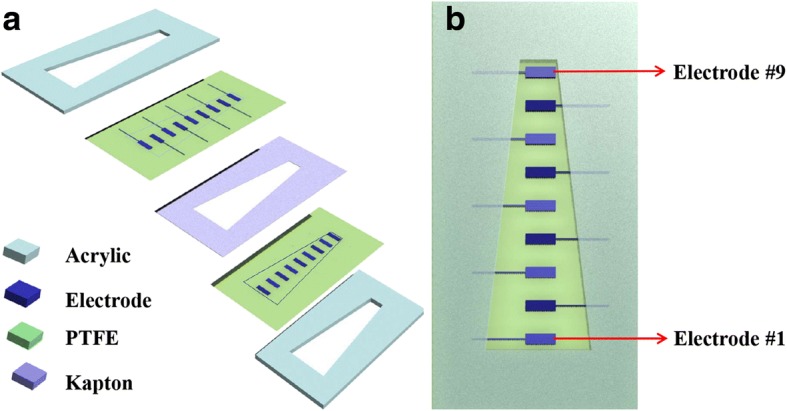
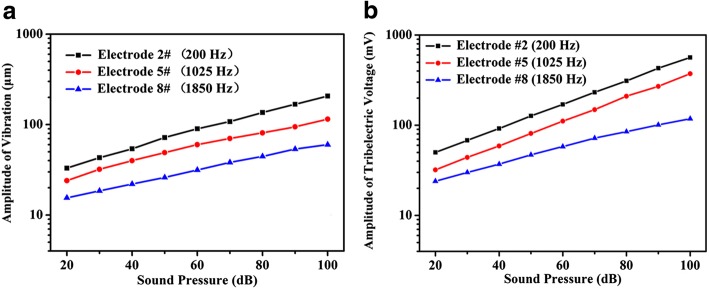
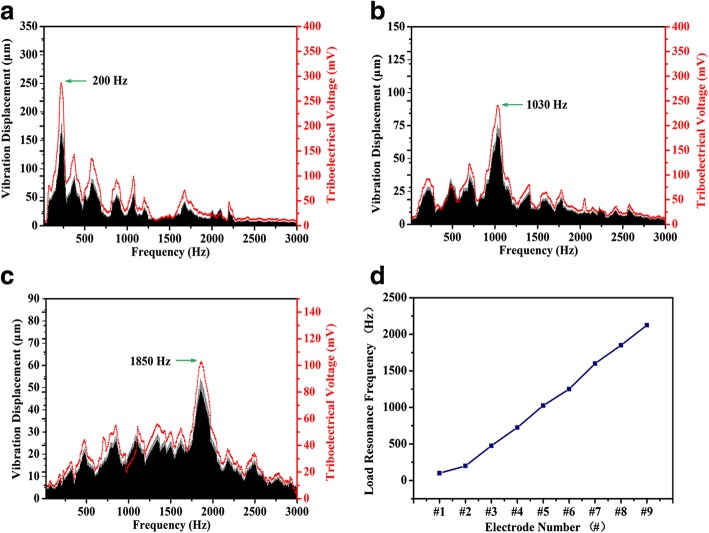
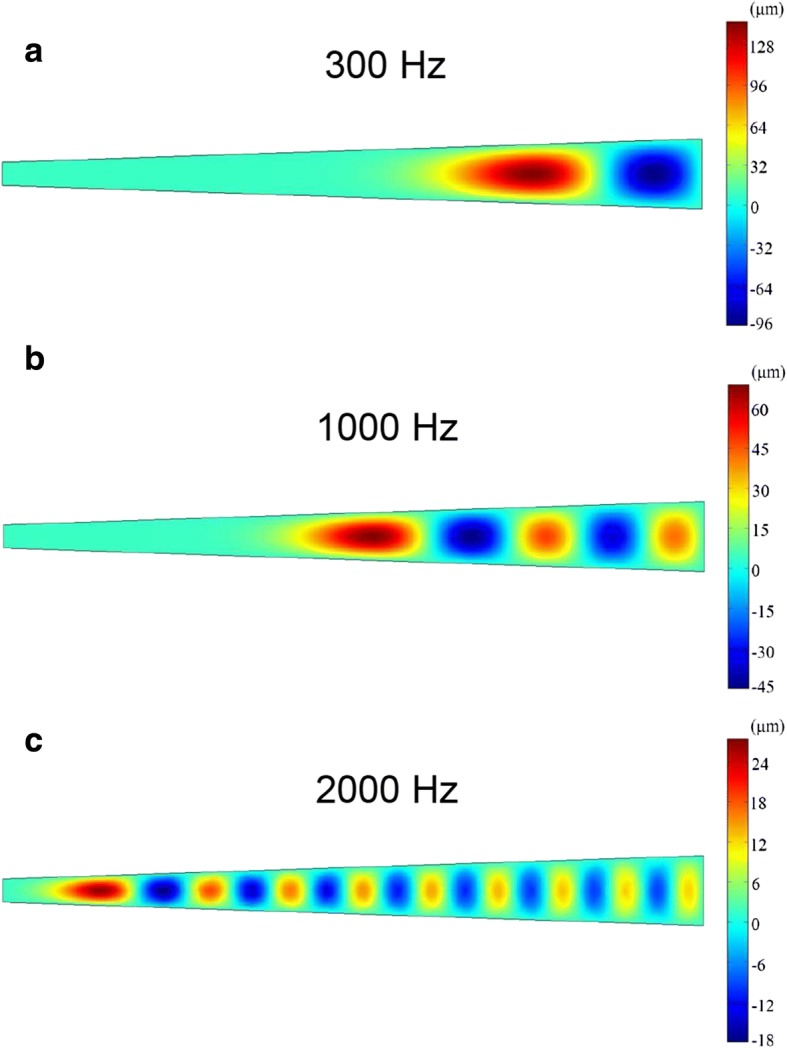
Sensorineural hearing loss tops the list of most suffering disease for the sake of its chronic, spirit pressing, and handicapped features, which can happen to all age groups, from newborns to old folks. Laggard technical design as well as external power dependence of conventional cochlear implant cumbers agonized patients and restrict its wider practical application, driving researchers to seek for fundamental improvement. In this paper, we successfully proposed a novel bionic cochlear basilar membrane acoustic sensor in conjugation with triboelectric nanogenerator. By trapezoidally distributing nine silver electrodes on both two polytetrafluoroethylene membranes, a highly frequency-selective function was fulfilled in this gadget, ranging from 20 to 3000 Hz. It is believed to be more discernable with the increment of electrode numbers, referring to the actual basilar membrane in the cochlear. Besides, the as-made device can be somewhat self-powered via absorption of vibration energy carried by sound, which tremendously facilitates its potential users. As a consequence, the elaborate bionic system provides an innovative perspective tackling the problem of sensorineural hearing loss.
感音神经性听力损失因其具有慢性、精神压力大以及致残等特点,成为最为困扰的疾病之首,各个年龄段的人,从新生儿到老年人,都可能患病。传统人工耳蜗技术设计滞后且依赖外部电源,这给患者带来了极大困扰,并限制了其更广泛的实际应用,促使研究人员寻求根本性的改进。在本文中,我们成功提出了一种结合摩擦纳米发电机的新型仿生耳蜗基底膜声学传感器。通过在两个聚四氟乙烯膜上梯形分布九个银电极,该装置实现了20至3000赫兹的高频率选择功能。参照耳蜗中的实际基底膜,随着电极数量的增加,其分辨能力有望更强。此外,制成的装置可以通过吸收声音携带的振动能量实现一定程度的自供电,这极大地方便了潜在用户。因此,这个精心设计的仿生系统为解决感音神经性听力损失问题提供了一个创新视角。