Centre for Research on Health and Social Care Management (CERGAS), SDA Bocconi School of Management, Via Roentgen 1, 20136, Milan, Italy.
Evidence synthesis and modelling for health improvement (ESMI), University of Exeter Medical School, South Cloisters St Luke's Campus Exeter, Exeter, UK.
BMC Cancer. 2018 Jul 5;18(1):715. doi: 10.1186/s12885-018-4636-7.
Trans-arterial radio-embolization (TARE) is an emerging treatment for the management of hepatocellular carcinoma (HCC). TARE may compete with systemic chemotherapy, sorafenib, in intermediate stage patients with prior chemoembolization failure or advanced patients with tumoral macrovascular invasion with no extra-hepatic spread and good liver function. We performed a budget impact analysis (BIA) evaluating the expected changes in the expenditure for the Italian Healthcare Service within scenarios of increased utilization of TARE in place of sorafenib over the next five years.
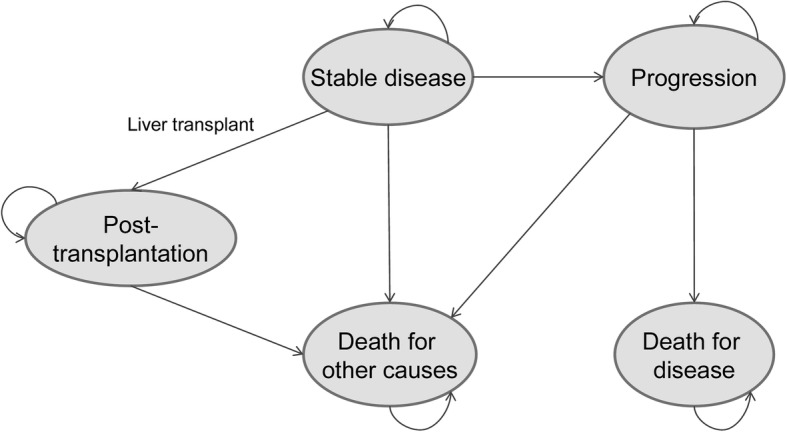
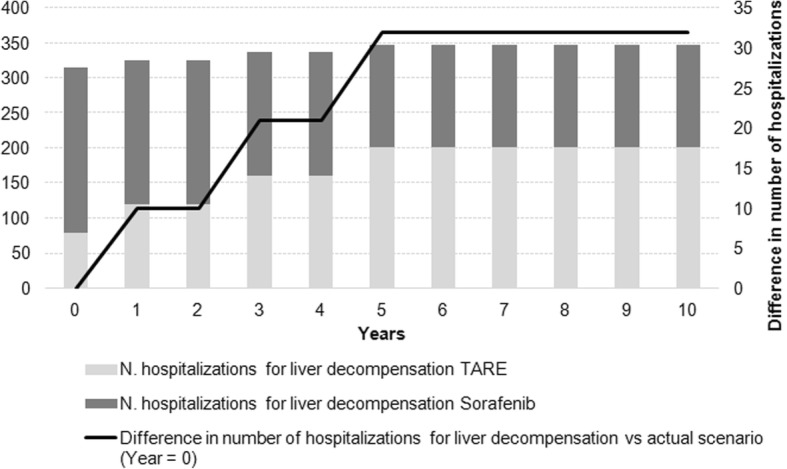
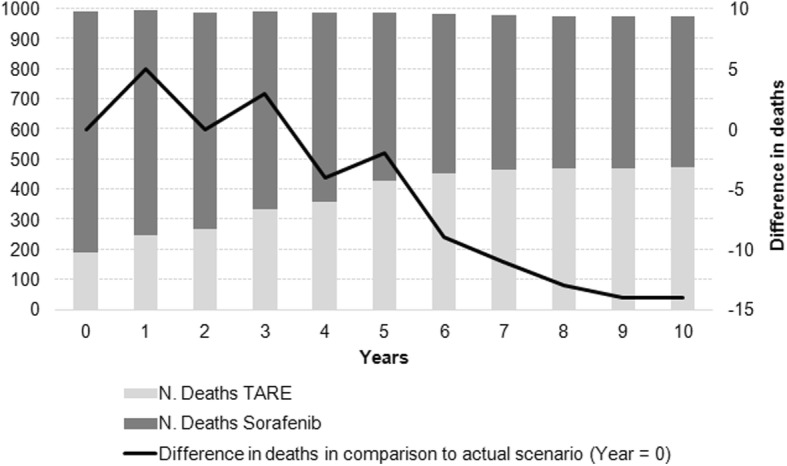
Starting from patient level data from three oncology centres in Italy, a Markov model was developed to project on a lifetime horizon survivals and costs associated to matched cohorts of intermediate-advanced HCC patients treated with TARE or sorafenib. The initial model has been integrated with epidemiological data to perform a BIA comparing the current scenario with 20 and 80% utilization rates for TARE and sorafenib, respectively, with increasing utilization rates of TARE of 30, 40 and 50% over the next 1, 3 and 5 years.
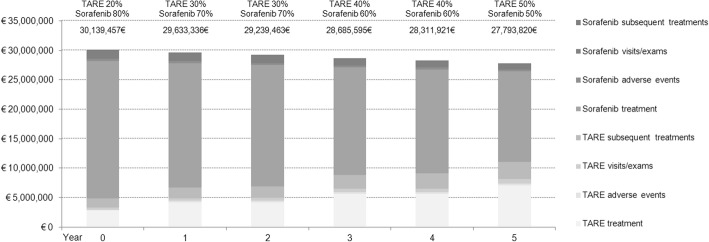
Compared to the current scenario, progressively increasing utilization rates of TARE over sorafenib in the next 5 years is expected to save globally about 7 million Euros.
Radioembolization can be considered a valuable treatment option for patients with intermediate-advanced HCC. These findings enrich the evidence about the economic sustainability of TARE in comparison to standard systemic chemotherapy within the context of a national healthcare service.
经动脉放射性栓塞术(TARE)是一种新兴的治疗肝细胞癌(HCC)的方法。在先前化疗栓塞失败的中期患者或有肿瘤大血管侵犯但无肝外扩散和良好肝功能的晚期患者中,TARE 可能与系统化疗药物索拉非尼竞争。我们进行了一项预算影响分析(BIA),评估了在未来五年内,TARE 的使用增加情况下,意大利医疗保健服务的支出预期变化。
从意大利三个肿瘤中心的患者水平数据出发,开发了一个马尔可夫模型,以在终生范围内预测接受 TARE 或索拉非尼治疗的中晚期 HCC 患者匹配队列的生存和相关成本。初始模型已与流行病学数据相结合,以进行 BIA 比较,比较当前情景与 TARE 和索拉非尼的 20%和 80%使用率,以及 TARE 的使用率在未来 1、3 和 5 年内分别增加 30%、40%和 50%。
与当前情景相比,在未来 5 年内,TARE 相对于索拉非尼的使用率逐渐增加,预计将节省约 700 万欧元。
放射性栓塞术可以被认为是中晚期 HCC 患者的一种有价值的治疗选择。这些发现丰富了 TARE 在国家医疗保健服务背景下与标准系统化疗相比的经济可持续性的证据。