Research Institute for Primary Care and Health Sciences, Keele University, Staffordshire, ST5 5BG, UK.
Arthritis Res Ther. 2018 Jul 5;20(1):136. doi: 10.1186/s13075-018-1612-1.
Gout treatment remains suboptimal. Identifying populations at risk of developing gout may provide opportunities for prevention. Our aim was to assess the risk of incident gout associated with obesity, hypertension and diuretic use.
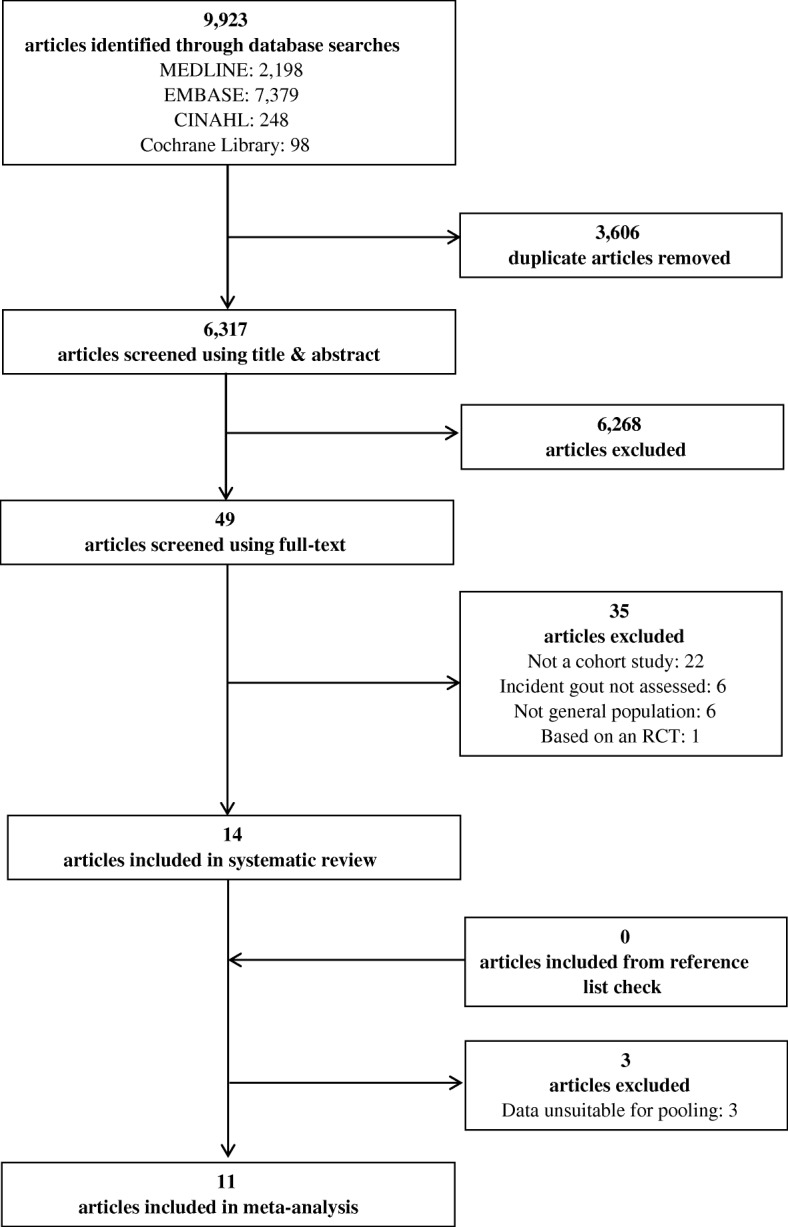
We conducted a systematic review and meta-analysis of prospective and retrospective cohort studies in adults (age ≥ 18 years) from primary care or the general population, exposed to obesity, hypertension or diuretic use and with incident gout as their outcome.
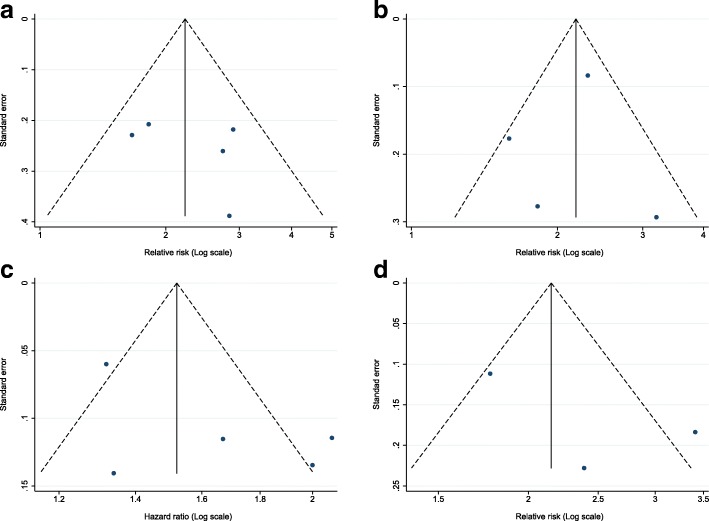
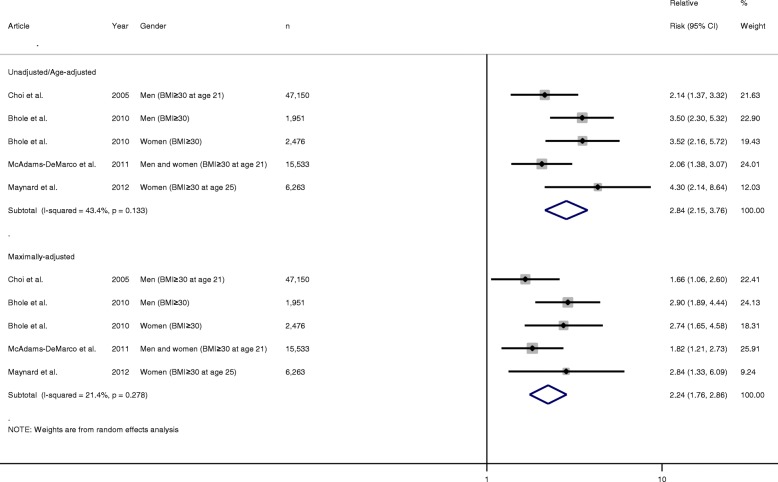
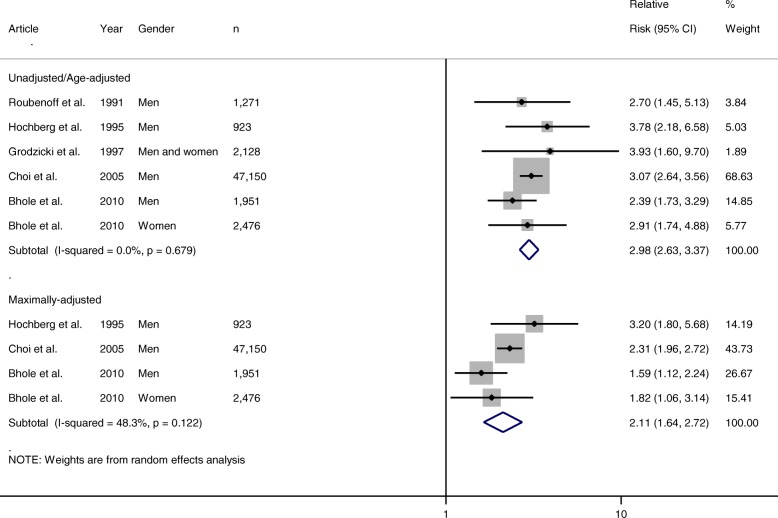
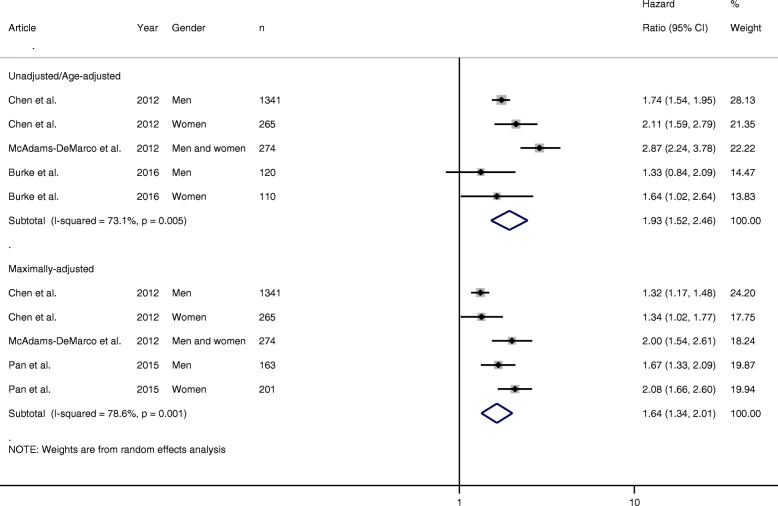
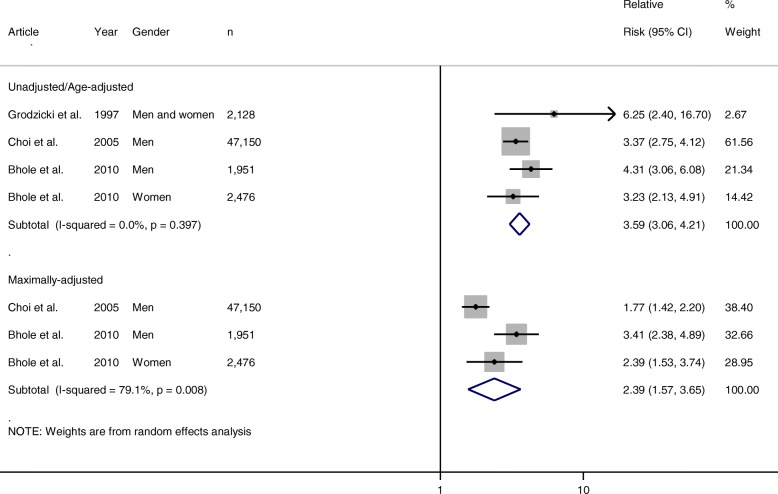
A total of 9923 articles were identified: 14 met the inclusion criteria, 11 of which contained data suitable for pooling in the meta-analysis. Four articles were identified for obesity, 10 for hypertension and six for diuretic use, with four, nine and three articles included respectively for each meta-analysis. Gout was 2.24 times more likely to occur in individuals with body mass index ≥ 30 kg/m (adjusted relative risk 2.24 (95% confidence interval) 1.76-2.86). Hypertensive individuals were 1.64 (1.34-2.01) and 2.11 (1.64-2.72) times more likely to develop gout as normotensive individuals (adjusted hazard ratio and relative risk respectively). Diuretic use was associated with almost 2.5 times the risk of developing gout compared to no diuretic use (adjusted relative risk 2.39 (1.57-3.65)).
Obesity, hypertension and diuretic use are risk factors for incident gout, each more than doubling the risk compared to those without these risk factors. Patients with these risk factors should be recognised by clinicians as being at greater risk of developing gout and provided with appropriate management and treatment options.
痛风的治疗效果仍然不尽如人意。识别有发生痛风风险的人群可能为预防提供机会。我们的目的是评估肥胖、高血压和利尿剂使用与新发痛风之间的关联风险。
我们对来自初级保健或普通人群的成年(年龄≥18 岁)的前瞻性和回顾性队列研究进行了系统评价和荟萃分析,这些研究的对象为暴露于肥胖、高血压或利尿剂使用中,新发痛风为其结局。
共确定了 9923 篇文章:14 篇符合纳入标准,其中 11 篇包含适合荟萃分析的数据。肥胖有 4 篇文章,高血压有 10 篇,利尿剂使用有 6 篇,分别纳入 4 项、9 项和 3 项荟萃分析。与 BMI<30kg/m 的个体相比,BMI≥30kg/m 的个体发生痛风的可能性高 2.24 倍(调整后的相对风险 2.24(95%置信区间 1.76-2.86))。高血压个体发生痛风的可能性是血压正常个体的 1.64 倍(1.34-2.01)和 2.11 倍(1.64-2.72)(调整后的危险比和相对风险分别)。与未使用利尿剂相比,使用利尿剂发生痛风的风险几乎增加了 2.5 倍(调整后的相对风险 2.39(1.57-3.65))。
肥胖、高血压和利尿剂使用是新发痛风的危险因素,与没有这些危险因素的人相比,每种危险因素使痛风风险增加一倍以上。临床医生应识别出具有这些危险因素的患者,这些患者发生痛风的风险更高,应给予适当的管理和治疗选择。