Rashid Khalid, Wolf Anne, Langmann Thomas
Laboratory for Experimental Immunology of the Eye, Department of Ophthalmology, University of Cologne, Cologne, Germany.
Center for Molecular Medicine Cologne (CMMC), University of Cologne, Cologne, Germany.
Front Cell Neurosci. 2018 Jun 21;12:176. doi: 10.3389/fncel.2018.00176. eCollection 2018.
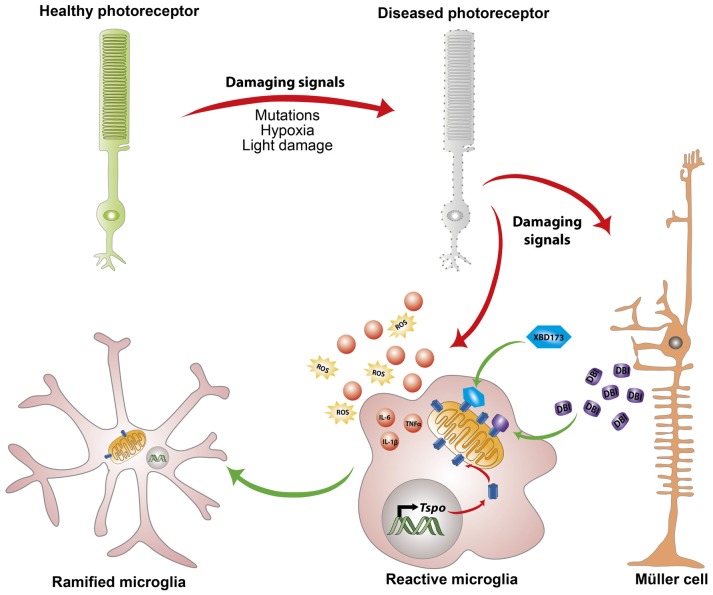
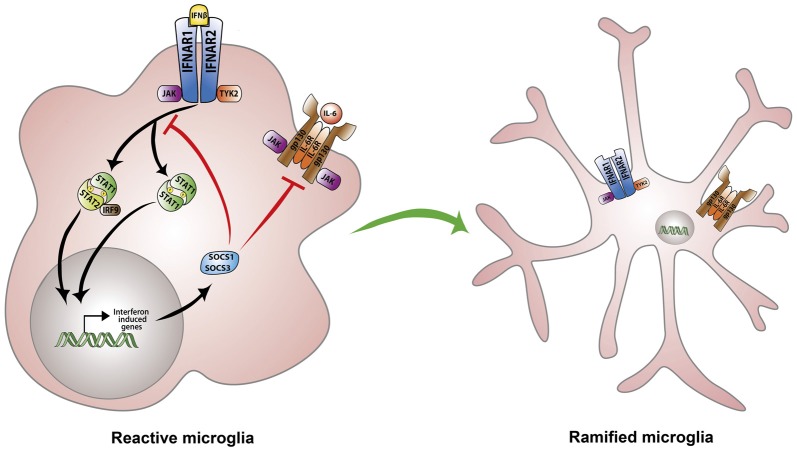
A chronic pro-inflammatory environment is a hallmark of retinal degenerative diseases and neurological disorders that affect vision. Inflammatory responses during retinal pathophysiology are orchestrated by microglial cells which constitute the resident immune cell population. Following activation, microglia cells lose their ramified protrusions, proliferate and rapidly migrate to the damaged areas and resolve tissue damage. However, sustained presence of tissue stress primes microglia to become overreactive and results in the excessive production of pro-inflammatory mediators that favor retinal degenerative changes. Consequently, interventions aimed at overriding microglial pro-inflammatory and pro-oxidative properties may attenuate photoreceptor demise and preserve retinal integrity. We highlight the positive effects of ligands for the translocator protein 18 kDa (TSPO) and the cytokine interferon beta (IFN-β) in modulating microgliosis during retinal pathologies and discuss their plausible mechanisms of action.
慢性促炎环境是影响视力的视网膜退行性疾病和神经疾病的一个标志。视网膜病理生理学过程中的炎症反应是由构成常驻免疫细胞群体的小胶质细胞精心安排的。激活后,小胶质细胞失去其分支状突起,增殖并迅速迁移到受损区域,解决组织损伤问题。然而,组织应激的持续存在使小胶质细胞变得过度反应,并导致促炎介质的过度产生,从而促进视网膜退行性变化。因此,旨在克服小胶质细胞促炎和促氧化特性的干预措施可能会减轻光感受器死亡并维持视网膜完整性。我们强调了18 kDa转位蛋白(TSPO)的配体和细胞因子干扰素β(IFN-β)在调节视网膜病变期间的小胶质细胞增生方面的积极作用,并讨论了它们可能的作用机制。