Head Elizabeth, Powell David K, Schmitt Frederick A
Department of Pharmacology & Nutritional Sciences, Sanders Brown Center on Aging, University of Kentucky, Lexington, KY, United States.
Magnetic Resonance Imaging and Spectroscopy Center, Sanders Brown Center on Aging, University of Kentucky, Lexington, KY, United States.
Front Aging Neurosci. 2018 Jun 21;10:191. doi: 10.3389/fnagi.2018.00191. eCollection 2018.
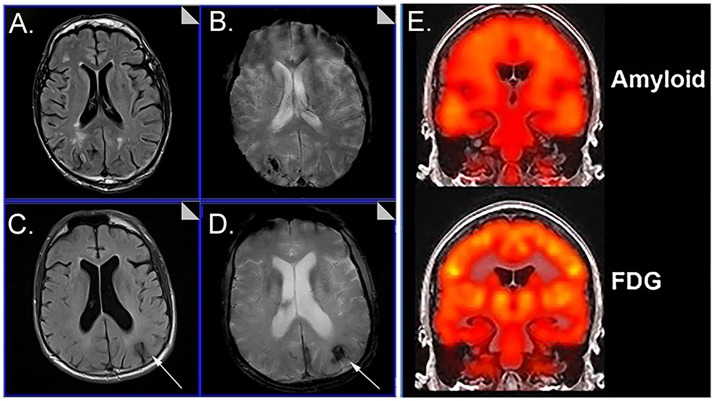
People with Down syndrome (DS) are at high risk for developing Alzheimer disease (AD). Neuropathology consistent with AD is present by 40 years of age and dementia may develop up to a decade later. In this review, we describe metabolic and vascular neuroimaging studies in DS that suggest these functional changes are a key feature of aging, linked to cognitive decline and AD in this vulnerable cohort. FDG-PET imaging in DS suggests systematic reductions in glucose metabolism in posterior cingulate and parietotemporal cortex. Magentic resonance spectroscopy studies show consistent decreases in neuronal health and increased myoinositol, suggesting inflammation. There are few vascular imaging studies in DS suggesting a gap in our knowledge. Future studies would benefit from longitudinal measures and combining various imaging approaches to identify early signs of dementia in DS that may be amenable to intervention.
唐氏综合征(DS)患者患阿尔茨海默病(AD)的风险很高。与AD一致的神经病理学在40岁时就已出现,痴呆可能在十年后发生。在本综述中,我们描述了DS患者的代谢和血管神经影像学研究,这些研究表明这些功能变化是衰老的关键特征,与这一脆弱人群的认知衰退和AD相关。DS患者的氟代脱氧葡萄糖正电子发射断层扫描(FDG-PET)成像显示后扣带回和顶颞叶皮质的葡萄糖代谢系统性降低。磁共振波谱研究表明神经元健康持续下降,肌醇增加,提示存在炎症。DS患者的血管成像研究很少,这表明我们在这方面的知识存在空白。未来的研究将受益于纵向测量以及结合各种成像方法,以识别DS患者中可能适合干预的痴呆早期迹象。