Billet Kévin, Houillé Benjamin, Dugé de Bernonville Thomas, Besseau Sébastien, Oudin Audrey, Courdavault Vincent, Delanoue Guillaume, Guérin Laurence, Clastre Marc, Giglioli-Guivarc'h Nathalie, Lanoue Arnaud
EA 2106 Biomolécules et Biotechnologie Végétales, Université de Tours, Faculté des Sciences Pharmaceutiques, Tours, France.
Institut Français de la Vigne et du Vin Tours, France.
Front Plant Sci. 2018 Jun 21;9:798. doi: 10.3389/fpls.2018.00798. eCollection 2018.
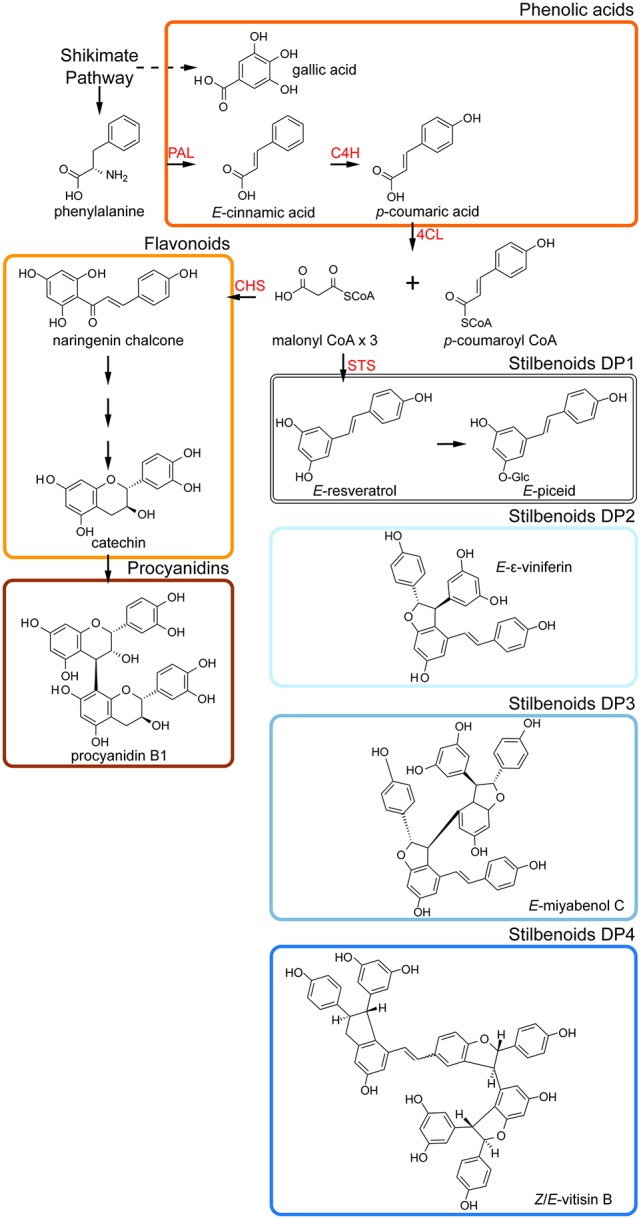
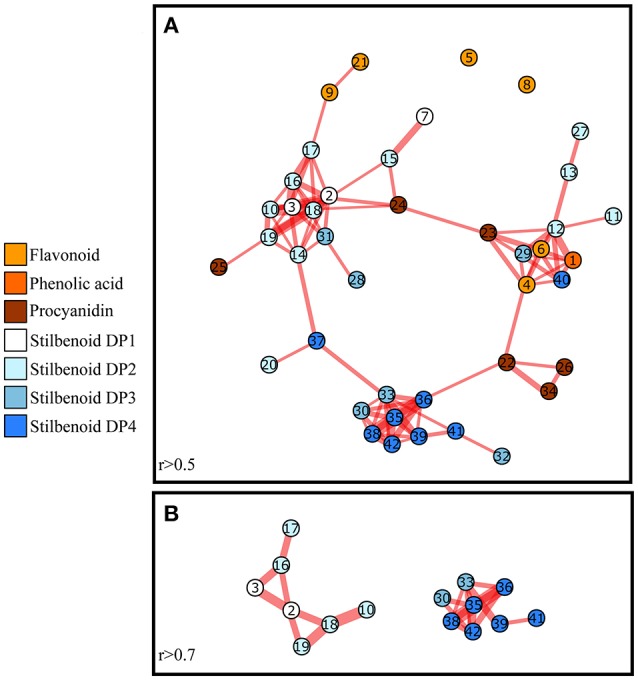
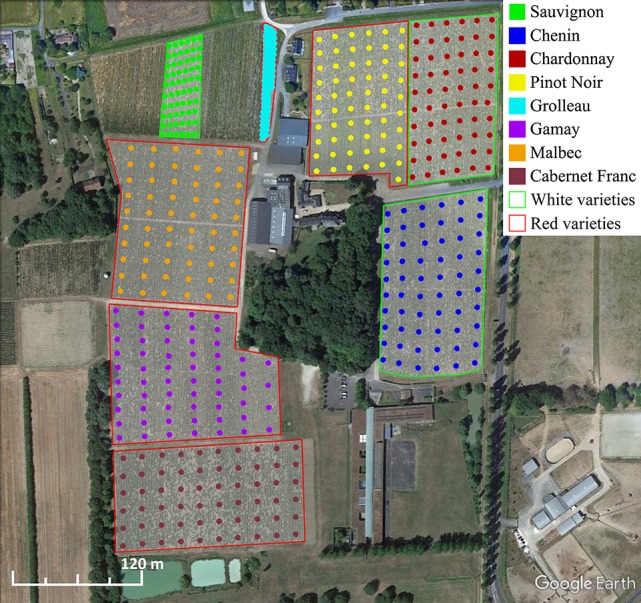
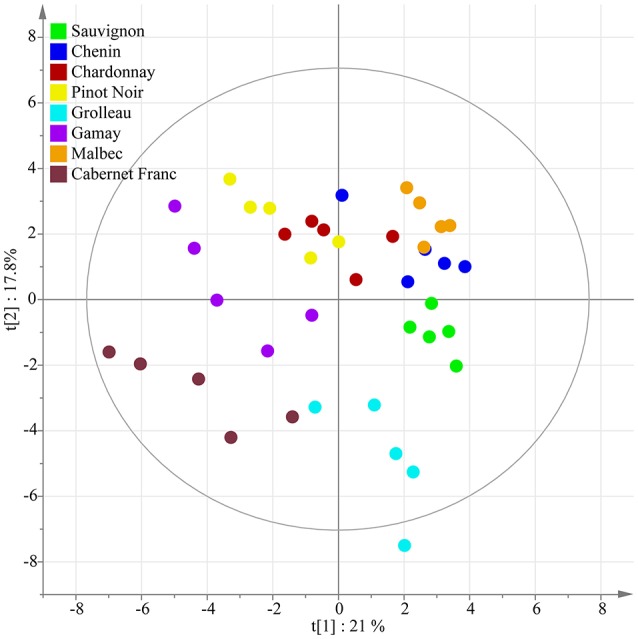
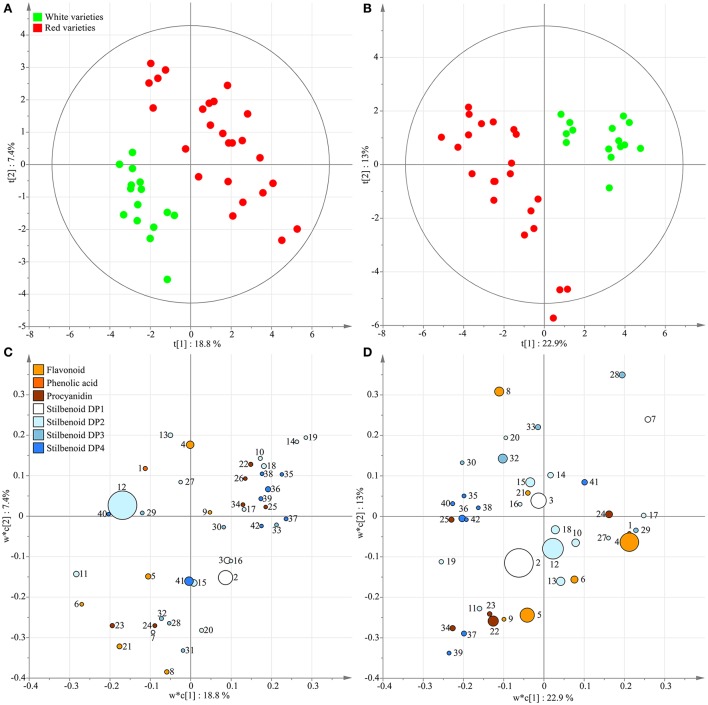
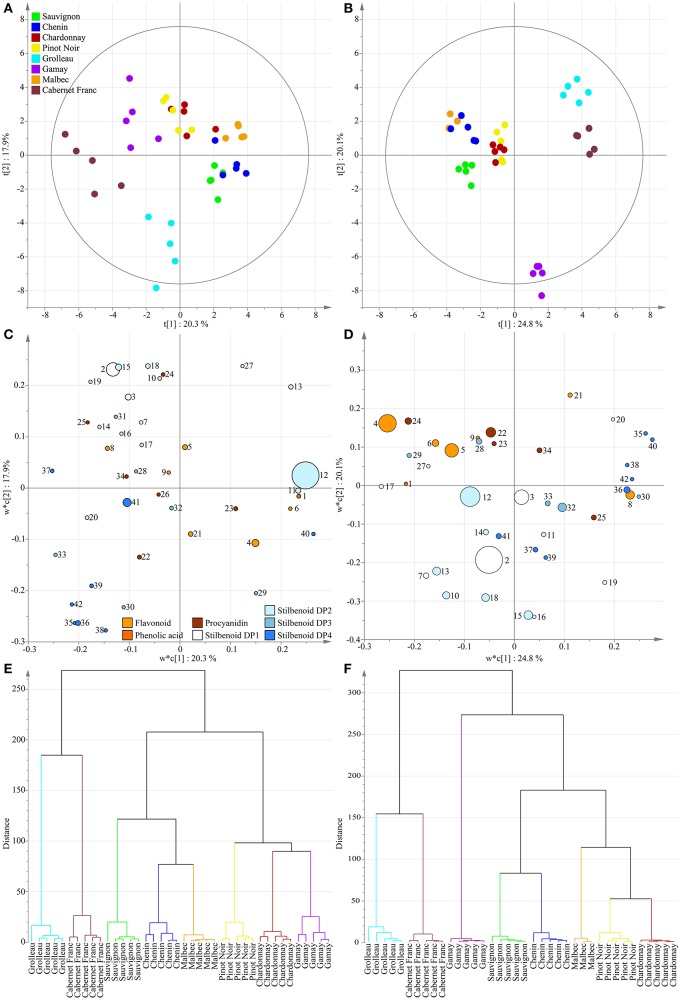
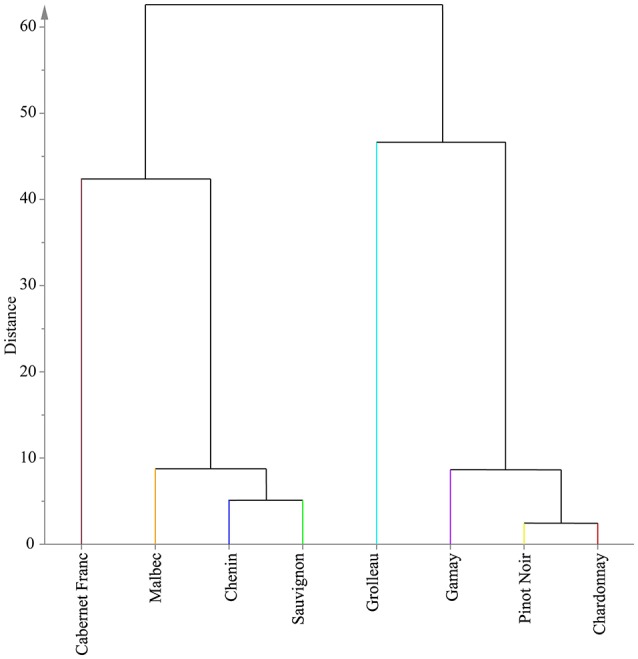
Grape accumulates numerous polyphenols with abundant health benefit and organoleptic properties that act as key components of the plant defense system against diseases. Considerable advances have been made in the chemical characterization of wine metabolites particularly volatile and polyphenolic compounds. However, the metabotyping (metabolite-phenotype characterization) of grape varieties, from polyphenolic-rich vineyard by-product is unprecedented. As this composition might result from the complex interaction between genotype, environment and viticultural practices, a field experiment was setting up with uniform pedo-climatic factors and viticultural practices of growing vines to favor the genetic determinism of polyphenol expression. As a result, UPLC-MS-based targeted metabolomic analyses of grape stems from 8 L. cultivars allowed the determination of 42 polyphenols related to phenolic acids, flavonoids, procyanidins, and stilbenoids as resveratrol oligomers (degree of oligomerization 1-4). Using a partial least-square discriminant analysis approach, grape stem chemical profiles were discriminated according to their genotypic origin showing that polyphenol profile express a varietal signature. Furthermore, hierarchical clustering highlights various degree of polyphenol similarity between grape varieties that were in agreement with the genetic distance using clustering analyses of 22 microsatellite DNA markers. Metabolite correlation network suggested that several polyphenol subclasses were differently controlled. The present polyphenol metabotyping approach coupled to multivariate statistical analyses might assist grape selection programs to improve metabolites with both health-benefit potential and plant defense traits.
葡萄积累了大量具有丰富健康益处和感官特性的多酚,这些多酚是植物抵御疾病的防御系统的关键组成部分。在葡萄酒代谢物的化学表征方面,尤其是挥发性和多酚类化合物方面,已经取得了相当大的进展。然而,对富含多酚的葡萄园副产品进行葡萄品种的代谢分型(代谢物-表型表征)却是前所未有的。由于这种成分可能是基因型、环境和葡萄栽培实践之间复杂相互作用的结果,因此开展了一项田间试验,设置统一的土壤气候因素和葡萄栽培实践来种植葡萄藤,以利于多酚表达的遗传决定因素。结果,基于超高效液相色谱-质谱联用的靶向代谢组学分析对8个葡萄品种的葡萄茎进行分析,确定了42种与酚酸、黄酮类化合物、原花青素和白藜芦醇低聚物(低聚度1-4)等芪类化合物相关的多酚。使用偏最小二乘判别分析方法,根据葡萄茎的基因型来源对其化学图谱进行了区分,表明多酚图谱表现出品种特征。此外,层次聚类突出了葡萄品种之间不同程度的多酚相似性,这与使用22个微卫星DNA标记进行聚类分析得出的遗传距离一致。代谢物相关网络表明,几个多酚亚类受到不同的控制。目前将多酚代谢分型方法与多变量统计分析相结合,可能有助于葡萄选育计划,以改善具有健康益处潜力和植物防御特性的代谢物。