Shaw Jana, Mader Emily M, Bennett Brittany E, Vernyi-Kellogg Olesya K, Yang Y Tony, Morley Christopher P
Department of Pediatrics, SUNY Upstate Medical University, Golisano Children's Hospital, Syracuse, New York.
Department of Family Medicine, SUNY Upstate Medical University, Syracuse, New York.
Open Forum Infect Dis. 2018 Jun 2;5(6):ofy130. doi: 10.1093/ofid/ofy130. eCollection 2018 Jun.
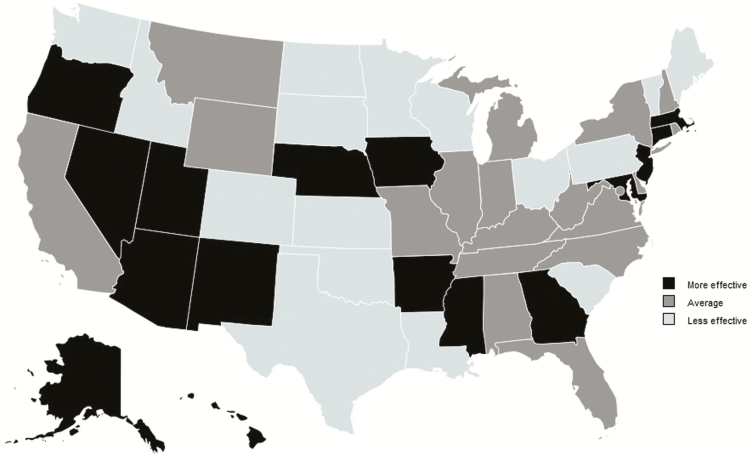
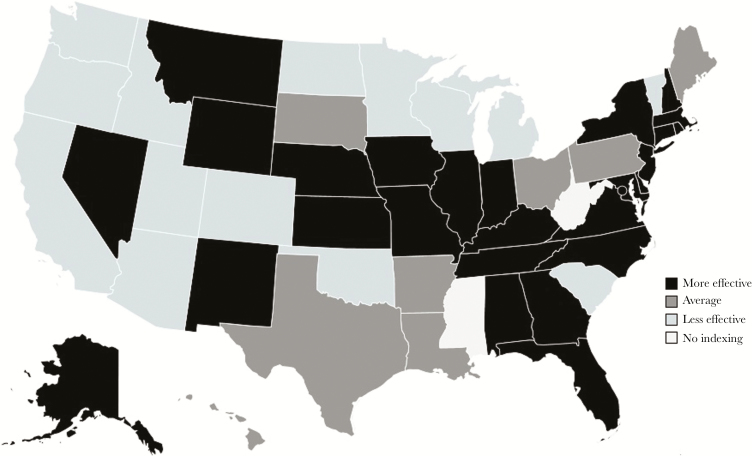
Vaccination coverage among children entering kindergarten in the United States is high, but interstate variations exist. The relationship between state immunization laws and vaccination coverage has not been fully assessed. We evaluated associations of state laws on both measles, mumps, and rubella (MMR) and diphtheria, tetanus, and pertussis (DTaP) vaccination coverage and exemptions to school immunization requirements.
We conducted a retrospective, longitudinal analysis of the effect of state immunization laws on vaccination coverage and exemptions among US kindergarteners from SY 2008 to SY 2014. The primary outcome measures were state-level kindergarten entry vaccination coverage rates for 2-dose MMR and 4-dose DTaP vaccines. Secondary outcome measures included rates of state-level exemptions (ie, medical, religious, philosophical) to school immunization requirements.
We found that state policies that refer to Advisory Committee on Immunization Practices recommendations were associated with 3.5% and 2.8% increases in MMR and DTaP vaccination rates. Health Department-led parental education was associated with 5.1% and 4.5% increases in vaccination rates. Permission of religious and philosophical exemptions was associated with 2.3% and 1.9% decreases in MMR and DTaP coverage, respectively, and a 1.5% increase in both total exemptions and nonmedical exemptions, respectively.
We found higher vaccination coverage and lower nonmedical exemption rates for MMR and DTaP vaccines in states adopting Advisory Committee on Immunization Practices guidelines for school entry. Adherence to these best practices was a successful strategy to increase vaccination coverage and reduce vaccination exemptions.
美国进入幼儿园的儿童疫苗接种覆盖率很高,但存在州际差异。州免疫法与疫苗接种覆盖率之间的关系尚未得到充分评估。我们评估了州法律对麻疹、腮腺炎和风疹(MMR)以及白喉、破伤风和百日咳(DTaP)疫苗接种覆盖率和学校免疫要求豁免情况的关联。
我们对2008学年度至2014学年度美国幼儿园儿童的州免疫法对疫苗接种覆盖率和豁免情况的影响进行了回顾性纵向分析。主要结局指标是2剂MMR疫苗和4剂DTaP疫苗的州级幼儿园入学疫苗接种覆盖率。次要结局指标包括州级对学校免疫要求的豁免率(即医疗、宗教、哲学方面)。
我们发现,参考免疫实践咨询委员会建议的州政策与MMR和DTaP疫苗接种率分别提高3.5%和2.8%相关。由卫生部门主导的家长教育与疫苗接种率分别提高5.1%和4.5%相关。允许宗教和哲学豁免分别与MMR和DTaP覆盖率降低2.3%和1.9%相关,并且总豁免率和非医疗豁免率分别提高1.5%。
我们发现,在采用免疫实践咨询委员会入学指南的州,MMR和DTaP疫苗的接种覆盖率较高,非医疗豁免率较低。遵循这些最佳实践是提高疫苗接种覆盖率和减少疫苗接种豁免的成功策略。