Department of Thoracic and Cardiovascular Surgery, Heart Institute-University of São Paulo Medical Center, São Paulo, Brazil.
Center of Cardiothoracic Surgery, University Hospital and Faculty of Medicine, Coimbra, Portugal.
PLoS One. 2018 Jul 6;13(7):e0199277. doi: 10.1371/journal.pone.0199277. eCollection 2018.
Mortality prediction after cardiac procedures is an essential tool in clinical decision making. Although rheumatic cardiac disease remains a major cause of heart surgery in the world no previous study validated risk scores in a sample exclusively with this condition.
Develop a novel predictive model focused on mortality prediction among patients undergoing cardiac surgery secondary to rheumatic valve conditions.
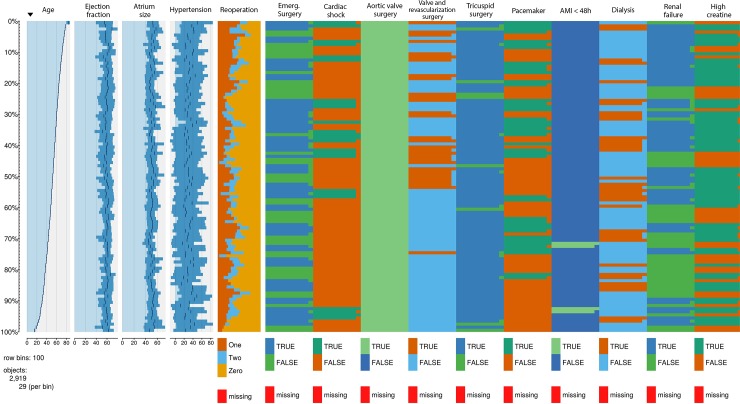
We conducted prospective consecutive all-comers patients with rheumatic heart disease (RHD) referred for surgical treatment of valve disease between May 2010 and July of 2015. Risk scores for hospital mortality were calculated using the 2000 Bernstein-Parsonnet, EuroSCORE II, InsCor, AmblerSCORE, GuaragnaSCORE, and the New York SCORE. In addition, we developed the rheumatic heart valve surgery score (RheSCORE).
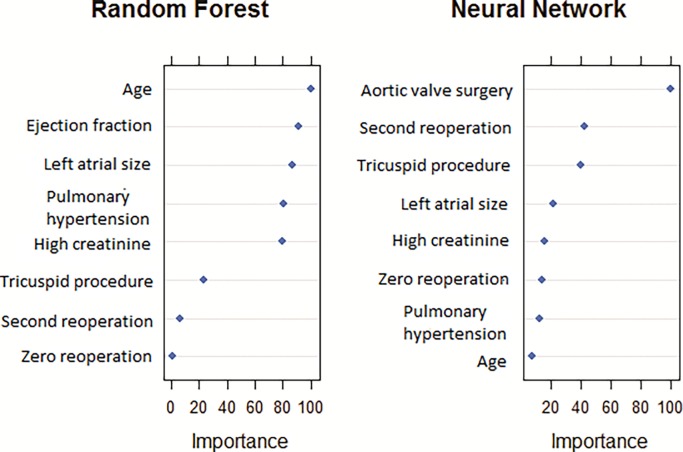
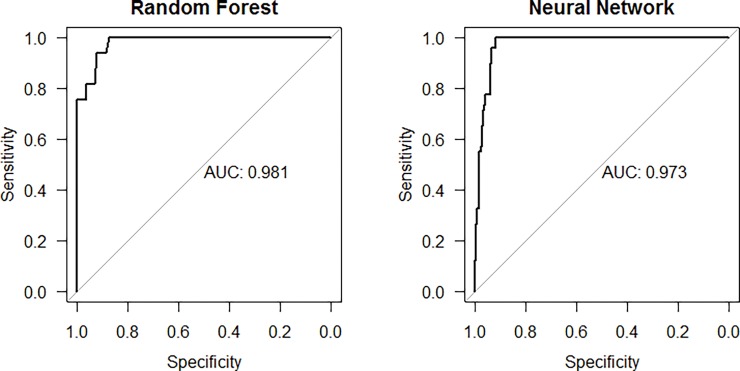
A total of 2,919 RHD patients underwent heart valve surgery. After evaluating 13 different models, the top performing areas under the curve were achieved using Random Forest (0.982) and Neural Network (0.952). Most influential predictors across all models included left atrium size, high creatinine values, a tricuspid procedure, reoperation and pulmonary hypertension. Areas under the curve for previously developed scores were all below the performance for the RheSCORE model: 2000 Bernstein-Parsonnet (0.876), EuroSCORE II (0.857), InsCor (0.835), Ambler (0.831), Guaragna (0.816) and the New York score (0.834). A web application is presented where researchers and providers can calculate predicted mortality based on the RheSCORE.
The RheSCORE model outperformed pre-existing scores in a sample of patients with rheumatic cardiac disease.
心脏手术后的死亡率预测是临床决策中的重要工具。尽管风湿性心脏病仍然是世界上心外科手术的主要原因,但以前没有研究在仅患有这种疾病的样本中验证风险评分。
开发一种专门针对风湿性心脏瓣膜疾病患者心脏手术后死亡率预测的新型预测模型。
我们对 2010 年 5 月至 2015 年 7 月期间因瓣膜疾病接受心脏手术的风湿性心脏病(RHD)连续所有患者进行前瞻性研究。使用 2000 年 Bernstein-Parsonnet、EuroSCORE II、InsCor、AmblerSCORE、GuaragnaSCORE 和纽约 SCORE 计算医院死亡率风险评分。此外,我们还开发了风湿性心脏瓣膜手术评分(RheSCORE)。
共有 2919 例 RHD 患者接受了心脏瓣膜手术。在评估了 13 种不同的模型后,随机森林(0.982)和神经网络(0.952)的表现达到了最高的曲线下面积。所有模型中最具影响力的预测因素包括左心房大小、肌酐值高、三尖瓣手术、再次手术和肺动脉高压。先前开发的评分的曲线下面积均低于 RheSCORE 模型的性能:2000 年 Bernstein-Parsonnet(0.876)、EuroSCORE II(0.857)、InsCor(0.835)、Ambler(0.831)、Guaragna(0.816)和纽约评分(0.834)。目前已经开发了一个网络应用程序,研究人员和提供者可以根据 RheSCORE 计算预测死亡率。
在风湿性心脏病患者的样本中,RheSCORE 模型的表现优于现有的评分系统。