Rhee Yun-Hee, Moon Jeong Hwan, Mo Ji-Hun, Pham Tiffany, Chung Phil-Sang
Beckman Laser Institute Korea, Dankook University, 119 Dandae-ro, Cheonan, 31116, Republic of Korea.
Laser Translational Clinical Trial Center, Dankook University Hospital, Cheonan, 31116, Republic of Korea.
BMC Cell Biol. 2018 Jul 6;19(1):12. doi: 10.1186/s12860-018-0163-2.
Adipocyte differentiation of human mesenchymal stem cells (hMSCs) is dependent on mitochondrial metabolism and reactive oxygen species (ROS) to initiate adipocyte differentiation. Although anethole has been known as an anti-oxidant and lipid peroxidation inhibitor, there is little investigated about its role in adipogenic differentiation.
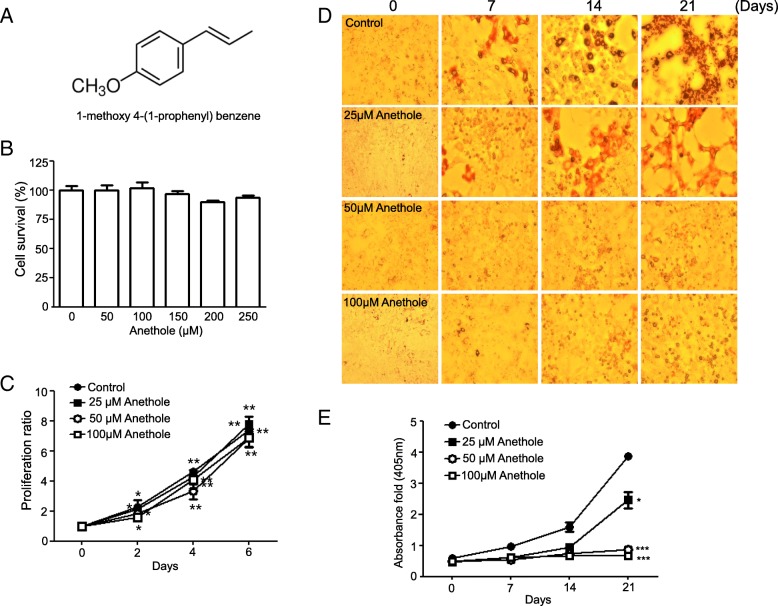
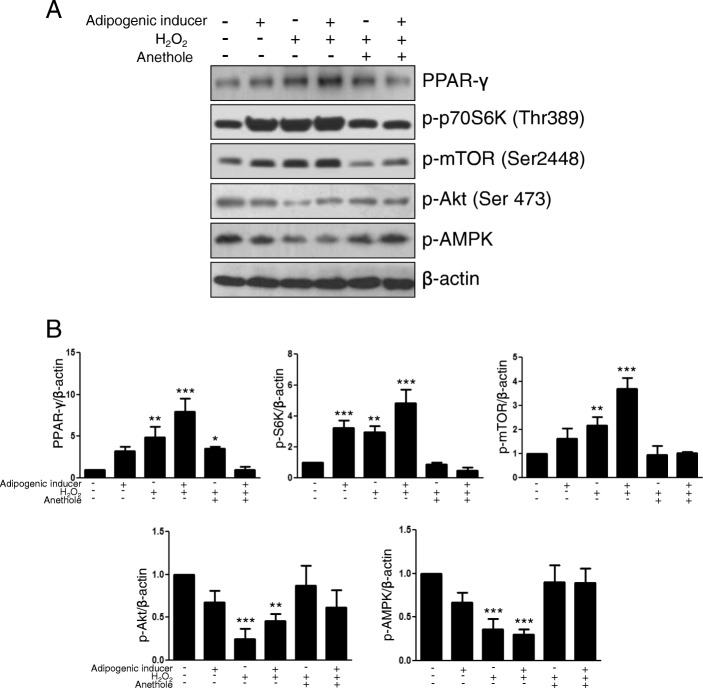
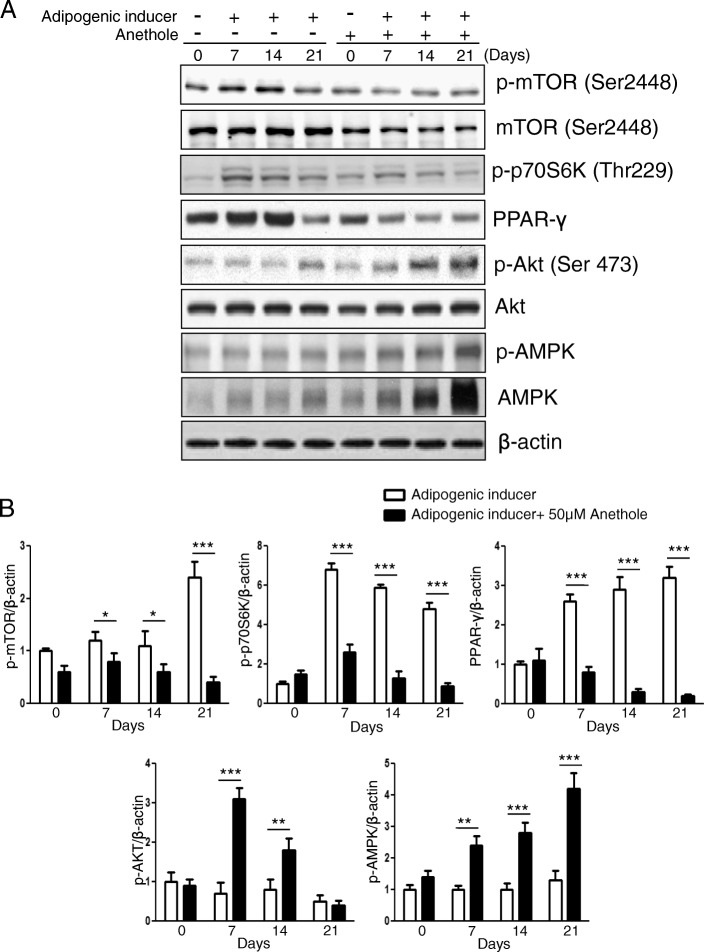
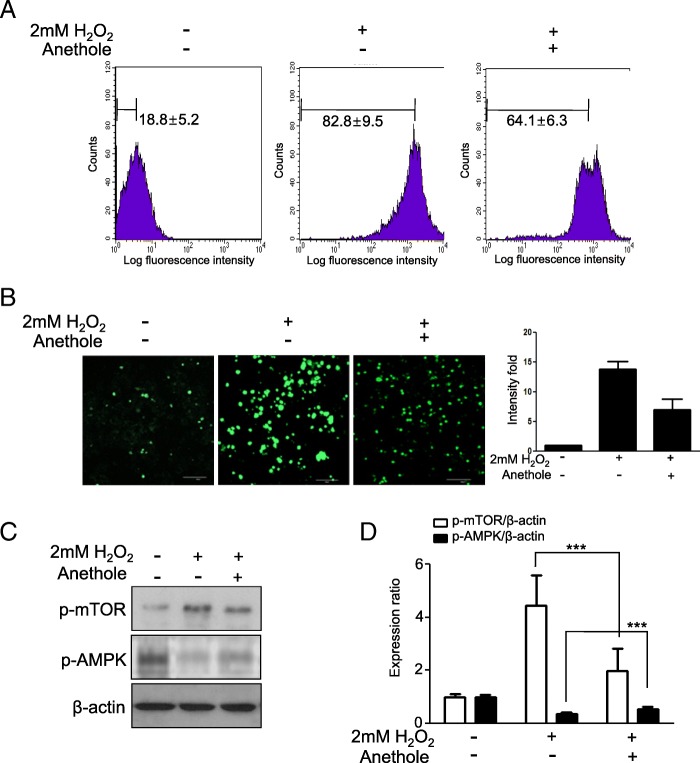
The effects on cytotoxicity and proliferation of anethole in hMSCs were measured by the MTT assay. The anti-adipogenic effect of anethole on hMSCs was analyzed by Oil Red O staining and western blot analysis. The anti-oxidant activity of anethole on hMSC was assessed by flowcytometry and fluorescence staining using 2',7' -dichlorofluorescin diacetate (DCFDA). The western blotting was used to detect of phospho-Akt, phospho-mTOR, phospho-p70S6K, PPARγ, and phsopho-AMP-activated kinase (AMPK).
Anethole suppressed the adipogenic differentiation of hMSCs through down-regulation of Akt-mTOR-p70S6K-PPARγ and up-regulation of AMPK. Anethole affected oxidative conditions through ROS generation. Anethole also rescued AMPK activity and reduced activation of mTOR-p70S6K-PPARγ under oxidative conditions in presence of exogenous hydrogen peroxide.
ROS and mTOR regulation is a crucial factor in adipogenic differentiation, anethole has an important role in regulating activities of mTOR/PPARγ and ROS control in adipogenic differentiation of hMSCs.
人间充质干细胞(hMSCs)的脂肪细胞分化依赖于线粒体代谢和活性氧(ROS)来启动脂肪细胞分化。尽管茴香脑已知是一种抗氧化剂和脂质过氧化抑制剂,但其在脂肪生成分化中的作用鲜少被研究。
通过MTT法检测茴香脑对hMSCs细胞毒性和增殖的影响。通过油红O染色和蛋白质印迹分析来分析茴香脑对hMSCs的抗脂肪生成作用。使用二氯荧光素二乙酸酯(DCFDA)通过流式细胞术和荧光染色评估茴香脑对hMSC的抗氧化活性。蛋白质印迹法用于检测磷酸化Akt、磷酸化mTOR、磷酸化p70S6K、PPARγ和磷酸化AMP激活的蛋白激酶(AMPK)。
茴香脑通过下调Akt-mTOR-p70S6K-PPARγ和上调AMPK来抑制hMSCs的脂肪生成分化。茴香脑通过ROS生成影响氧化条件。在存在外源性过氧化氢的氧化条件下,茴香脑还能恢复AMPK活性并降低mTOR-p70S6K-PPARγ的激活。
ROS和mTOR调节是脂肪生成分化的关键因素,茴香脑在调节hMSCs脂肪生成分化中mTOR/PPARγ的活性和ROS控制方面具有重要作用。