Department of Medical Biochemistry and Cell Biology, Institute of Biomedicine, The Sahlgrenska Academy, University of Gothenburg, Gothenburg, Sweden.
Department of Molecular and Cell Biology, University of California, Berkeley, CA, USA.
Nat Commun. 2024 Nov 18;15(1):9965. doi: 10.1038/s41467-024-54158-5.
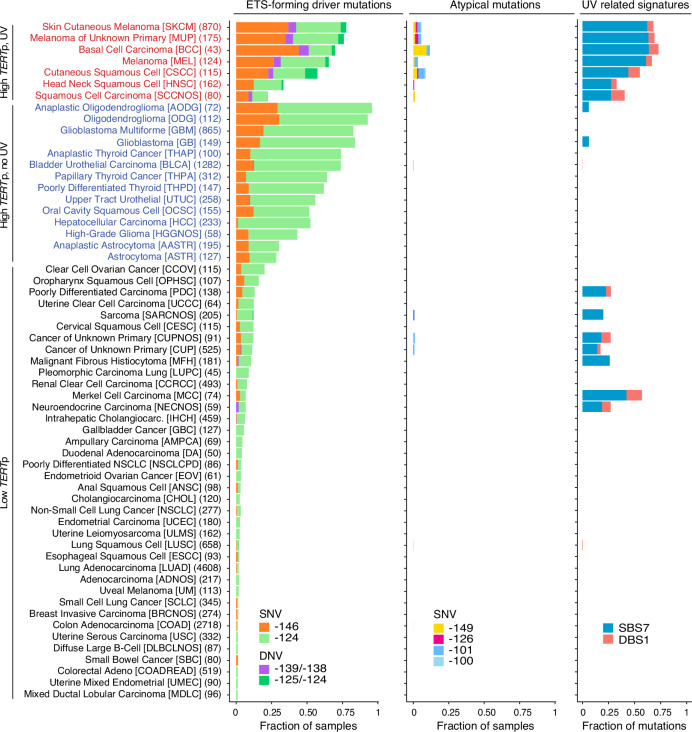
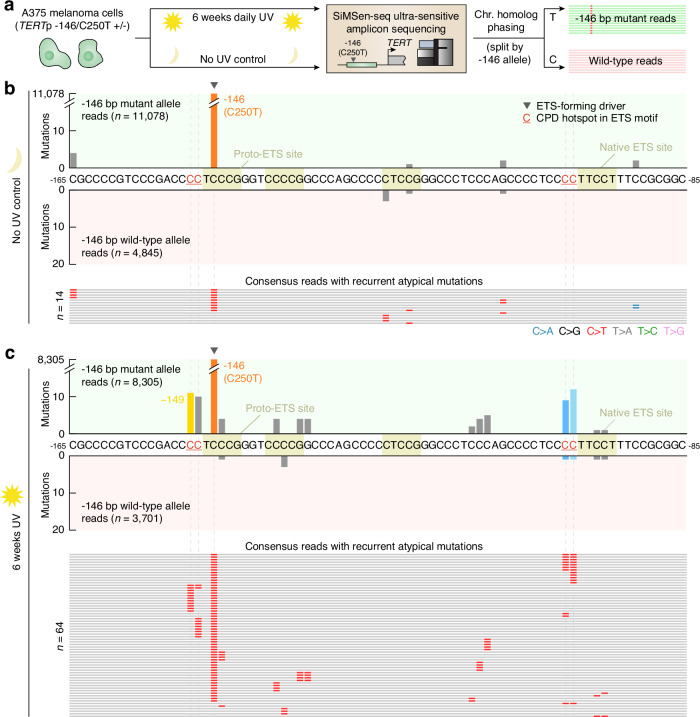
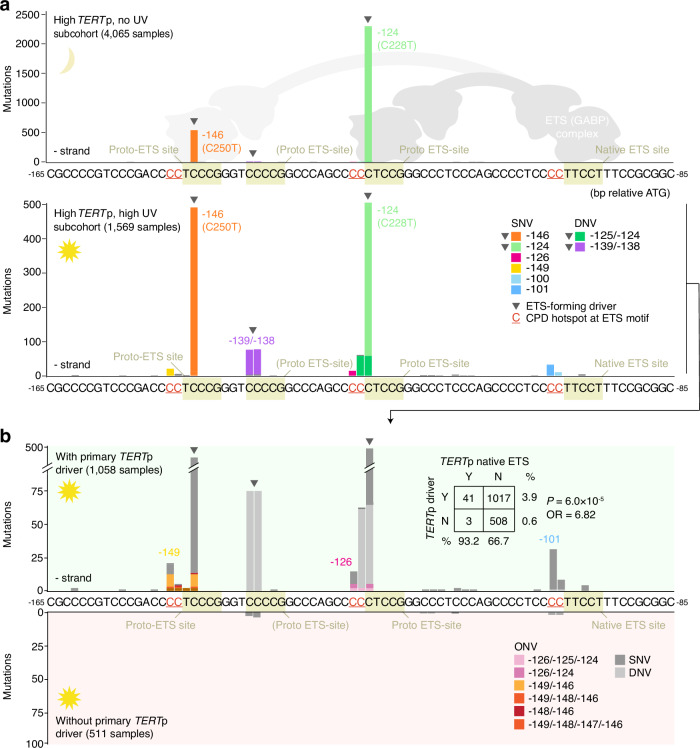
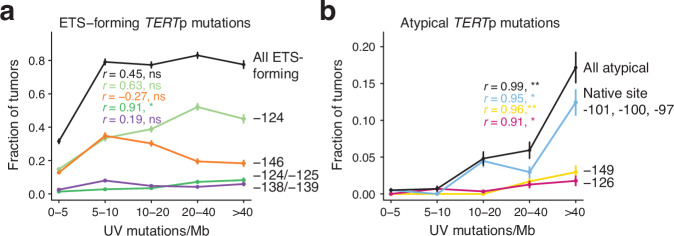
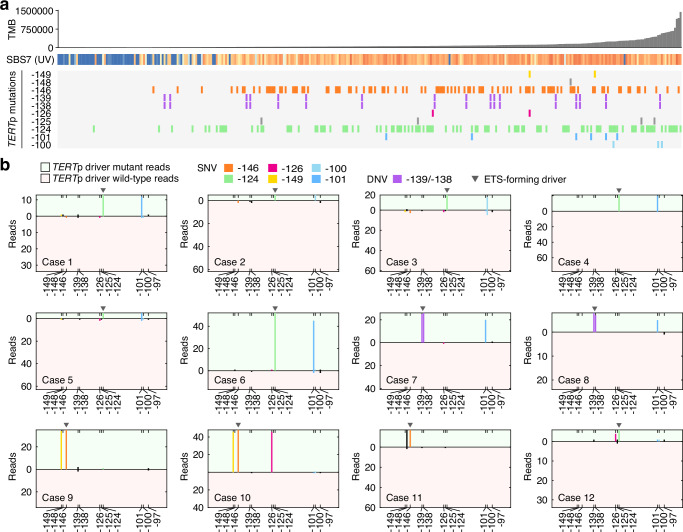
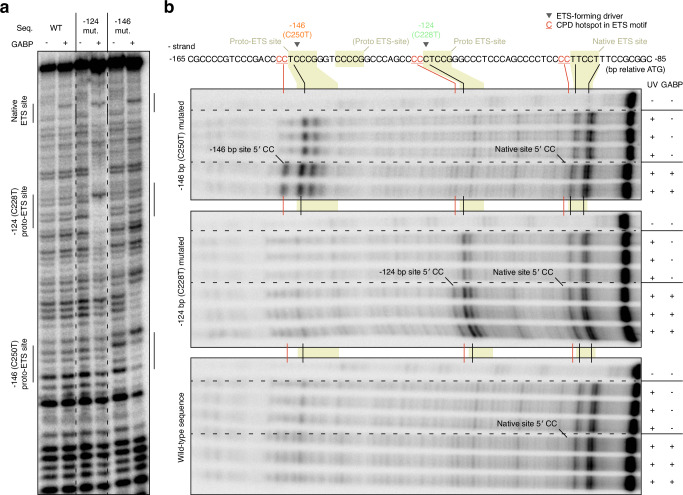
Non-coding mutations in the TERT promoter (TERTp), typically at one of two bases -124 and -146 bp upstream of the start codon, are among the most prevalent driver mutations in human cancer. Several additional recurrent TERTp mutations have been reported but their functions and origins remain largely unexplained. Here, we show that atypical TERTp mutations arise secondary to canonical TERTp mutations in a two-step process. Canonical TERTp mutations create de novo binding sites for ETS family transcription factors that induce favourable conditions for DNA damage formation by UV light, thus creating a hotspot effect but only after a first mutational hit. In agreement, atypical TERTp mutations co-occur with canonical driver mutations in large cancer cohorts and arise subclonally specifically on the TERTp driver mutant chromosome homolog of melanoma cells treated with UV light in vitro. Our study gives an in-depth view of TERTp mutations in cancer and provides a mechanistic explanation for atypical TERTp mutations.
非编码突变 TERT 启动子(TERTp),通常位于起始密码子上游的两个碱基-124 和-146bp 处,是人类癌症中最常见的驱动突变之一。已经报道了一些其他常见的 TERTp 突变,但它们的功能和起源在很大程度上仍未得到解释。在这里,我们表明,非典型 TERTp 突变是在两步过程中继发于典型 TERTp 突变而产生的。典型的 TERTp 突变创造了新的 ETS 家族转录因子结合位点,这些转录因子通过紫外线诱导 DNA 损伤形成有利条件,从而产生热点效应,但仅在第一次突变后才会产生。一致地,非典型 TERTp 突变与大的癌症队列中的典型驱动突变共同发生,并且仅在体外用紫外线处理黑色素瘤细胞的 TERTp 驱动突变体染色体同源物上亚克隆特异性地出现。我们的研究深入了解了癌症中的 TERTp 突变,并为非典型 TERTp 突变提供了一种机制解释。