Department of Stomatology, Renji Hospital, School of Medicine, Shanghai Jiao Tong University, Shanghai, People's Republic of China,
Shanghai Key Laboratory of Orthopedic Implants, Department of Orthopedic Surgery, Shanghai Ninth People's Hospital, School of Medicine, Shanghai Jiao Tong University, Shanghai, People's Republic of China.
Int J Nanomedicine. 2018 Jun 26;13:3643-3659. doi: 10.2147/IJN.S159989. eCollection 2018.
Optimal osseointegration has been recognized as a pivotal factor in determining the long-term success of biomedical implants.
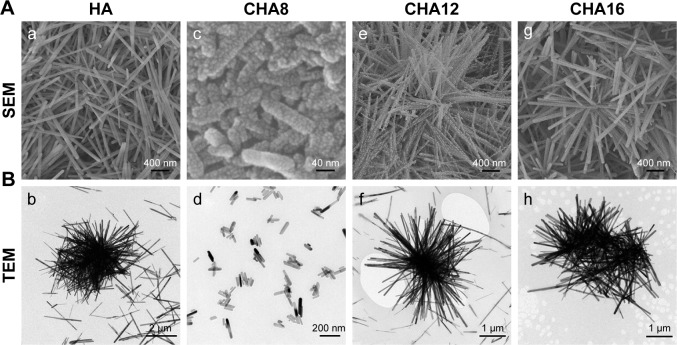
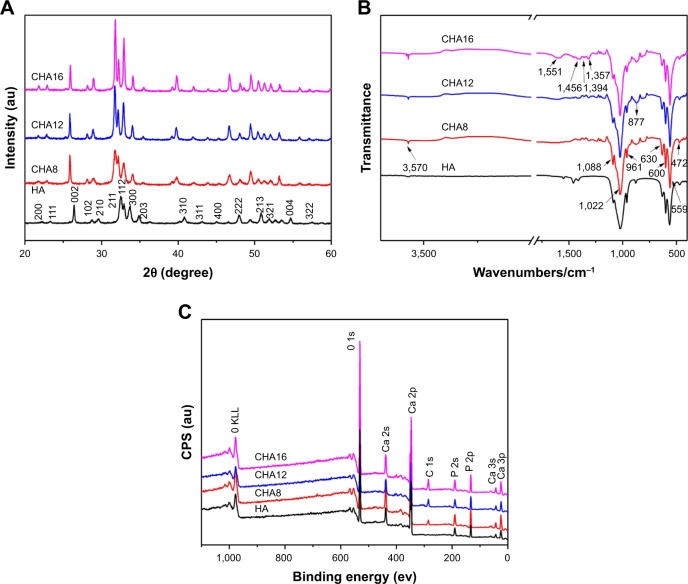
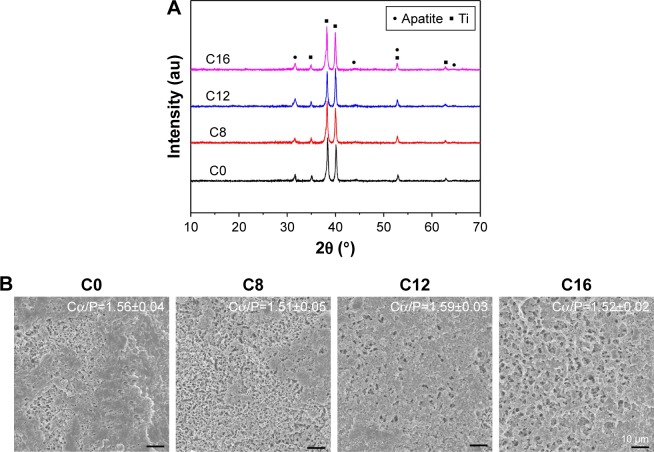
In the current study, highly carbonated hydroxyapatite (CHA) with carbonate contents of 8, 12 and 16 wt% and pure hydroxyapatite (HA) were fabricated via a novel hydrothermal method and deposited on the titanium substrates to generate corresponding CHA bioceramic coatings (designated as C8, C12 and C16, respectively) and HA bioceramic coatings (designated as C0).
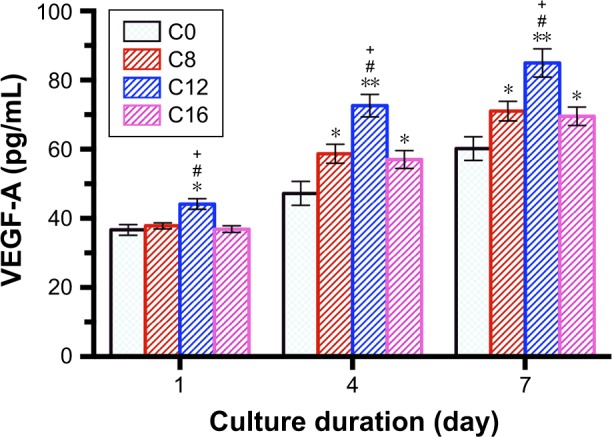
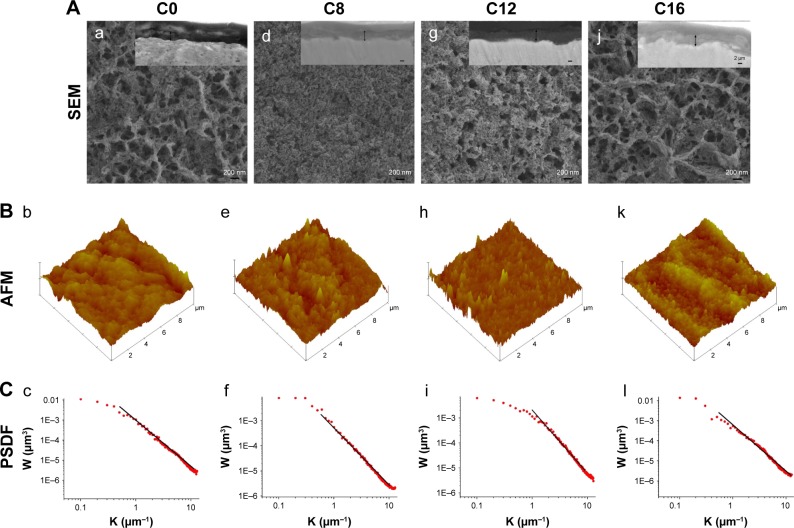
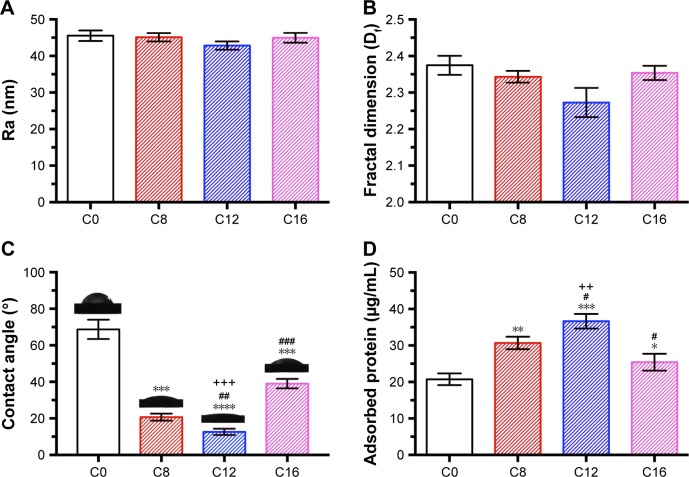
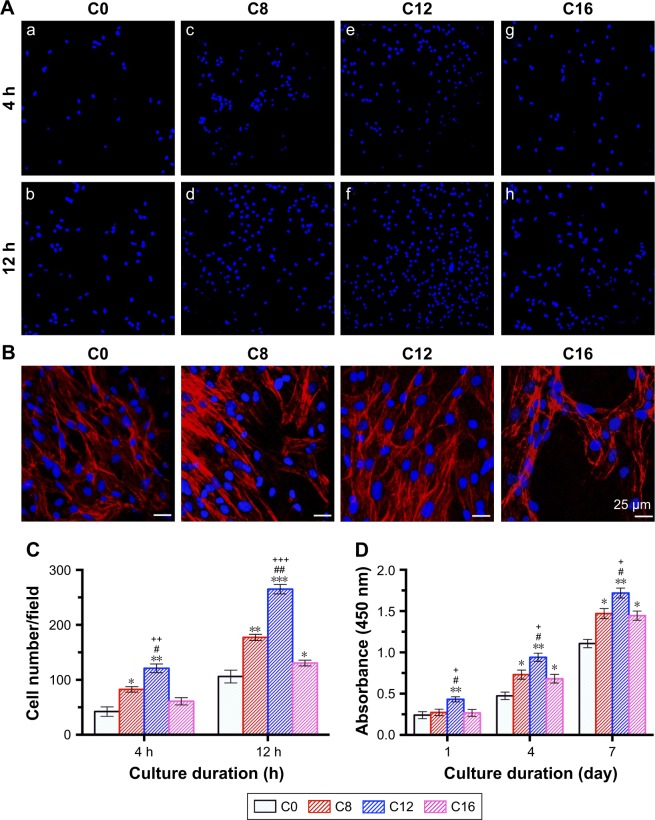
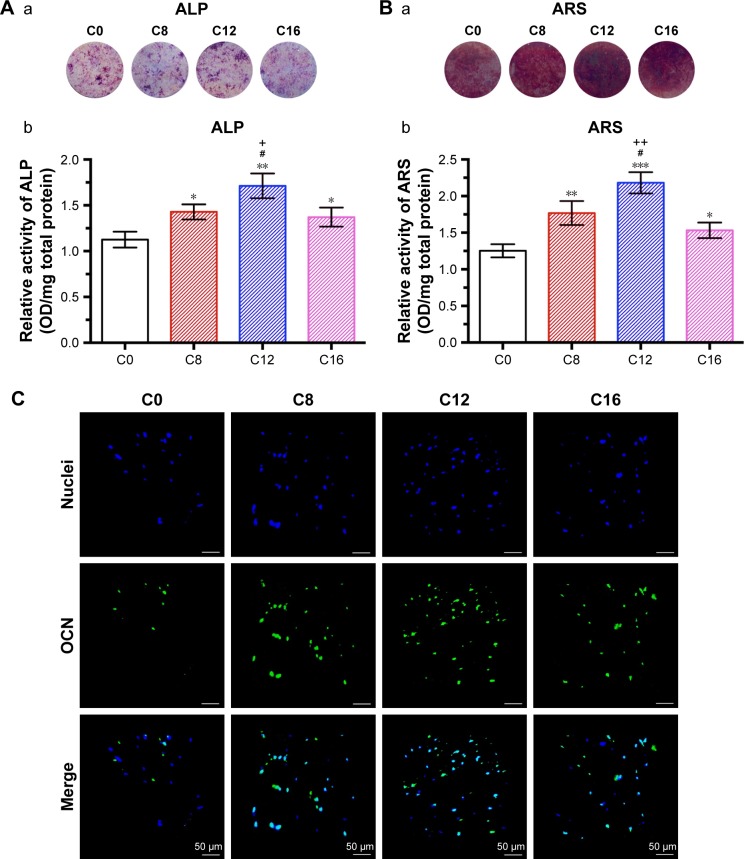
C8, C12 and C16 were endowed with nanoscale, hierarchical hybrid micro-/nanoscale and microscale surface topographies with rod-like superstructures, respectively. Compared with C0, the micro-/nanotextured CHA bioceramic coatings (C8, C12 and C16) possessed excellent surface bioactivity and biocompatibility, as well as better wettability, which mediated improved protein adsorption, giving rise to simultaneous enhancement of a biological cascade of events of rat bone-marrow-derived mesenchymal stem cells including cell adhesion, proliferation, osteogenic differentiation and, notably, the production of the pro-angiogenic growth factor, vascular endothelial growth factor-A. In particular, C12 with biomimetic hierarchical hybrid micro-/nanorod topography exhibited superior fractal property and predominant performance of protein adsorption, cell adhesion, proliferation and osteogenesis concomitant with angiogenesis.
All these results suggest that the 12 wt% CHA bioceramic coating with synergistic modification of surface chemistry and topography has great prospect for future use as implant coating to achieve optimum osseointegration for orthopedic and dental applications.
最佳的骨整合已被认为是决定生物医学植入物长期成功的关键因素。
在本研究中,通过一种新颖的水热方法制备了具有 8wt%、12wt%和 16wt%碳酸根的高碳酸化羟基磷灰石(CHA),并将其沉积在钛基体上,生成相应的 CHA 生物陶瓷涂层(分别命名为 C8、C12 和 C16)和羟基磷灰石生物陶瓷涂层(命名为 C0)。
C8、C12 和 C16 分别具有纳米级、分级混合微/纳米级和微级表面形貌,具有棒状超结构。与 C0 相比,微/纳米结构的 CHA 生物陶瓷涂层(C8、C12 和 C16)具有优异的表面生物活性和生物相容性,以及更好的润湿性,这促进了蛋白质吸附的增强,同时提高了一系列包括大鼠骨髓间充质干细胞黏附、增殖、成骨分化等生物学事件,特别是促血管生成生长因子血管内皮生长因子-A 的产生。特别是具有仿生分级混合微/纳米棒形貌的 C12 表现出优异的分形特性和对蛋白质吸附、细胞黏附、增殖和成骨作用的协同促进作用,同时也促进了血管生成。
所有这些结果表明,具有协同表面化学和形貌改性的 12wt%CHA 生物陶瓷涂层具有作为植入物涂层的巨大应用前景,可实现骨科和牙科应用的最佳骨整合。