Cho In, Son Younsun, Song Sejong, Bae Yoon Jung, Kim Youn Nam, Kim Hyoung-Il, Lee Dae Taek, Hyung Woo Jin
Department of Surgery, Graduate School, Yonsei University College of Medicine, Seoul, Korea.
Department of Surgery, Soonchunhyang University College of Medicine, Bucheon, Korea.
J Gastric Cancer. 2018 Jun;18(2):118-133. doi: 10.5230/jgc.2018.18.e12. Epub 2018 Apr 25.
Exercise intervention after surgery has been found to improve physical fitness and quality of life (QOL). The purpose of this study was to investigate the feasibility and effects of a postoperative recovery exercise program developed specifically for gastric cancer patients (PREP-GC) undergoing minimally invasive gastrectomy.
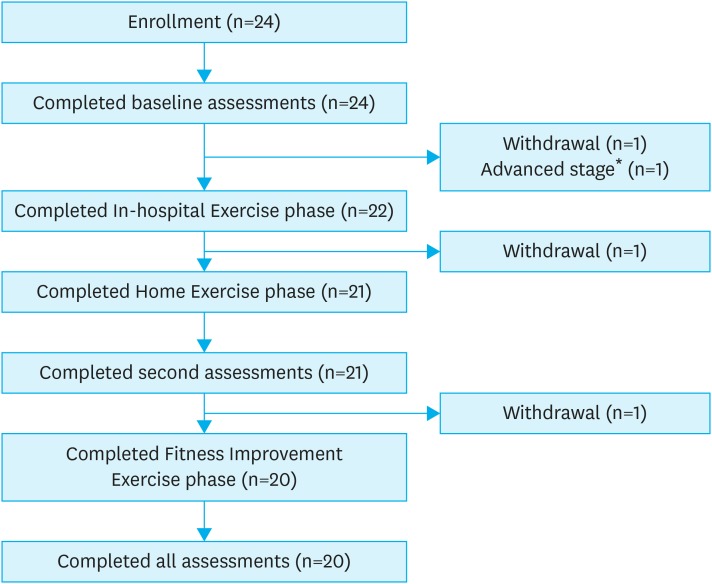
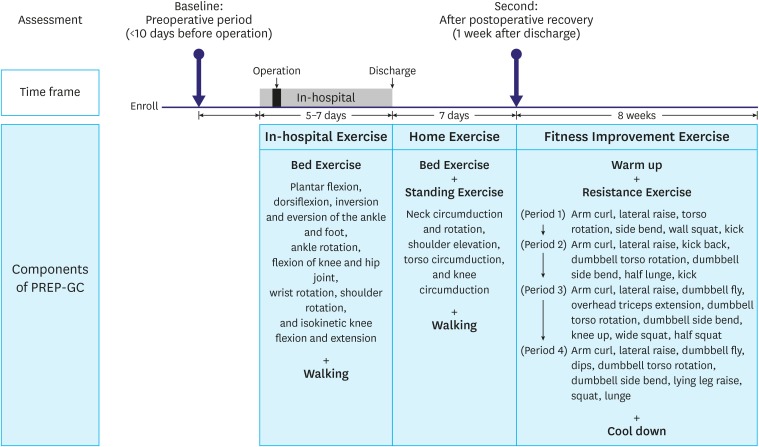
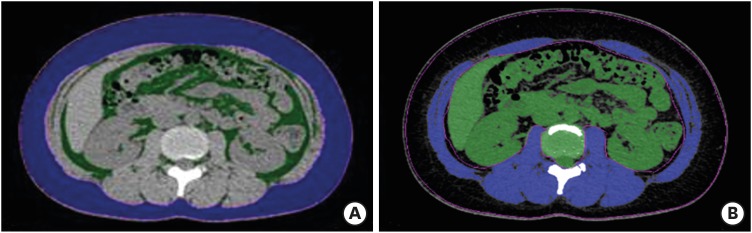
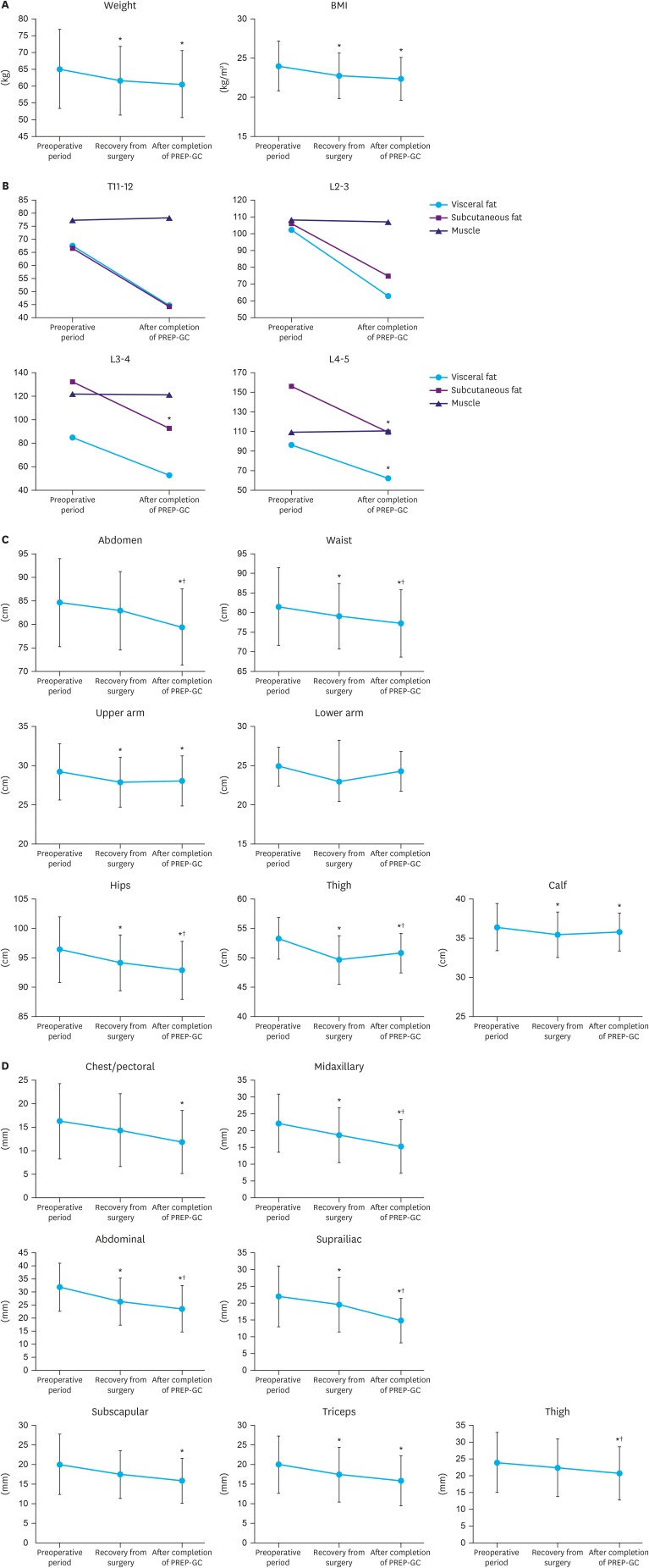
Twenty-four patients treated surgically for early gastric cancer were enrolled in the PREP-GC. The exercise program comprised sessions of In-hospital Exercise (1 week), Home Exercise (1 week), and Fitness Improvement Exercise (8 weeks). Adherence and compliance to PREP-GC were evaluated. In addition, body composition, physical fitness, and QOL were assessed during the preoperative period, after the postoperative recovery (2 weeks after surgery), and upon completing the PREP-GC (10 weeks after surgery).
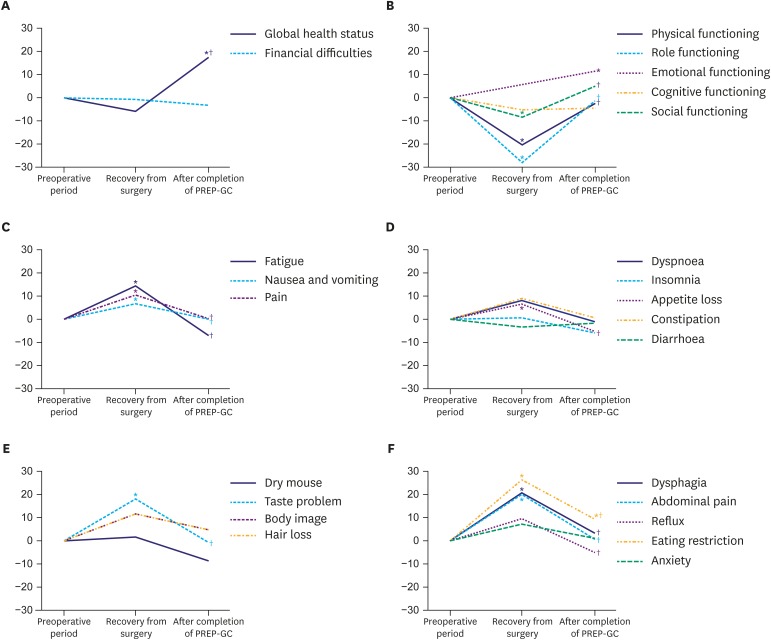
Of the 24 enrolled patients, 20 completed the study without any adverse events related to the PREP-GC. Adherence and compliance rates to the Fitness Improvement Exercise were 79.4% and 99.4%, respectively. Upon completing the PREP-GC, patients also exhibited restored cardiopulmonary function and muscular strength, with improved muscular endurance and flexibility (P<0.05). Compared to those in the preoperative period, no differences were found in symptom scale scores measured using the European Organization for Research and Treatment of Cancer (EORTC) Core Quality of Life Questionnaire (QLQ-C30) and Quality of Life Questionnaire-Stomach Cancer-Specific Module (QLQ-STO22); however, higher scores for global health status and emotional functioning were observed after completing the PREP-GC (P<0.05).
In gastric cancer patients undergoing minimally invasive gastrectomy, PREP-GC was found to be feasible and safe, with high adherence and compliance. Although randomized studies evaluating the benefits of exercise intervention during postoperative recovery are needed, surgeons should encourage patients to participate in systematic exercise intervention programs in the early postoperative period (Registered at the ClinicalTrials.gov NCT01751880).
术后运动干预已被证实可改善身体健康状况和生活质量(QOL)。本研究旨在探讨专门为接受微创胃切除术的胃癌患者制定的术后恢复运动计划(PREP-GC)的可行性和效果。
24例接受早期胃癌手术治疗的患者纳入PREP-GC。运动计划包括住院运动(1周)、家庭运动(1周)和体能改善运动(8周)。评估对PREP-GC的依从性和顺应性。此外,在术前、术后恢复后(术后2周)和完成PREP-GC时(术后10周)评估身体成分、体能和生活质量。
24例纳入患者中,20例完成研究,未发生与PREP-GC相关的不良事件。体能改善运动的依从率和顺应率分别为79.4%和99.4%。完成PREP-GC后,患者还表现出心肺功能和肌肉力量恢复,肌肉耐力和柔韧性提高(P<0.05)。与术前相比,使用欧洲癌症研究与治疗组织(EORTC)核心生活质量问卷(QLQ-C30)和生活质量问卷-胃癌特异性模块(QLQ-STO22)测量的症状量表评分无差异;然而,完成PREP-GC后,整体健康状况和情绪功能得分更高(P<0.05)。
在接受微创胃切除术的胃癌患者中,PREP-GC被发现是可行且安全的,具有高依从性和顺应性。尽管需要进行随机研究来评估术后恢复期间运动干预的益处,但外科医生应鼓励患者在术后早期参与系统的运动干预计划(在ClinicalTrials.gov注册,NCT01751880)。