Department of Physiology (286), Radboud Institute for Molecular Life Sciences, Radboud university medical center, P. O. Box 9101, 6500 HB, Nijmegen, the Netherlands.
Department of Internal Medicine, Radboud Institute for Molecular Life Sciences, Radboud university medical center, Nijmegen, 6500 HB, the Netherlands.
Diabetologia. 2018 Sep;61(9):2030-2042. doi: 10.1007/s00125-018-4680-5. Epub 2018 Jul 9.
AIMS/HYPOTHESIS: Hypomagnesaemia (blood Mg <0.7 mmol/l) is a common phenomenon in individuals with type 2 diabetes. However, it remains unknown how a low blood Mg concentration affects lipid and energy metabolism. Therefore, the importance of Mg in obesity and type 2 diabetes has been largely neglected to date. This study aims to determine the effects of hypomagnesaemia on energy homeostasis and lipid metabolism.
Mice (n = 12/group) were fed either a low-fat diet (LFD) or a high-fat diet (HFD) (10% or 60% of total energy) in combination with a normal- or low-Mg content (0.21% or 0.03% wt/wt) for 17 weeks. Metabolic cages were used to investigate food intake, energy expenditure and respiration. Blood and tissues were taken to study metabolic parameters and mRNA expression profiles, respectively.
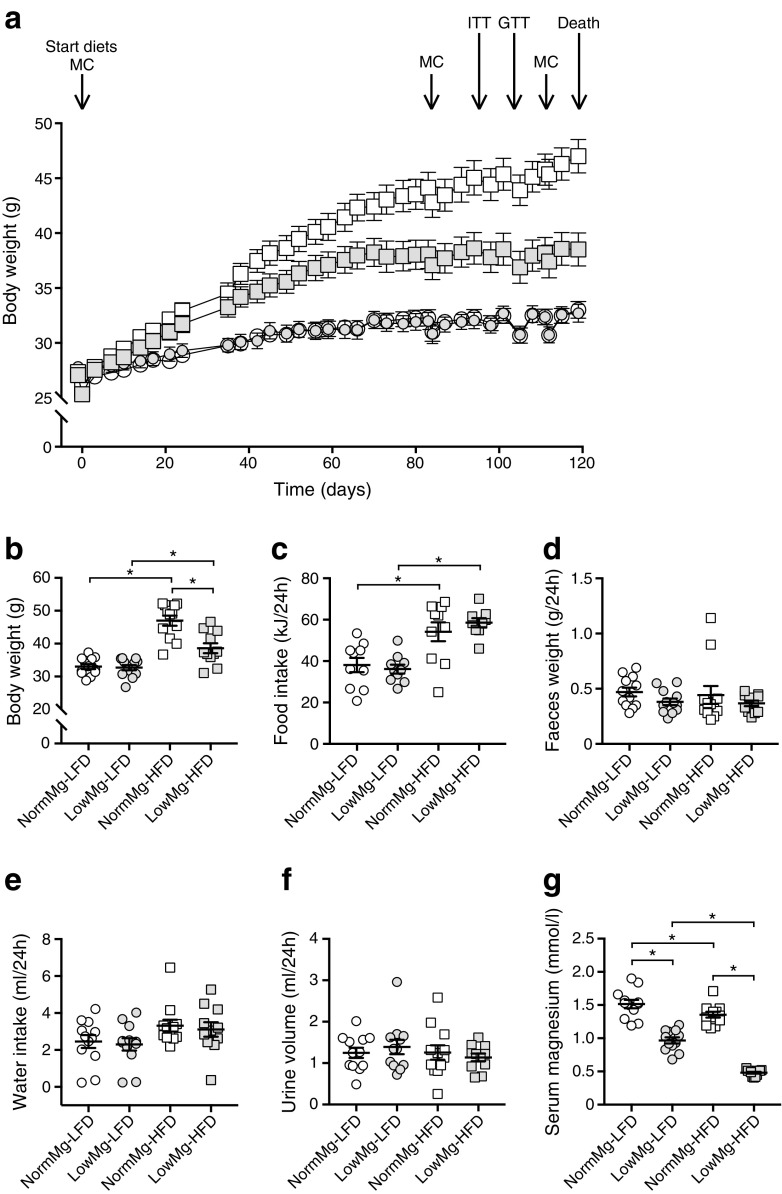
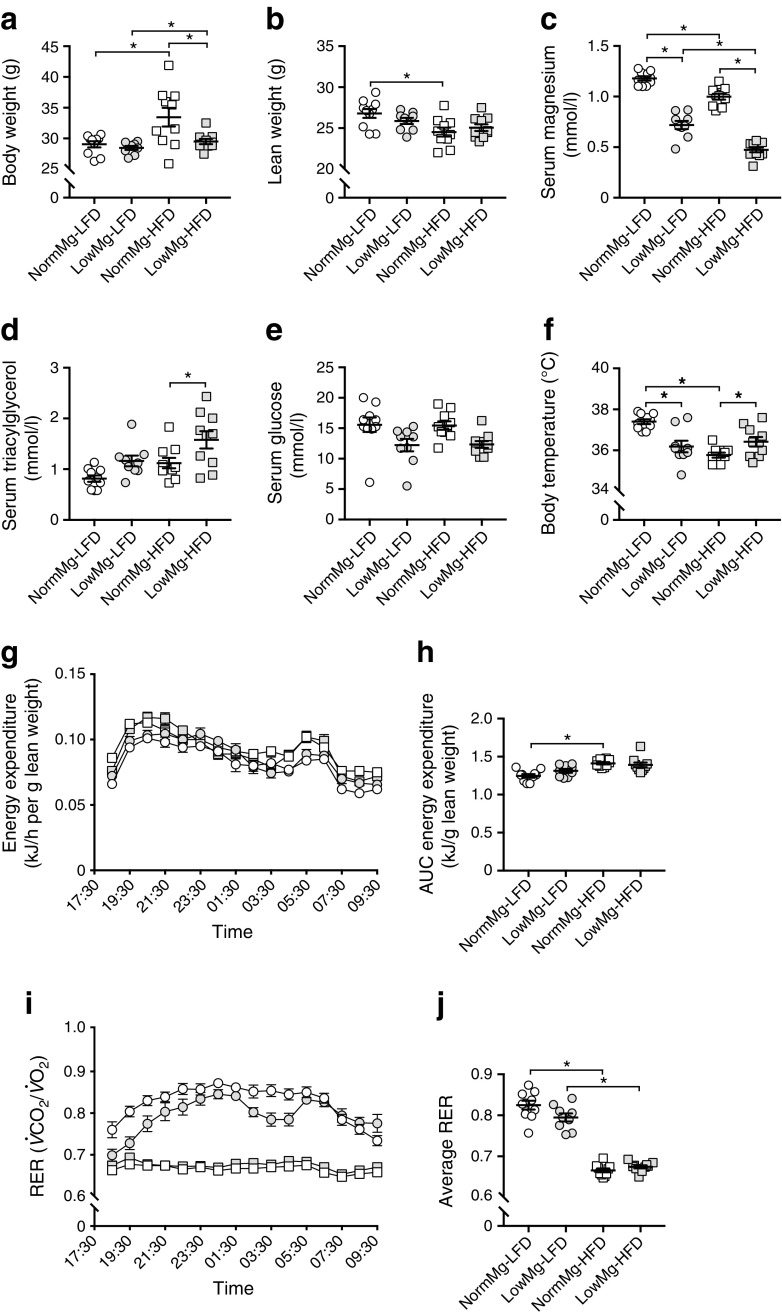
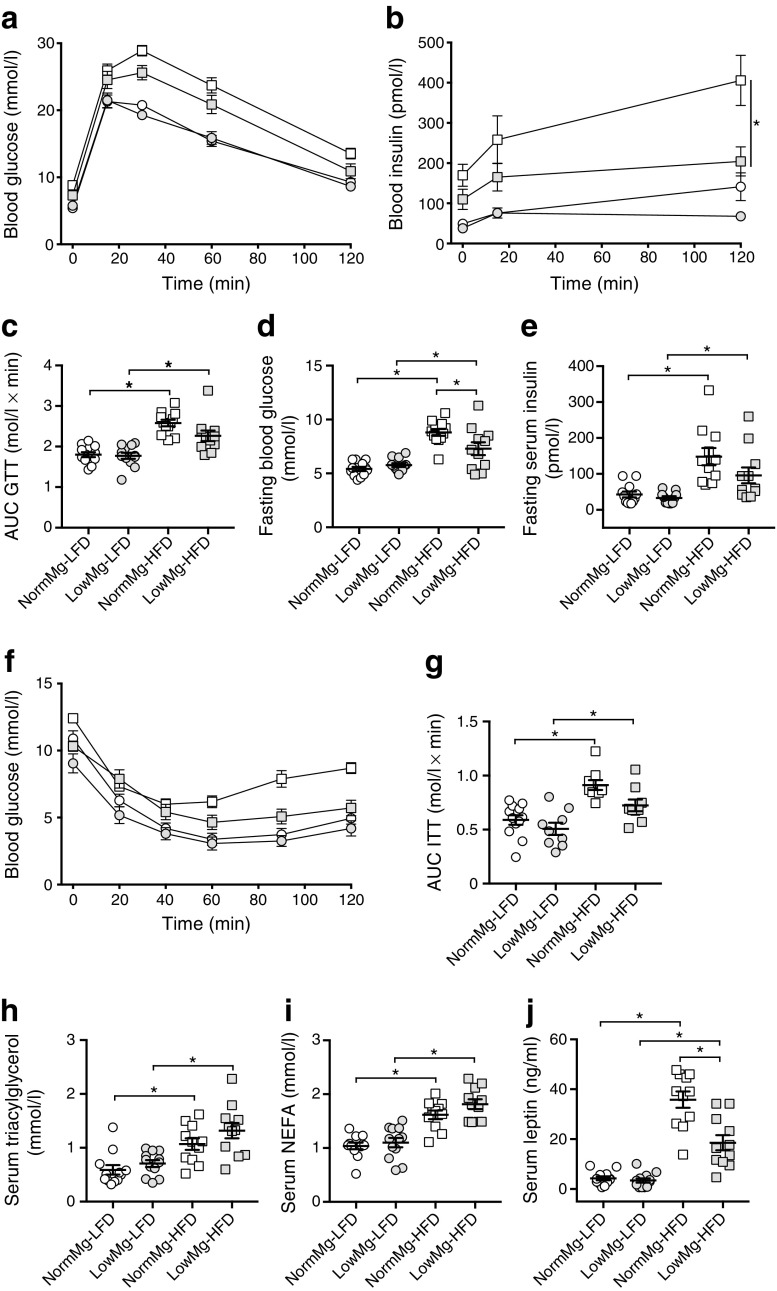
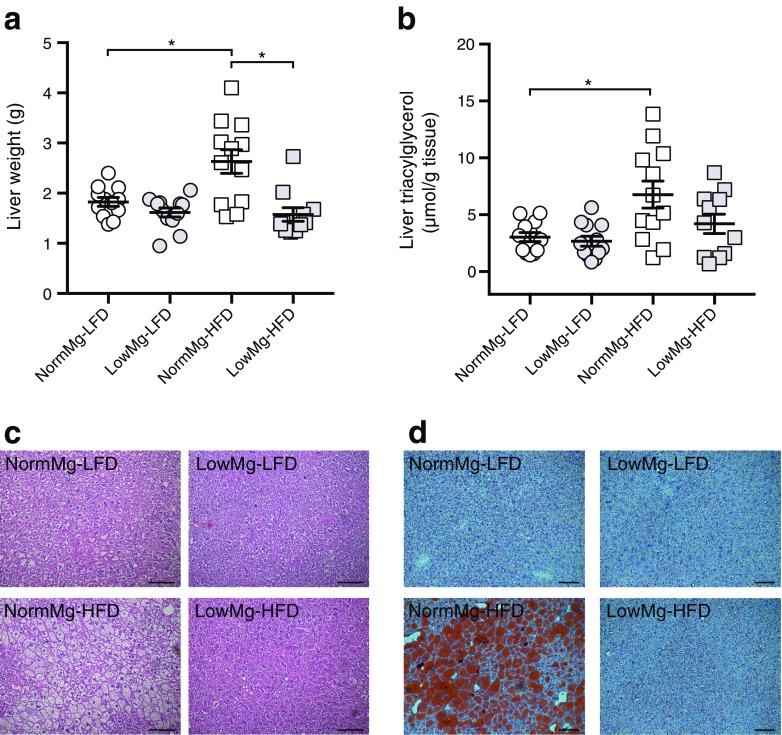
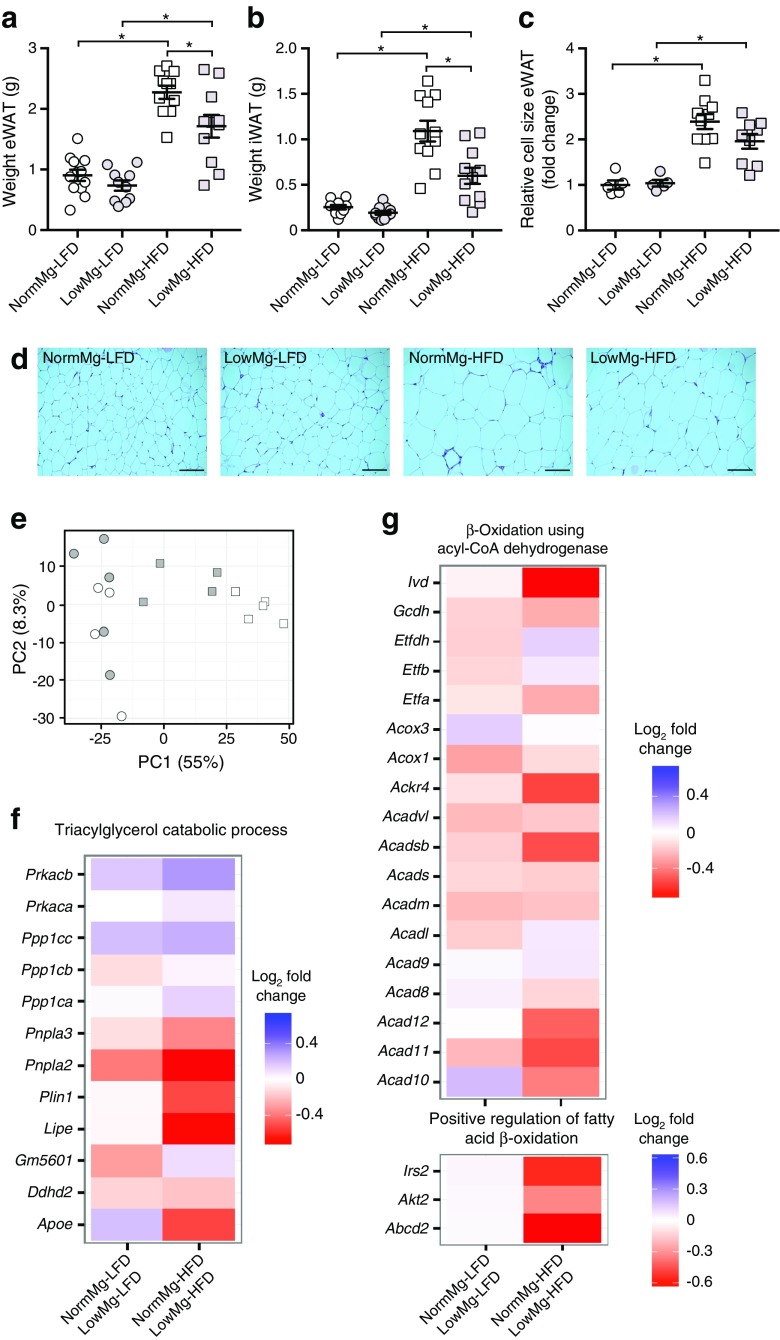
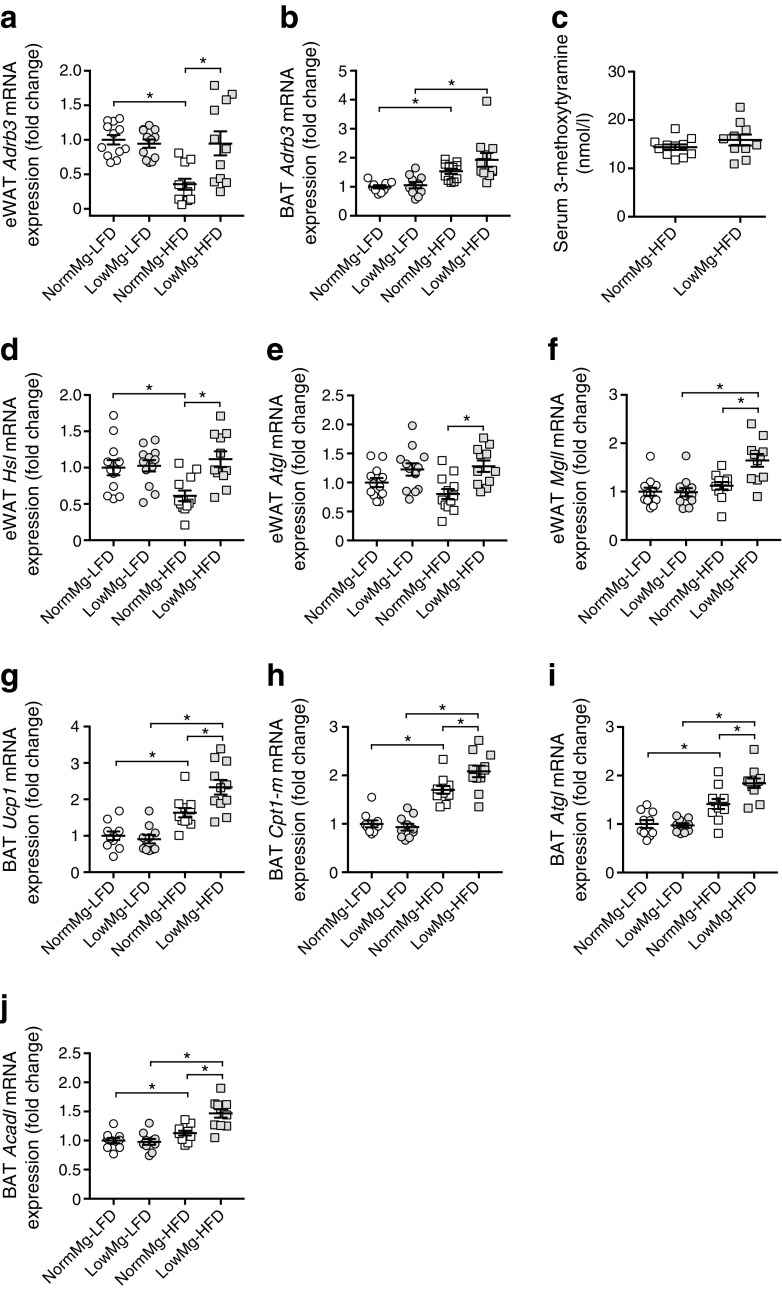
We show that low dietary Mg intake ameliorates HFD-induced obesity in mice (47.00 ± 1.53 g vs 38.62 ± 1.51 g in mice given a normal Mg-HFD and low Mg-HFD, respectively, p < 0.05). Consequently, fasting serum glucose levels decreased and insulin sensitivity improved in low Mg-HFD-fed mice. Moreover, HFD-induced liver steatosis was absent in the low Mg group. In hypomagnesaemic HFD-fed mice, mRNA expression of key lipolysis genes was increased in epididymal white adipose tissue (eWAT), corresponding to reduced lipid storage and high blood lipid levels. Low Mg-HFD-fed mice had increased brown adipose tissue (BAT) Ucp1 mRNA expression and a higher body temperature. No difference was observed in energy expenditure between the two HFD groups.
CONCLUSIONS/INTERPRETATION: Mg-deficiency abrogates HFD-induced obesity in mice through enhanced eWAT lipolysis and BAT activity.
目的/假设:低镁血症(血液镁 <0.7mmol/l)是 2 型糖尿病患者的常见现象。然而,血液中镁浓度降低如何影响脂质和能量代谢仍不清楚。因此,迄今为止,镁在肥胖和 2 型糖尿病中的重要性在很大程度上被忽视了。本研究旨在确定低镁血症对能量平衡和脂质代谢的影响。
将小鼠(每组 12 只)分别喂食低脂肪饮食(LFD)或高脂肪饮食(HFD)(总能量的 10%或 60%),并与正常或低镁含量(0.21%或 0.03%wt/wt)组合,持续 17 周。使用代谢笼研究食物摄入、能量消耗和呼吸。采集血液和组织以研究代谢参数和 mRNA 表达谱。
我们表明,低膳食镁摄入可改善 HFD 诱导的肥胖小鼠(给予正常镁-HFD 和低镁-HFD 的小鼠体重分别为 47.00±1.53g 和 38.62±1.51g,p<0.05)。因此,低镁-HFD 喂养的小鼠空腹血清葡萄糖水平降低,胰岛素敏感性提高。此外,低镁组不存在 HFD 诱导的肝脂肪变性。在低镁血症的 HFD 喂养小鼠中,附睾白色脂肪组织(eWAT)中关键脂肪分解基因的 mRNA 表达增加,对应于脂质储存减少和血液脂质水平升高。低镁-HFD 喂养的小鼠棕色脂肪组织(BAT)Ucp1 mRNA 表达增加,体温升高。两组 HFD 之间的能量消耗没有差异。
结论/解释:镁缺乏通过增强 eWAT 脂肪分解和 BAT 活性来消除 HFD 诱导的肥胖。