Kondoh Nobuo, Mizuno-Kamiya Masako, Takayama Eiji, Kawati Harumi, Umemura Naoki, Yamazaki Yutaka, Mitsudo Kenji, Tohnai Iwai
Department of Oral Biochemistry, Division of Oral Structure, Function and Development, Asahi University School of Dentistry, 1851 Hozumi, Mizuho, Gifu, 501-0296, Japan.
Department of Management and Information Studies, Chemistry Laboratory, Asahi University School of Business Administration, 1851 Hozumi, Mizuho, Gifu 501-0296, Japan.
Open Dent J. 2018 Jun 20;12:455-465. doi: 10.2174/1874210601812010455. eCollection 2018.
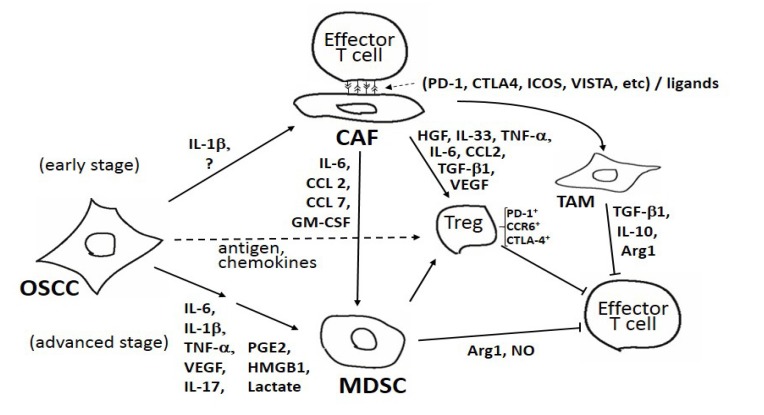
In order to survive, cancers control immune systems and evade immune detection using mediators consisting of immune checkpoint molecules and cellular systems associated with immune suppression.
During the development of cancer and chronic infections, the immune checkpoints and cellular components including regulatory T cells, myeloid derived suppressor cells and cancer associated fibroblasts are often enhanced as a mechanism of immune subversion and have therefore become very important therapeutic targets.
In this review, we will discuss the complexity of immune-suppressive mechanisms in the tumor milieu of cancers, including oral malignancy.
为了生存,癌症利用由免疫检查点分子和与免疫抑制相关的细胞系统组成的介质来控制免疫系统并逃避免疫检测。
在癌症和慢性感染的发展过程中,免疫检查点和细胞成分,包括调节性T细胞、髓源性抑制细胞和癌症相关成纤维细胞,常常会增强,作为一种免疫颠覆机制,因此已成为非常重要的治疗靶点。
在本综述中,我们将讨论癌症肿瘤微环境中免疫抑制机制的复杂性,包括口腔恶性肿瘤。