Gothe Neha P, Hayes Jessica M, Temali Cindy, Damoiseaux Jessica S
Department of Kinesiology and Community Health, University of Illinois at Urbana Champaign, Champaign, IL, United States.
Department of Psychology and Institute of Gerontology, Wayne State University, Detroit, MI, United States.
Front Integr Neurosci. 2018 Jun 22;12:26. doi: 10.3389/fnint.2018.00026. eCollection 2018.
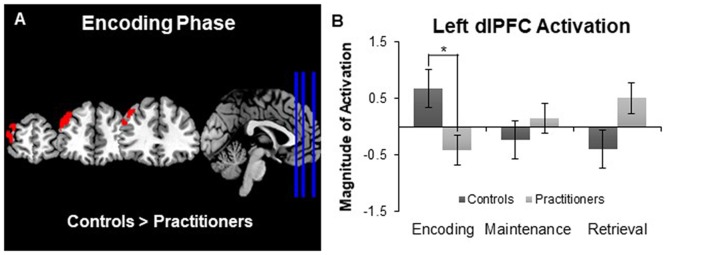
Yoga is a mind-body based physical activity that has demonstrated a variety of physiological, psychological and cognitive health benefits. Although yoga practice has shown to improve cognitive performance, few studies have examined the underlying neurological correlates. The current study aimed to determine the differences in gray matter volume of the hippocampus, thalamus and caudate nucleus and brain activation during the Sternberg working memory task. Participants were 13 experienced yoga practitioners (mean age = 35.8), defined as having more than 3 years of regular yoga practice, and 13 age- and sex-matched controls (mean age = 35.7). All participants completed a 6-min walk test to assess fitness, psychosocial and demographic questionnaires; and underwent magnetic resonance imaging to assess gray matter volume and brain activation. There were no group differences on demographic measures of income, education and on estimated VO2max or physical activity levels. Gray matter volume differences were observed in the left hippocampus, showing greater volume in experienced yoga practitioners compared to controls ( = 0.017). The functional MRI results revealed less activation in the dorsolateral prefrontal cortex in yoga practitioners compared to controls during the encoding phase of the Sternberg task ( < 0.05). Reaction time and accuracy on the task did not differ between the groups. Our results suggest an association between regular long-term yoga practice and differential structure and function of specific brain regions involved in executive function, specifically working memory, which has previously shown to improve with yoga practice. Future studies need to examine intervention effects of yoga and explore its potential to maintain and improve cognitive health across the lifespan through longitudinal and intervention studies.
瑜伽是一种基于身心的体育活动,已被证明对生理、心理和认知健康有多种益处。尽管瑜伽练习已显示出能改善认知表现,但很少有研究考察其潜在的神经关联。本研究旨在确定在斯特恩伯格工作记忆任务期间,海马体、丘脑和尾状核的灰质体积差异以及大脑激活情况。参与者包括13名有经验的瑜伽练习者(平均年龄 = 35.8岁),定义为有超过3年的规律瑜伽练习经历,以及13名年龄和性别匹配的对照组(平均年龄 = 35.7岁)。所有参与者完成了一项6分钟步行测试以评估体能、心理社会和人口统计学问卷;并接受了磁共振成像以评估灰质体积和大脑激活情况。在收入、教育程度以及估计的最大摄氧量或身体活动水平等人口统计学指标上,两组之间没有差异。在左侧海马体观察到灰质体积差异,与对照组相比,有经验的瑜伽练习者灰质体积更大( = 0.017)。功能磁共振成像结果显示,在斯特恩伯格任务的编码阶段,与对照组相比,瑜伽练习者背外侧前额叶皮层的激活较少( < 0.05)。两组在任务反应时间和准确性上没有差异。我们的结果表明,长期规律的瑜伽练习与执行功能(特别是工作记忆)所涉及的特定脑区的结构和功能差异之间存在关联,此前已证明瑜伽练习能改善工作记忆。未来的研究需要考察瑜伽的干预效果,并通过纵向研究和干预研究探索其在维持和改善全生命周期认知健康方面的潜力。