School of Physiology, Pharmacology & Neuroscience, Faculty of Biomedical Sciences, University of Bristol, BS8 1TD Bristol, United Kingdom.
Institute for Experimental Cardiovascular Medicine, University Heart Centre Freiburg - Bad Krozingen, Faculty of Medicine, University of Freiburg, 79110 Freiburg, Germany.
Proc Natl Acad Sci U S A. 2018 Jul 24;115(30):E7073-E7080. doi: 10.1073/pnas.1805979115. Epub 2018 Jul 10.
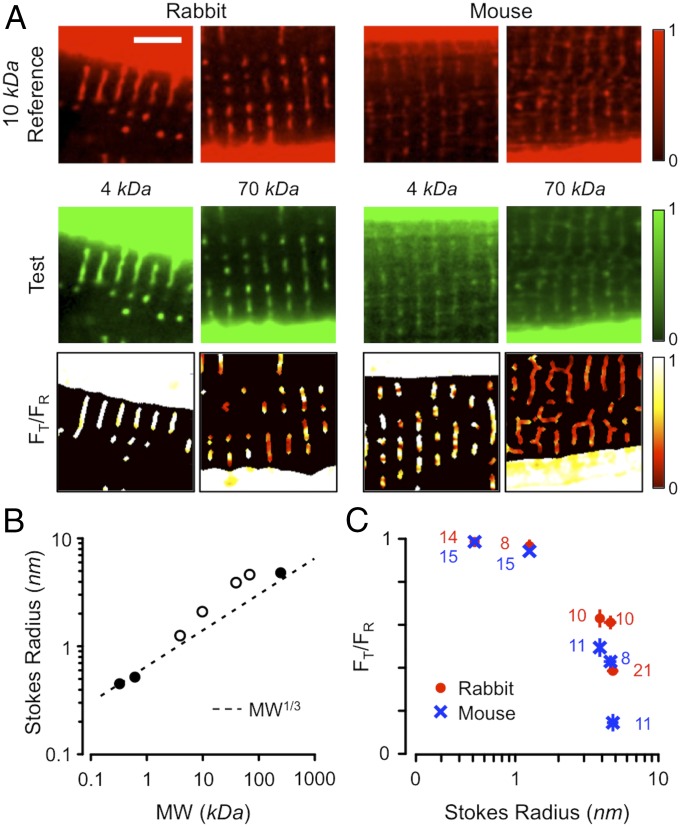
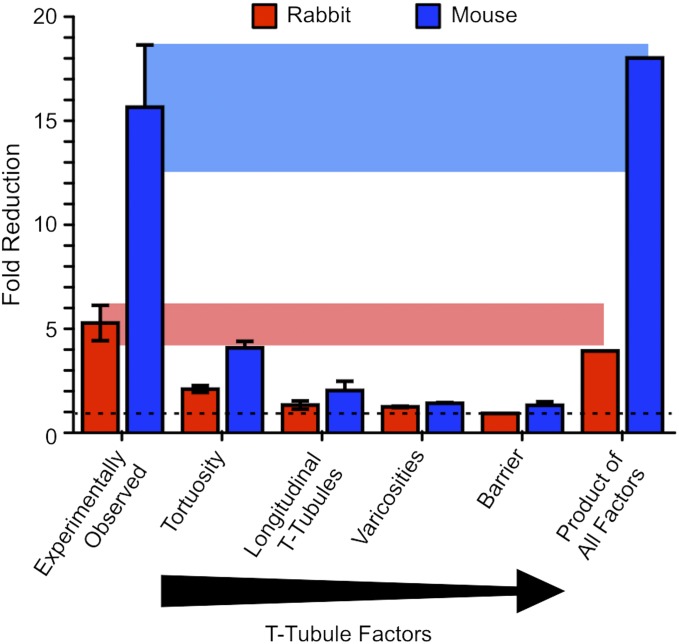
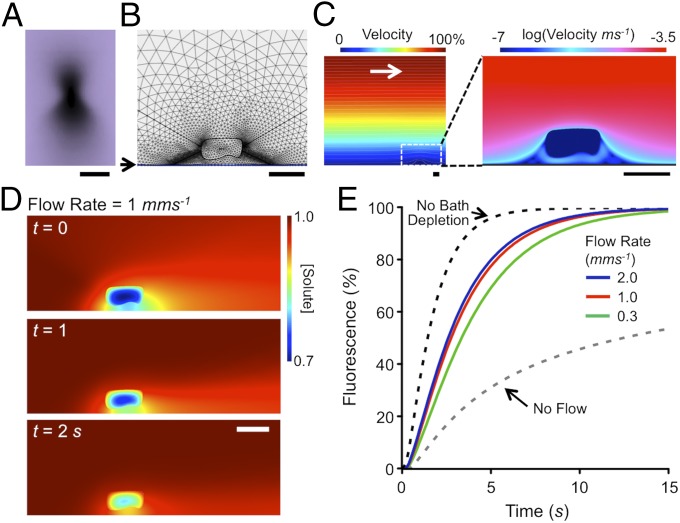
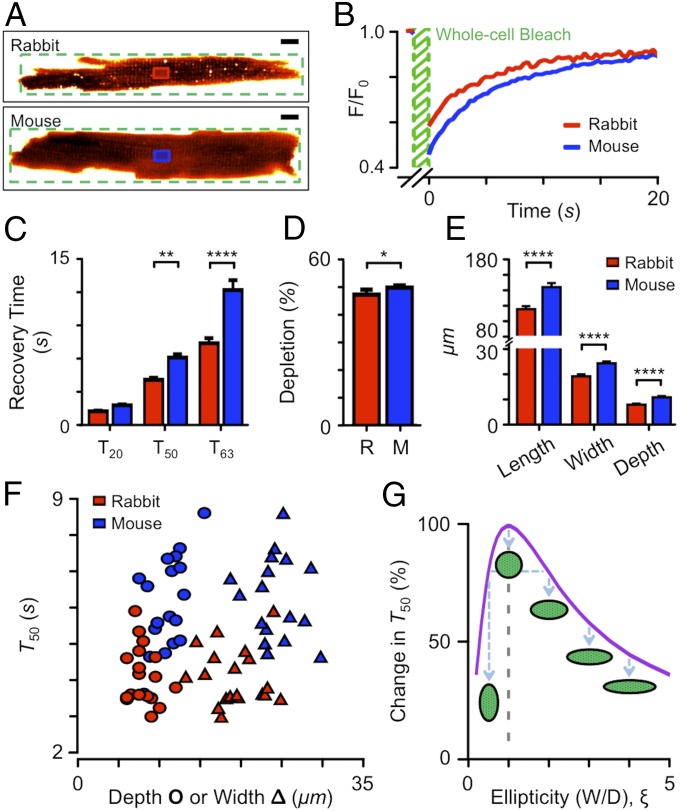
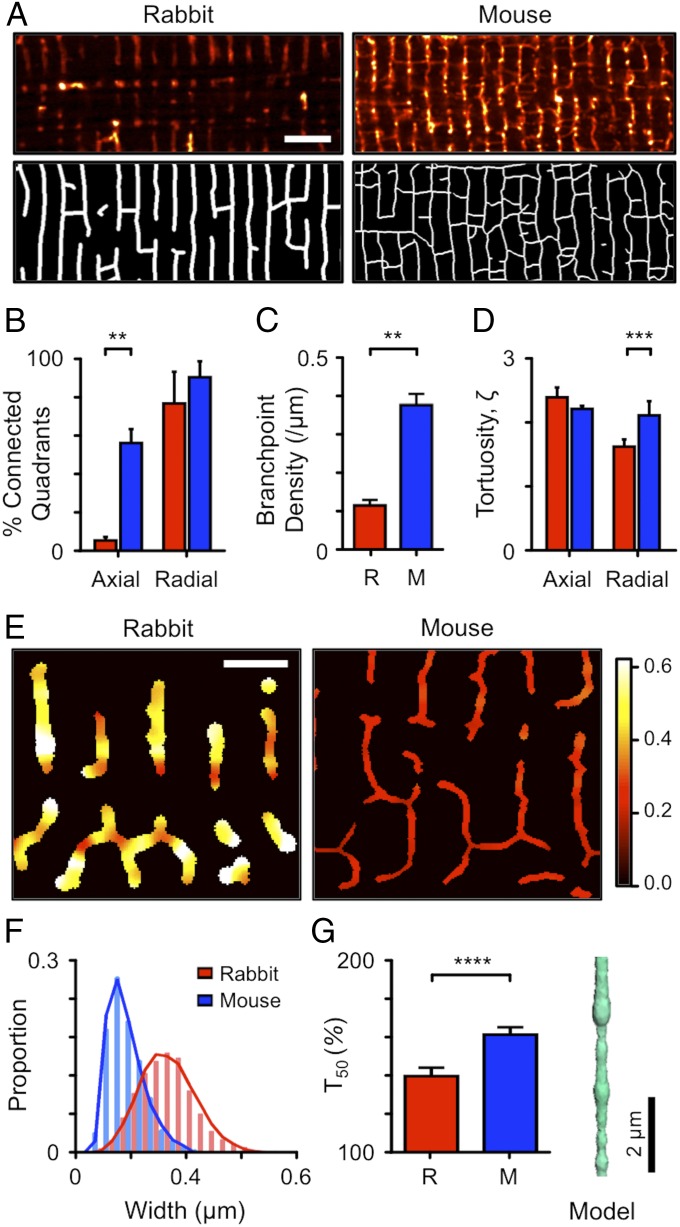
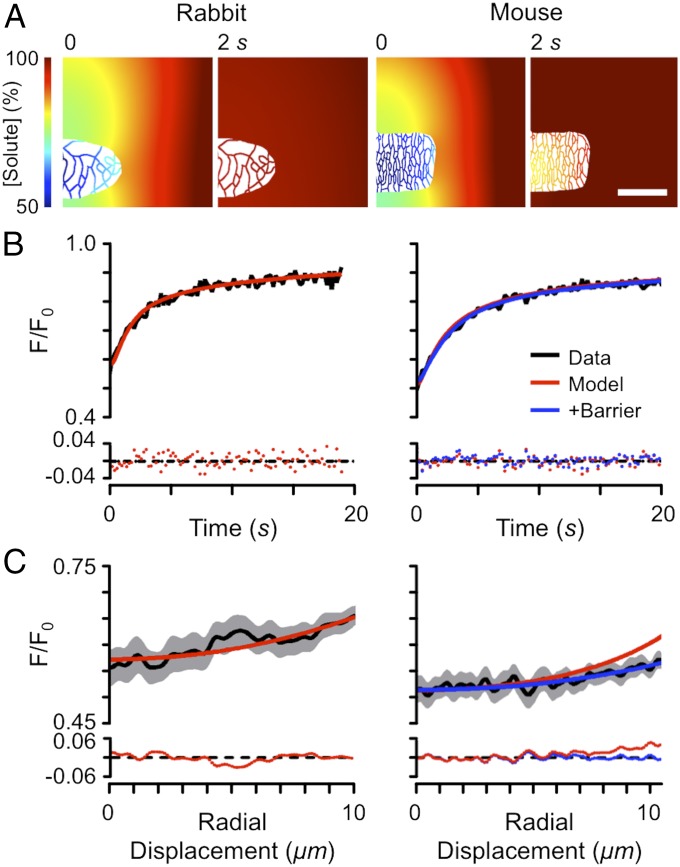
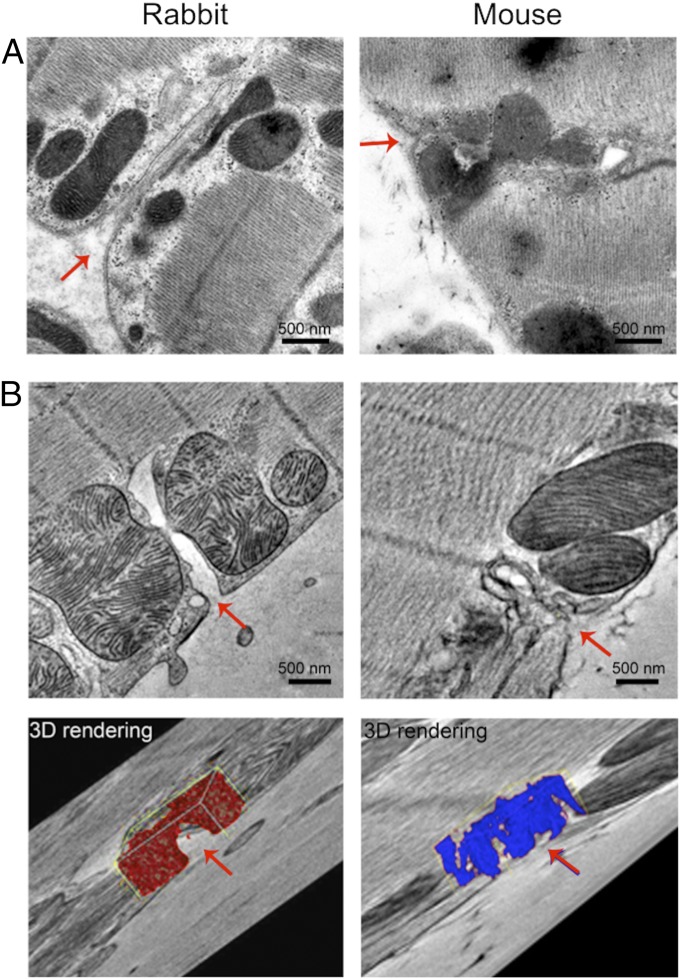
Cardiac transverse (t-) tubules carry both electrical excitation and solutes toward the cell center but their ability to transport small molecules is unclear. While fluorescence recovery after photobleaching (FRAP) can provide an approach to measure local solute movement, extraction of diffusion coefficients is confounded by cell and illumination beam geometries. In this study, we use measured cellular geometry and detailed computer modeling to derive the apparent diffusion coefficient of a 1-kDa solute inside the t-tubular system of rabbit and mouse ventricular cardiomyocytes. This approach shows that diffusion within individual t-tubules is more rapid than previously reported. T-tubule tortuosity, varicosities, and the presence of longitudinal elements combine to substantially reduce the apparent rate of solute movement. In steady state, large (>4 kDa) solutes did not freely fill the t-tubule lumen of both species and <50% of the t-tubule volume was available to solutes >70 kDa. Detailed model fitting of FRAP data suggests that solute diffusion is additionally restricted at the t-tubular entrance and this effect was larger in mouse than in rabbit. The possible structural basis of this effect was investigated using electron microscopy and tomography. Near the cell surface, mouse t-tubules are more tortuous and filled with an electron-dense ground substance, previously identified as glycocalyx and a polyanionic mesh. Solute movement in the t-tubule network of rabbit and mouse appears to be explained by their different geometric properties, which impacts the use of these species for understanding t-tubule function and the consequences of changes associated with t-tubule disease.
心的横向(t-)小管携带电兴奋和溶质向细胞中心,但它们运输小分子的能力尚不清楚。虽然光漂白后荧光恢复(FRAP)可以提供一种测量局部溶质运动的方法,但扩散系数的提取受到细胞和照明光束几何形状的影响。在这项研究中,我们使用测量的细胞几何形状和详细的计算机建模来推导兔和鼠心室心肌细胞 t-小管系统内 1kDa 溶质的表观扩散系数。这种方法表明,单个 t-小管内的扩散速度比以前报道的要快。t-小管的扭曲、静脉曲张和纵向元素的存在结合起来,大大降低了溶质运动的表观速率。在稳态下,大于 4kDa 的大溶质不能自由填充两种物种的 t-小管腔,并且大于 70kDa 的溶质只能占据 t-小管体积的<50%。FRAP 数据的详细模型拟合表明,溶质扩散在 t-小管入口处进一步受到限制,而这种效应在小鼠中比在兔中更大。使用电子显微镜和断层扫描技术研究了这种效应的可能结构基础。在细胞表面附近,鼠 t-小管更扭曲,并充满电子致密的基质,以前被鉴定为糖萼和多阴离子网。兔和鼠 t-小管网络中的溶质运动似乎可以用它们不同的几何特性来解释,这影响了这些物种在理解 t-小管功能和与 t-小管疾病相关变化的后果方面的应用。