Section of Oncology, Department of Clinical Science, University of Bergen, 5020 Bergen, Norway.
Department of Oncology, Haukeland University Hospital, 5021 Bergen, Norway.
Nat Commun. 2018 Jul 10;9(1):2665. doi: 10.1038/s41467-018-05063-1.
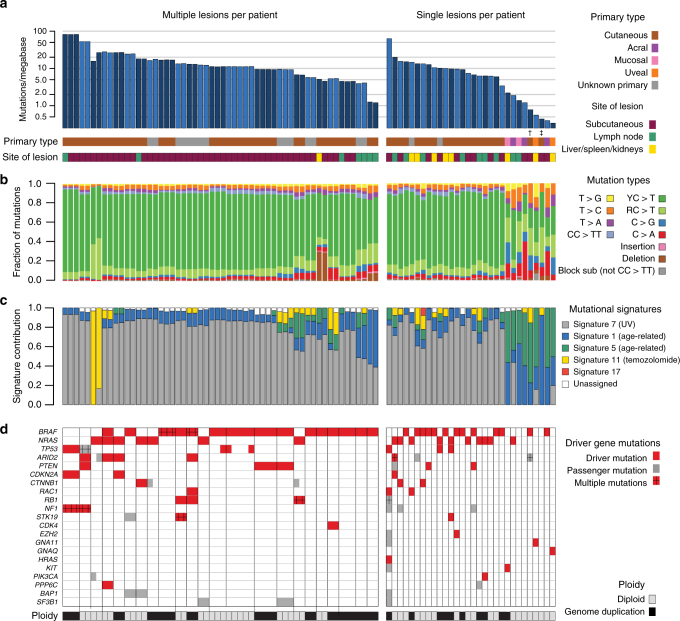
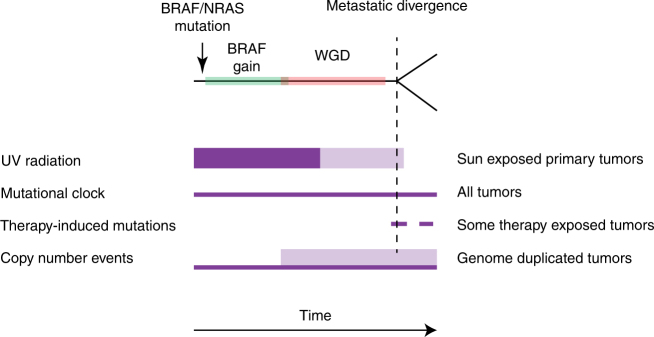
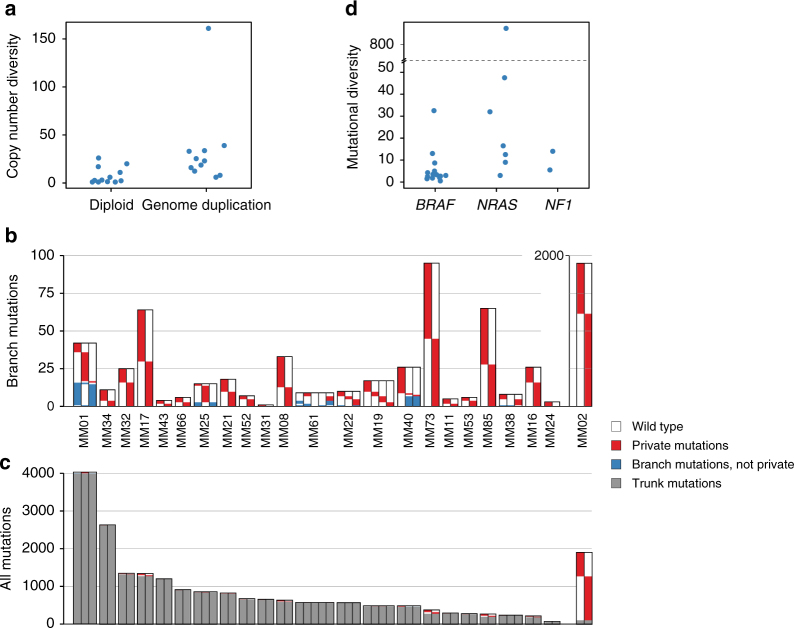
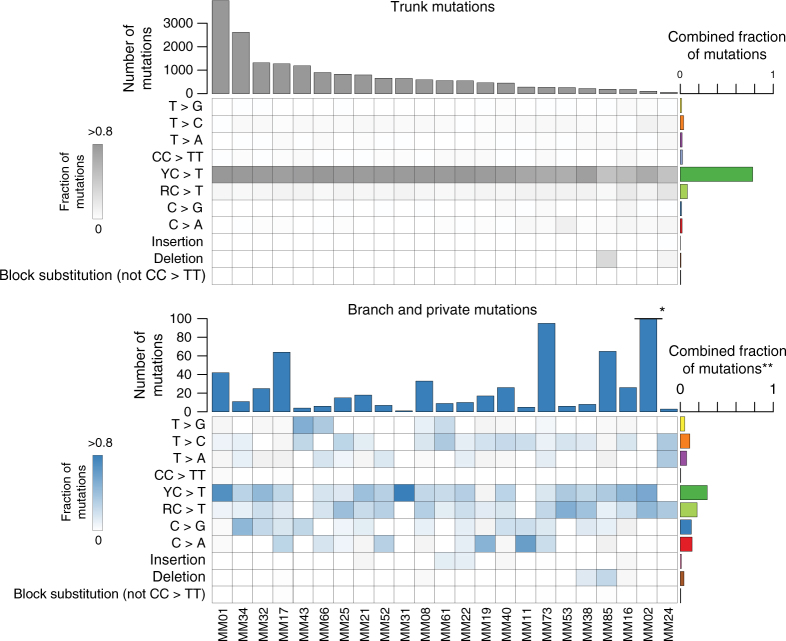
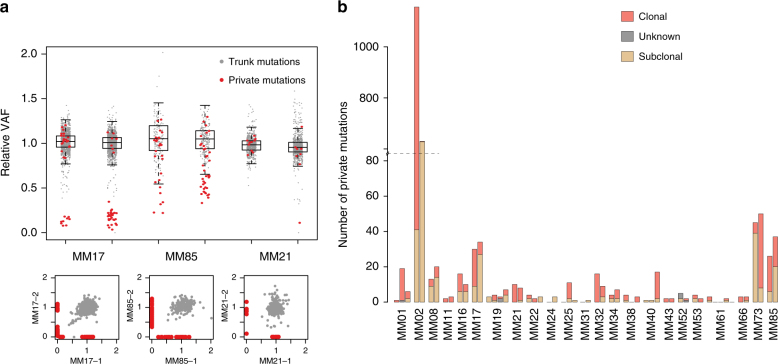
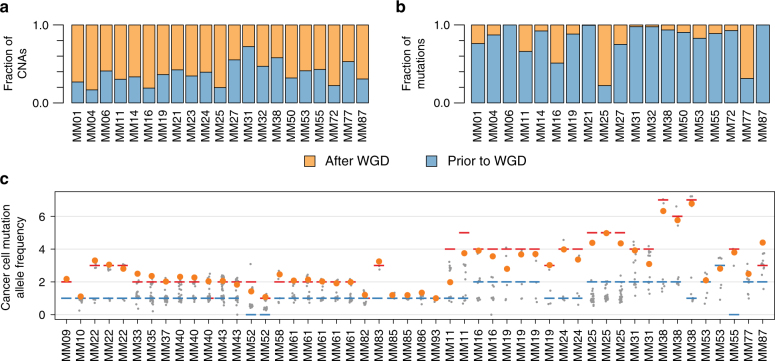
Genomic alterations occurring during melanoma progression and the resulting genomic heterogeneity between metastatic deposits remain incompletely understood. Analyzing 86 metastatic melanoma deposits from 53 patients with whole-exome sequencing (WES), we show a low branch to trunk mutation ratio and little intermetastatic heterogeneity, with driver mutations almost completely shared between lesions. Branch mutations consistent with UV damage indicate that metastases may arise from different subclones in the primary tumor. Selective gain of mutated BRAF alleles occurs as an early event, contrasting whole-genome duplication (WGD) occurring as a late truncal event in about 40% of cases. One patient revealed elevated mutational diversity, probably related to previous chemotherapy and DNA repair defects. In another patient having received radiotherapy toward a lymph node metastasis, we detected a radiotherapy-related mutational signature in two subsequent distant relapses, consistent with secondary metastatic seeding. Our findings add to the understanding of genomic evolution in metastatic melanomas.
黑色素瘤进展过程中发生的基因组改变以及转移灶之间由此产生的基因组异质性仍不完全清楚。通过对 53 名患者的 86 个转移性黑色素瘤病灶进行全外显子组测序 (WES) 分析,我们发现分支到主干的突变比例较低,且转移灶之间的异质性很小,几乎所有病灶都存在驱动突变。与紫外线损伤一致的分支突变表明,转移灶可能来自原发性肿瘤中的不同亚克隆。选择性获得突变的 BRAF 等位基因是一个早期事件,而全基因组复制 (WGD) 作为一个主干事件发生在大约 40%的病例中。一名患者显示出较高的突变多样性,可能与先前的化疗和 DNA 修复缺陷有关。在另一名接受淋巴结转移放疗的患者中,我们在随后的两次远处复发中检测到与放疗相关的突变特征,与继发性转移播种一致。我们的研究结果有助于加深对转移性黑色素瘤中基因组进化的理解。