Department of Pharmaceutical Sciences, University of Tennessee Health Science Center, Memphis, TN, 38163, USA.
Sci Rep. 2018 Jul 10;8(1):10394. doi: 10.1038/s41598-018-28500-z.
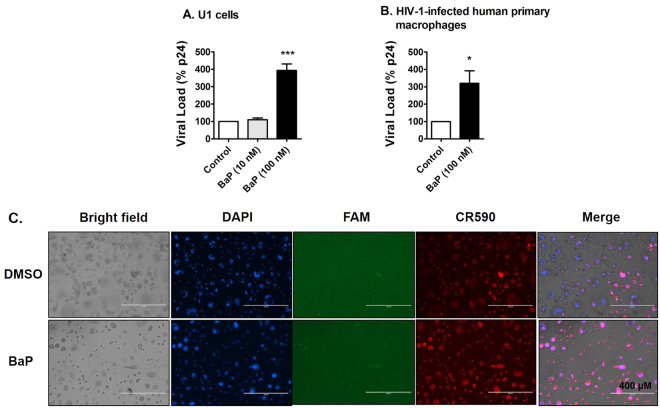
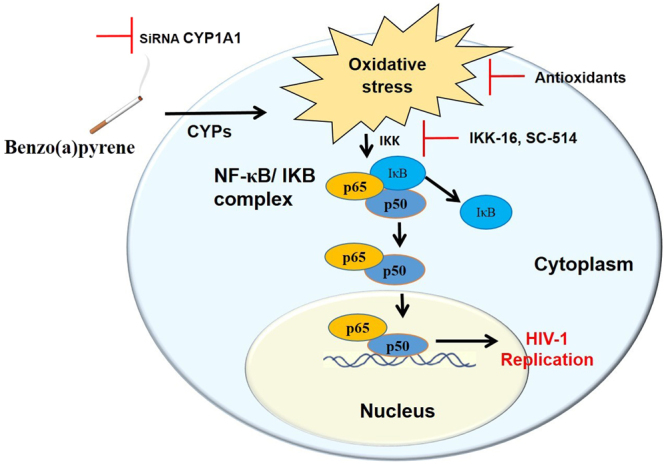
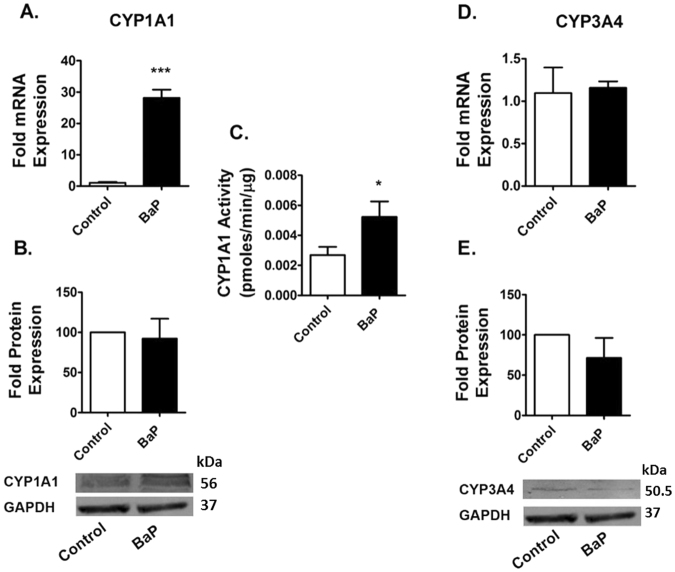
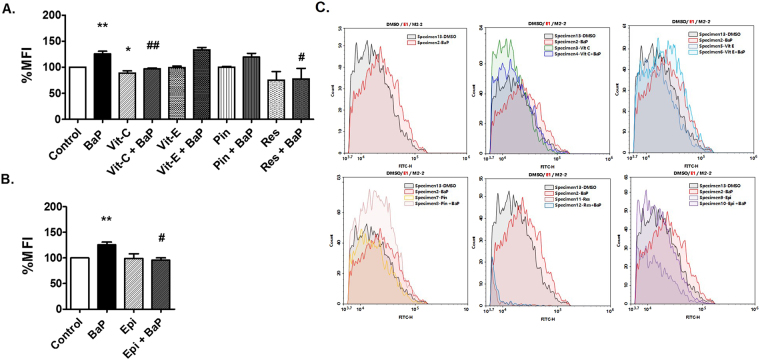
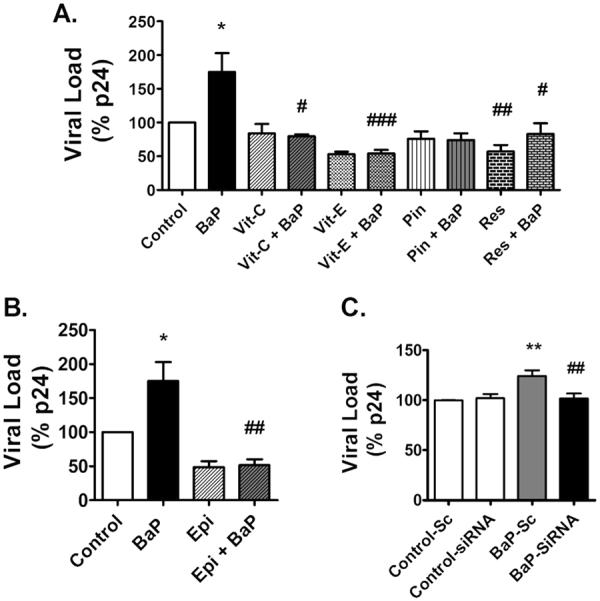
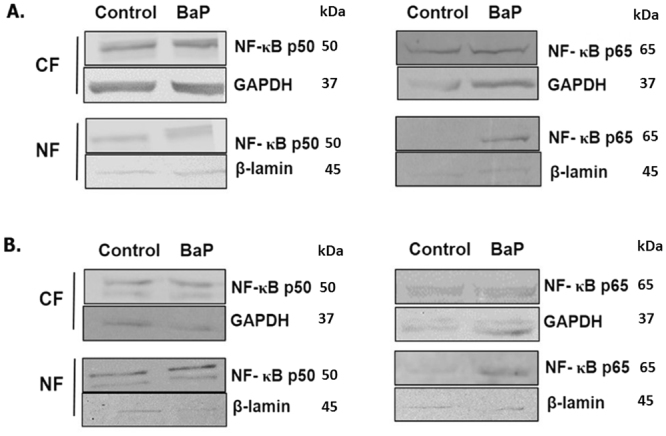
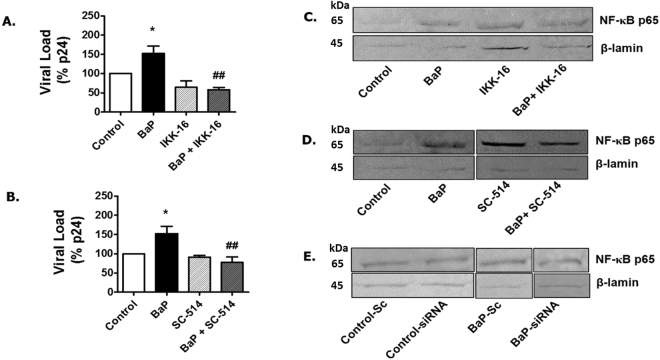
Smoking aggravates HIV-1 pathogenesis and leads to decreased responses to antiretroviral therapy. In this study, we aim to find a molecular mechanism that would explain smoking-induced HIV-1 replication. Benzo(a)pyrene (BaP), a major carcinogen in cigarette, requires metabolic activation through cytochrome P450s (CYPs) to exert its toxic effects. We hypothesized that CYP-mediated BaP metabolism generates reactive oxygen species (ROS), and the resultant oxidative stress aggravates HIV-1 replication. As expected, we observed ~3 to 4-fold increase in HIV-1 replication in U1 cells and human primary macrophages after chronic BaP exposure. We also observed ~30-fold increase in the expression of CYP1A1 at mRNA level, ~2.5-fold increase in its enzymatic activity as well as elevated ROS and cytotoxicity in U1 cells. The knock-down of the CYP1A1 gene using siRNA and treatment with selective CYP inhibitors and antioxidants significantly reduced HIV-1 replication. Further, we observed a nuclear translocation of NF-κB subunits (p50 and p65) after chronic BaP exposure, which was reduced by treatment with siRNA and antioxidants/CYP inhibitors. Suppression of NF-κB pathway using specific NF-κB inhibitors also significantly reduced HIV-1 replication. Altogether, our results suggest that BaP enhances HIV-1 replication in macrophages by a CYP-mediated oxidative stress pathway followed by the NF-κB pathway.
吸烟可加重 HIV-1 的发病机制,并导致抗逆转录病毒治疗反应降低。在这项研究中,我们旨在寻找一种分子机制,以解释吸烟引起的 HIV-1 复制。苯并(a)芘(BaP)是香烟中的一种主要致癌物质,需要通过细胞色素 P450s(CYPs)代谢激活来发挥其毒性作用。我们假设 CYP 介导的 BaP 代谢产生活性氧(ROS),由此产生的氧化应激会加重 HIV-1 的复制。正如预期的那样,我们观察到慢性 BaP 暴露后 U1 细胞和人原代巨噬细胞中的 HIV-1 复制增加了约 3 到 4 倍。我们还观察到 CYP1A1 的 mRNA 水平表达增加了约 30 倍,其酶活性增加了约 2.5 倍,U1 细胞中的 ROS 和细胞毒性也升高了。使用 siRNA 敲低 CYP1A1 基因,以及使用选择性 CYP 抑制剂和抗氧化剂治疗,可显著降低 HIV-1 复制。此外,我们观察到慢性 BaP 暴露后 NF-κB 亚基(p50 和 p65)发生核转位,而用 siRNA 和抗氧化剂/CYP 抑制剂处理则可减少核转位。使用特异性 NF-κB 抑制剂抑制 NF-κB 通路也可显著降低 HIV-1 复制。总之,我们的结果表明,BaP 通过 CYP 介导的氧化应激途径,继而通过 NF-κB 途径,增强巨噬细胞中的 HIV-1 复制。