Department of Pharmaceutical Sciences, College of Pharmacy, University of Tennessee Health Science Center, Memphis, TN, 38163, USA.
Laboratory of Molecular Virology, George Mason University, Manassas, VA, 20110, USA.
Sci Rep. 2017 Nov 23;7(1):16120. doi: 10.1038/s41598-017-16301-9.
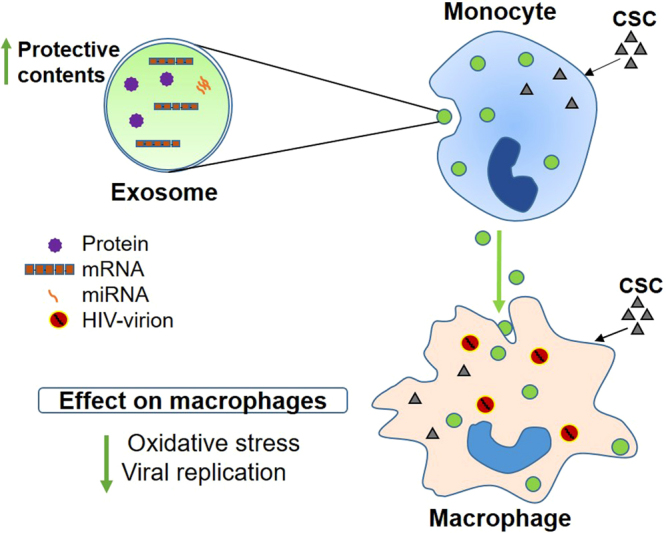
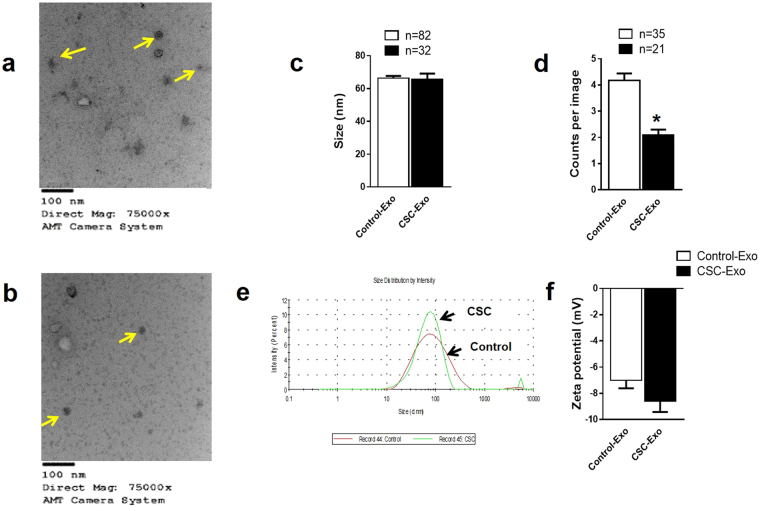
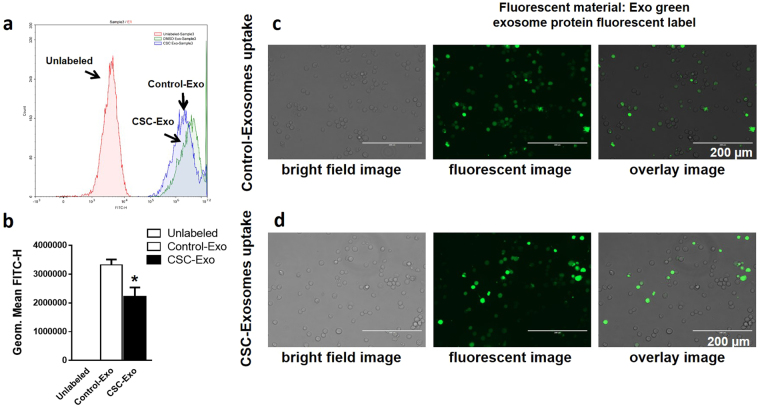
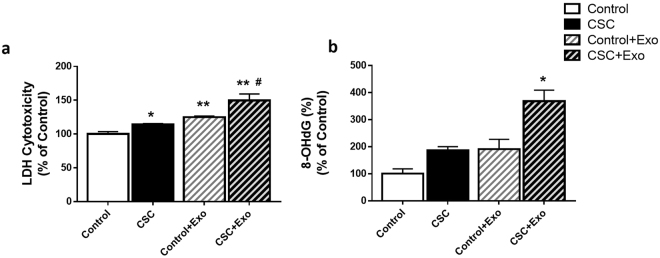
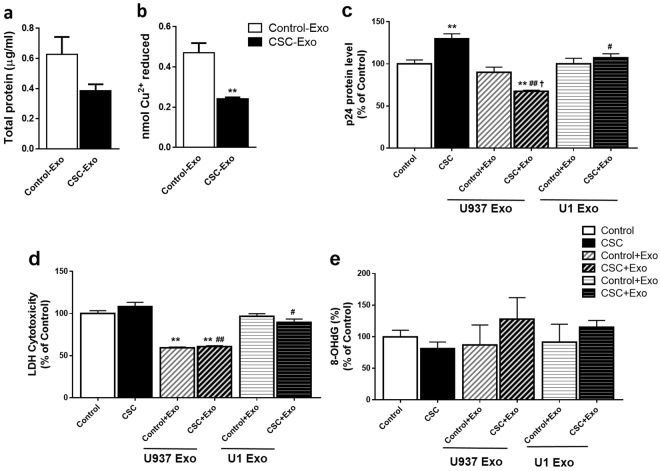
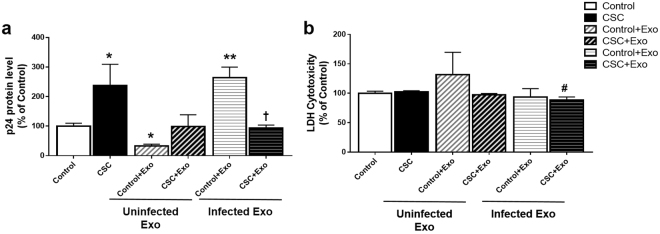
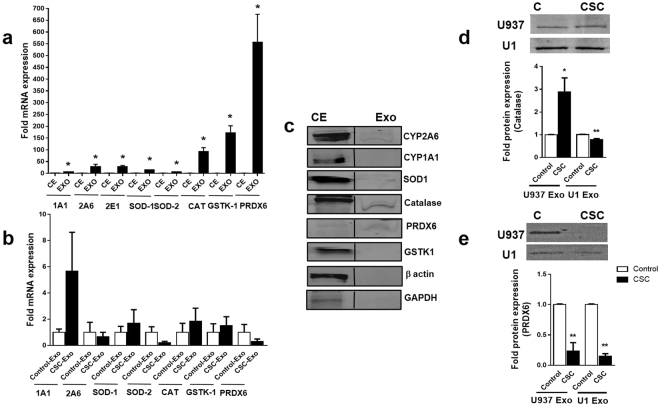
Smoking is known to exacerbate HIV-1 pathogenesis, especially in monocytes, through the oxidative stress pathway. Exosomes are known to alter HIV-1 pathogenesis through inter-cellular communication. However, the role of exosomes in smoking-mediated HIV-1 pathogenesis is unknown. In this study, we investigated the effect of cigarette smoke condensate (CSC) on the characteristics of monocyte-derived exosomes and their influence on HIV-1 replication. Initially, we demonstrated that CSC reduced total protein and antioxidant capacity in exosomes derived from HIV-1-infected and uninfected macrophages. The exosomes from CSC-treated uninfected cells showed a protective effect against cytotoxicity and viral replication in HIV-1-infected macrophages. However, exosomes derived from HIV-1-infected cells lost their protective capacity. The results suggest that the exosomal defense is likely to be more effective during the early phase of HIV-1 infection and diminishes at the latter phase. Furthermore, we showed CSC-mediated upregulation of catalase in exosomes from uninfected cells, with a decrease in the levels of catalase and PRDX6 in exosomes derived from HIV-1-infected cells. These results suggest a potential role of antioxidant enzymes, which are differentially packaged into CSC-exposed HIV-1-infected and uninfected cell-derived exosomes, on HIV-1 replication of recipient cells. Overall, our study suggests a novel role of exosomes in tobacco-mediated HIV-1 pathogenesis.
吸烟已知可通过氧化应激途径加重 HIV-1 发病机制,尤其是在单核细胞中。外泌体已知通过细胞间通讯改变 HIV-1 发病机制。然而,外泌体在吸烟介导的 HIV-1 发病机制中的作用尚不清楚。在这项研究中,我们研究了香烟烟雾冷凝物(CSC)对单核细胞来源的外泌体特征的影响及其对 HIV-1 复制的影响。最初,我们证明 CSC 降低了 HIV-1 感染和未感染巨噬细胞来源的外泌体中的总蛋白和抗氧化能力。来自 CSC 处理的未感染细胞的外泌体显示出对 HIV-1 感染巨噬细胞中细胞毒性和病毒复制的保护作用。然而,来自 HIV-1 感染细胞的外泌体失去了这种保护能力。结果表明,外泌体防御可能在 HIV-1 感染的早期阶段更有效,而在后期阶段则减弱。此外,我们表明 CSC 介导的未感染细胞中外泌体中过氧化氢酶的上调,同时 HIV-1 感染细胞中外泌体中过氧化氢酶和 PRDX6 的水平降低。这些结果表明抗氧化酶在外泌体中可能具有不同的包装方式,这可能对受体细胞中的 HIV-1 复制具有潜在作用。总体而言,我们的研究表明外泌体在烟草介导的 HIV-1 发病机制中具有新的作用。