Neuroscience Graduate Group, Department of Neuroscience, University of Pennsylvania, Philadelphia, Pennsylvania, United States of America.
School of Arts and Sciences, Department of Biology, University of Pennsylvania, Philadelphia, Pennsylvania, United States of America.
PLoS One. 2018 Jul 11;13(7):e0200477. doi: 10.1371/journal.pone.0200477. eCollection 2018.
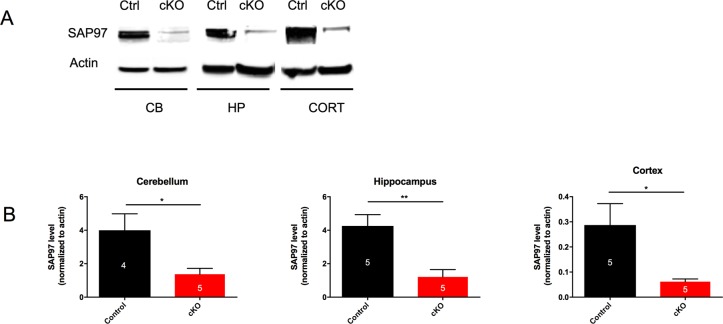
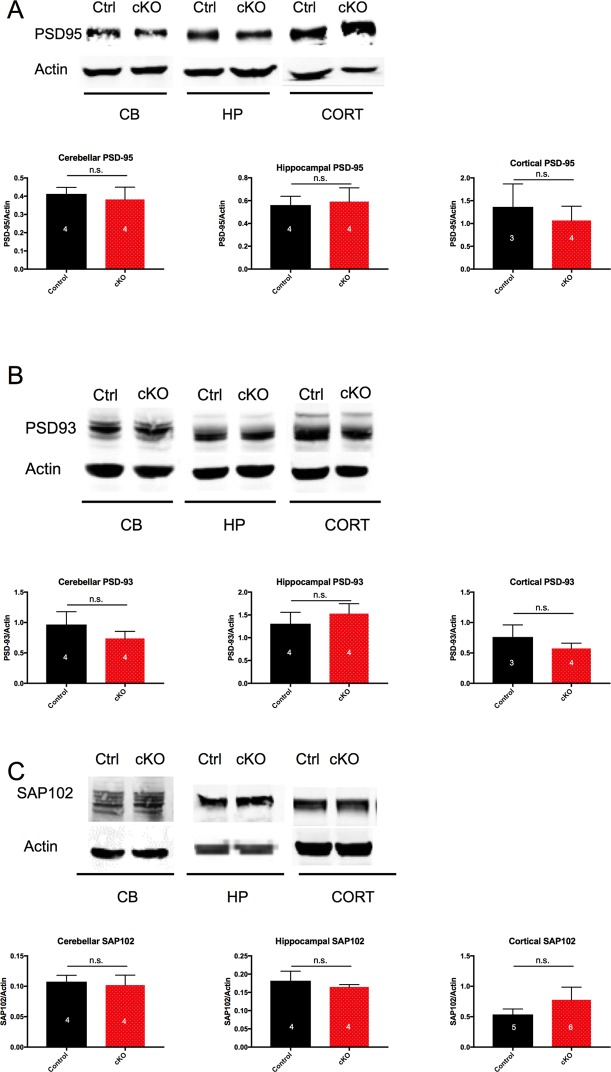
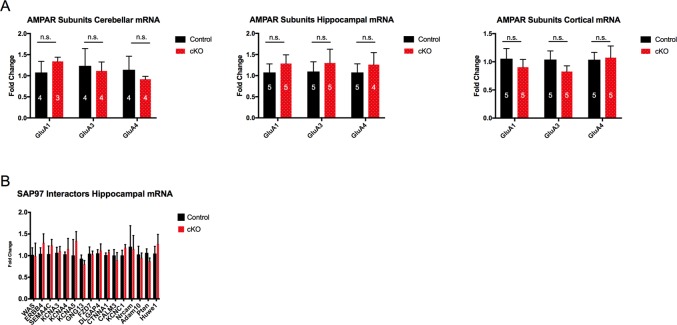
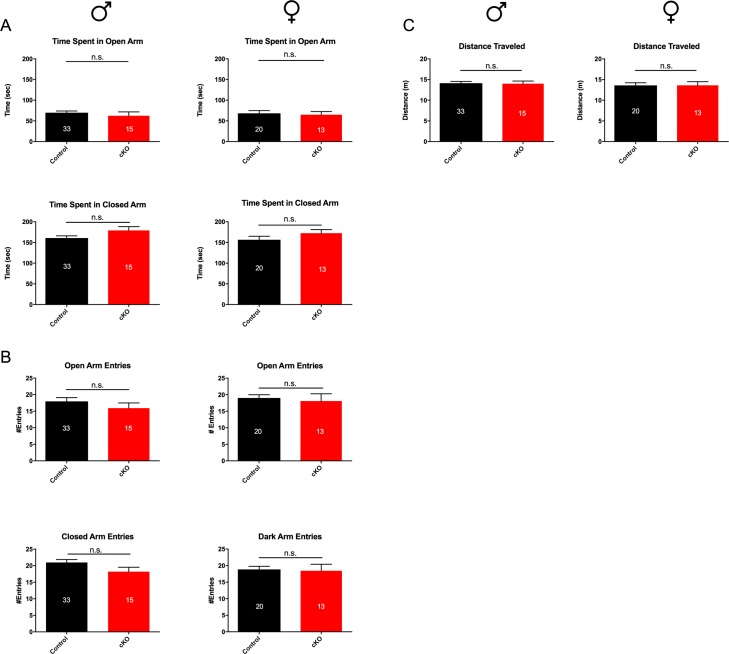
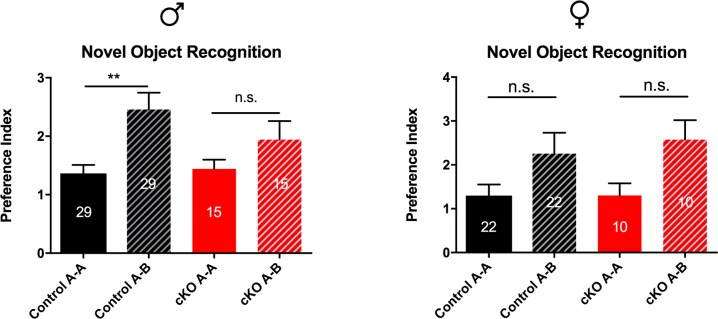
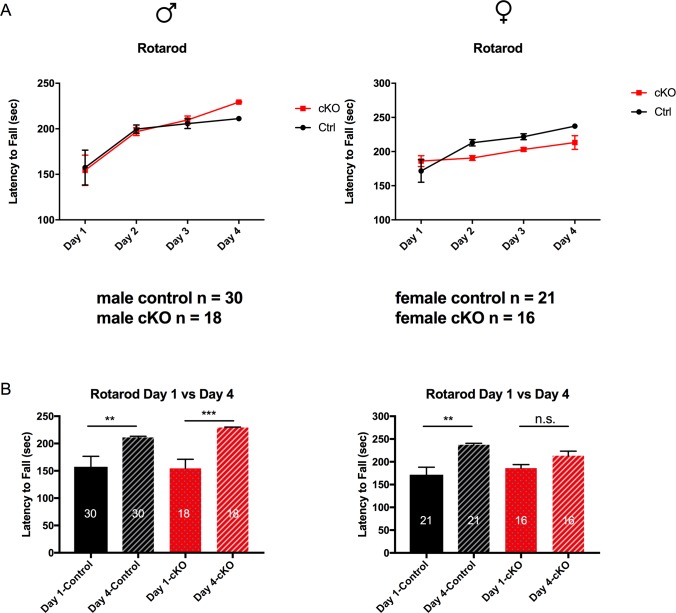
Synapse associated protein of 97KDa (SAP97) belongs to a family of scaffolding proteins, the membrane-associated guanylate kinases (MAGUKs), that are highly enriched in the postsynaptic density of synapses and play an important role in organizing protein complexes necessary for synaptic development and plasticity. The Dlg-MAGUK family of proteins are structurally very similar, and an effort has been made to parse apart the unique function of each Dlg-MAGUK protein by characterization of knockout mice. Knockout mice have been generated and characterized for PSD-95, PSD-93, and SAP102, however SAP97 knockout mice have been impossible to study because the SAP97 null mice die soon after birth due to a craniofacial defect. We studied the transcriptomic and behavioral consequences of a brain-specific conditional knockout of SAP97 (SAP97-cKO). RNA sequencing from hippocampi from control and SAP97-cKO male animals identified 67 SAP97 regulated transcripts. As large-scale genetic studies have implicated MAGUKs in neuropsychiatric disorders such as intellectual disability, autism spectrum disorders, and schizophrenia (SCZ), we analyzed our differentially expressed gene (DEG) set for enrichment of disease risk-associated genes, and found our DEG set to be specifically enriched for SCZ-related genes. Subjecting SAP97-cKO mice to a battery of behavioral tests revealed a subtle male-specific cognitive deficit and female-specific motor deficit, while other behaviors were largely unaffected. These data suggest that loss of SAP97 may have a modest contribution to organismal behavior. The SAP97-cKO mouse serves as a stepping stone for understanding the unique role of SAP97 in biology.
突触相关蛋白 97kDa(SAP97)属于支架蛋白家族,即膜相关鸟苷酸激酶(MAGUKs),它们在突触后密度区高度富集,在组织发育和可塑性所必需的蛋白质复合物中发挥重要作用。Dlg-MAGUK 蛋白家族结构非常相似,人们努力通过对 knockout 小鼠的特征描述来解析每个 Dlg-MAGUK 蛋白的独特功能。已经生成并表征了 PSD-95、PSD-93 和 SAP102 的 knockout 小鼠,但 SAP97 knockout 小鼠由于颅面缺陷,出生后不久就无法研究。我们研究了大脑特异性条件性敲除 SAP97(SAP97-cKO)的转录组学和行为后果。来自对照和 SAP97-cKO 雄性动物海马的 RNA 测序鉴定了 67 个受 SAP97 调节的转录本。由于大规模遗传研究表明 MAGUKs 与神经精神疾病有关,如智力障碍、自闭症谱系障碍和精神分裂症(SCZ),我们分析了我们的差异表达基因(DEG)集,以富集疾病风险相关基因,并发现我们的 DEG 集特别富含与 SCZ 相关的基因。对 SAP97-cKO 小鼠进行一系列行为测试显示,雄性小鼠存在轻微的认知缺陷和雌性小鼠特有的运动缺陷,而其他行为则基本不受影响。这些数据表明,SAP97 的缺失可能对机体行为有一定的影响。SAP97-cKO 小鼠为理解 SAP97 在生物学中的独特作用提供了一个切入点。